
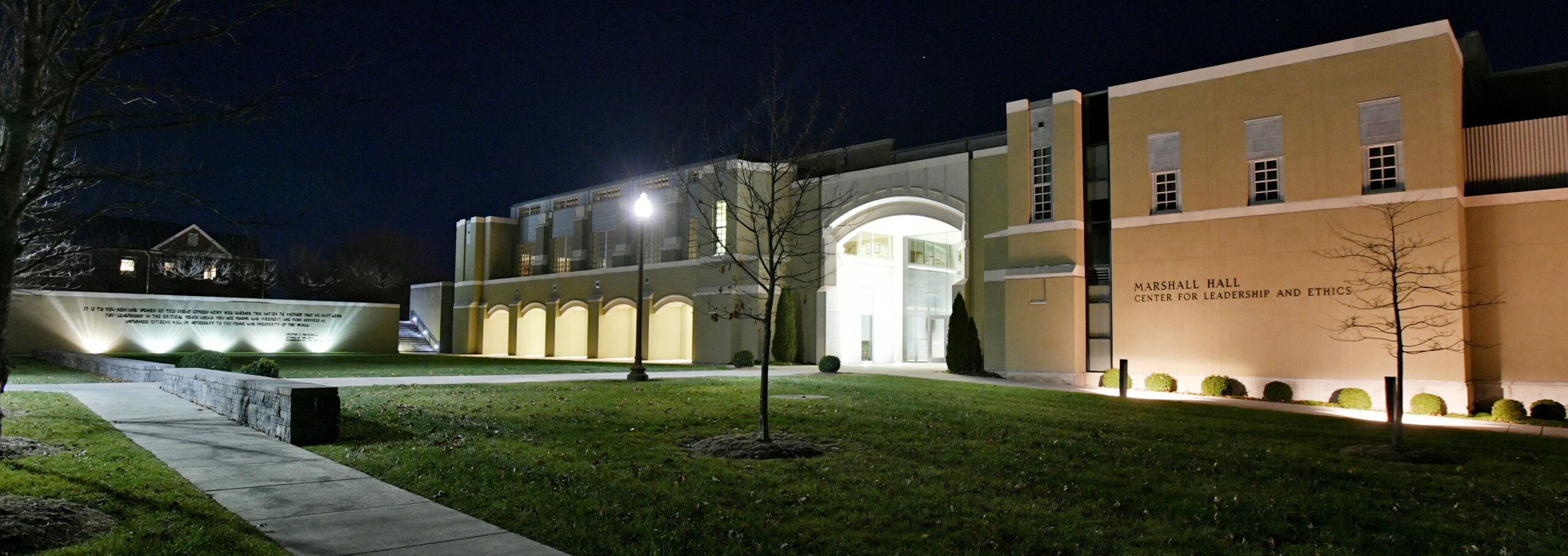

Leadership insights from Virginia Military Institute’s Center for Leadership and Ethics. We educate, engage, & inspire leader development!
Each year, the VMI Center for Leadership & Ethics (Center) selects a leadership theme for our programming. It is our hope that members of the VMI community will continue the discussion on that leadership theme offline. Guests of the show are VMI cadets, alumni, and faculty as well as VIP guests who visit post. This podcast is an outreach program of the Center.
The Center’s mission is to integrate moral-ethical development programs for the cadets, faculty, and staff and share insights gleaned from VMI programs with a broader national audience.
Note: Episodes feature closed captions.
Podcast Details
How to Listen: Find us on Podbean to stream our episodes.
Our Mission: This podcast aims to share leadership stories from our VMI Corps of Cadets and high-profile leaders who visit the Center for Leadership and Ethics (CLE) and VMI.
Your Hosts: Maj. Catherine M. Roy, Communications & Marketing Manager, with Ms. Broni King, Conference and Marketing Assistant.
Featured Episode
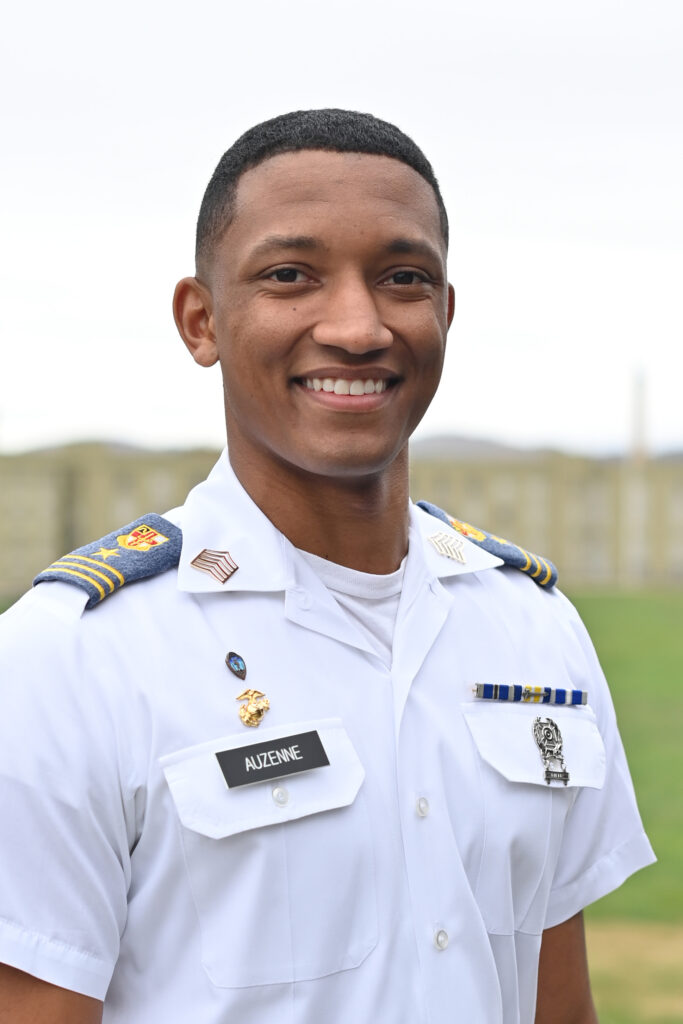
Inside VMI’s Regimental Commander Journey with Devin Auzenne ’26
In this episode of the VMI Leader Journey Podcast, we sit down with Cadet Devin Auzenne, Class of 2026, the current Regimental Commander of the VMI Corps of Cadets. Auzenne shares his inspiring leadership journey—from earning a Marine Corps ROTC scholarship to leading the Corps—and offers practical insights on leadership styles, personal growth, and the unique opportunities at VMI.
What You’ll Learn in This Episode:


✔ Why VMI’s leadership model is unlike any other military college
✔ How the Honor, Regimental, and Class systems shape cadet leadership
✔ Devin’s path to becoming Regimental Commander
✔ Servant, visionary, and transformational leadership explained
✔ Lessons learned from leading peers and managing challenges
✔ How VMI prepares cadets for military service and life beyond
✔ Networking and leadership opportunities through CLE programs
Key Highlights & Timestamps:
00:01:20 – Why VMI? Understanding its unique leadership systems
00:04:16 – Choosing VMI and the Marine Corps ROTC path
00:08:16 – Leadership opportunities beyond the classroom (C-SAB & conferences)
00:15:17 – Leadership theories and communication styles
00:17:04 – Lessons learned as Regimental Commander
00:24:04 – “You don’t rise to the occasion—you revert back to your training.”
00:28:07 – Accountability and responsibility in leadership
00:29:13 – Looking ahead: Breakout, graduation, and commissioning
Episode Transcript
00:00:00:06 – 00:00:34:07
Lt. Col. Roy
Welcome to the VMI Leader Journey podcast, where we explore what it takes to lead with courage, integrity and purpose. In this episode, we meet Cadet Devon Ozanne, class of 2026 and current Regimental commander of the VMI Corps of Cadets. Much has been written about Osborne since becoming our CEO. So our conversation will focus more keenly on his leadership insights as he shares his journey from a Marine Corps ROTC scholarship recipient to one of the highest leadership positions at VMI.
00:00:34:09 – 00:01:04:01
Lt. Col. Roy
You’ll hear insights on servant leadership, transformational leadership, and how VMI is unique. Systems, the honor system, regimental system, and class system shaped leaders for life. Whether you’re a cadet, an aspiring officer, or someone passionate about leadership, this conversation will inspire you to lead with confidence and character. Stay tuned for practical lessons, personal stories, and advice you can apply today.
00:01:04:04 – 00:01:21:02
Lt. Col. Roy
Today on the podcast, we have with us Devin Auzenne, class of 2026. And we’re going to get to know Auzenne and some of the leadership roles he’s had here at VMI over the past three and a half years, including your current role, primary role, which is…
00:01:21:02 – 00:01:22:21
Cadet Auzenne
regimental commander.
00:01:22:24 – 00:01:30:00
Lt. Col. Roy
Regimental commander. So welcome. Cadet Auzenne, I’d like you to introduce yourself to our audience.
00:01:30:02 – 00:01:45:08
Cadet Auzenne
Yes, ma’am. Thank you for having me, Colonel Roy. Devin Auzenne, history major from Opelousas, Louisiana. I’m the regimental commander, cadet first captain for VMI Corps cadets for the 2526 academic year.
00:01:45:11 – 00:02:01:19
Lt. Col. Roy
For for those of us who are listening, who don’t know anything about VMI system here. What can you tell them about, what attracted you to coming to VMI and then how it is that you became the regimental commander?
00:02:01:23 – 00:02:23:21
Cadet Auzenne
Yes, ma’am. So I guess I can go a little bit into the system. And then what kind of brought me here? So VMI is unlike any other military college in the nation. There are other state senior military colleges, federal service academies, but no other military school and military college has the three systems like VMI has the honor system, the regimental system in the class system.
00:02:23:23 – 00:02:49:07
Cadet Auzenne
And that was partly one of the things that attracted me here is you can lead in any there are so many more facets to leadership here at VMI within the different systems, each to have their own similar similarities and differences in the leadership dynamics and the lessons you can learn there. Coming out of high school, I got a marine Corps ROTC scholarship, so I knew that in four years I was going to be a marine officer.
00:02:49:09 – 00:03:04:03
Cadet Auzenne
So then it was about picking a place that would prepare me the best out, so I could be the very best that I could be whenever out to Michigan. Because I knew that one day I’m going to lead Marines, whether I’m ready to or not. So I’d rather be as prepared as possible.
00:03:04:05 – 00:03:07:00
Lt. Col. Roy
So I’m sure they’d like that first year as well.
00:03:07:02 – 00:03:29:01
Cadet Auzenne
Yes, ma’am. So, looked at VMI and they were ROTC program. They put out great numbers for the marine option unit. And then on top of that of top of having Marine Corps ROTC, they also had the Corps cadets, which is like a double facet. Being able to learn and being able to teach and being able to really get engaged.
00:03:29:02 – 00:03:37:11
Cadet Auzenne
So seeing that I just saw all the different opportunities, all the different things that I could do and just really wanted to be a part of that.
00:03:37:13 – 00:03:48:21
Lt. Col. Roy
So you had a focus. You would say, I mean, you knew like you said, you were an, you’re interested in Marine Corps ROTC programing and where could you go to school? Did you evaluate some other schools?
00:03:48:21 – 00:04:12:20
Cadet Auzenne
Yes, ma’am. I looked at some other schools, so I looked at Navy. So that was that was really the other one. I looked at VMI, The Citadel, and then I looked at other ones, but I narrowed down the list to those two. And then after just delving deeper, the liberal arts program here at VMI is awesome. And just the culture and what it means to be a VMI cadet, the alumnus, the history of people who have come through here.
00:04:12:23 – 00:04:17:16
Cadet Auzenne
It was. They’re both really good places, but I just knew VMI was the place for me.
00:04:17:18 – 00:04:30:17
Lt. Col. Roy
When you talk about, the history of cadets who had come through here, were there any names that sprung to mind that you and did you know them before you looked at VMI? Or once you looked at me and were like, oh, I didn’t know he went here.
00:04:30:20 – 00:04:49:15
Cadet Auzenne
Yeah. So there were a few. So wanting to go in the Marine Corps, big name is Chesty Puller. He came here for a year. Right. So and it’s obviously he’s one of like the greatest known Marines of all time. So it feels good enough for him. It definitely could be good enough for me. And then looking a little deeper saw George C Marshall George Patton came here for a year.
00:04:49:18 – 00:05:08:24
Cadet Auzenne
And then looking into what life was like here and the deep rooted traditions that are, but also professionalism here. It was one of those things that other places do similar things, but they don’t do it quite the way VMI does. They don’t have quite as rich a history as the cadets here, and what it means to be a cadet and then the alumni network.
00:05:08:27 – 00:05:19:06
Cadet Auzenne
Though it’s small, this isn’t a very big college, the tightest knit and the most well-recognized successful that I’ve ever known. If a single group of people.
00:05:19:06 – 00:05:21:00
Lt. Col. Roy
So strong loyalty.
00:05:21:01 – 00:05:29:09
Cadet Auzenne
Yes, ma’am. I’m sure.
00:05:29:12 – 00:05:42:25
Cadet Auzenne
Very strong loyalty in any, any organization that can get that kind of loyalty out of its people is definitely one worth being a part of a brotherhood, sisterhood, something that brings people here because they know they’ll be a part of something greater than themselves.
00:05:42:27 – 00:06:06:01
Lt. Col. Roy
Yeah, nothing like the people who’ve actually been here experienced the system to to speak on its behalf or to shine a light on, you know what? Maybe wasn’t so great. So it’s it’s good to know that you heard good things about the institute and that that was enough to bring you here. Did you come from a military family?
00:06:06:03 – 00:06:22:19
Cadet Auzenne
I did, and also not really. So my dad was in the National Guard, and I had an uncle in the Navy, but my dad only did six years in the guard, and that was mom before I was born. So I come from a family that does have military experience, even though it wasn’t very heavily influence in my life.
00:06:22:22 – 00:06:28:16
Cadet Auzenne
And I am the first marine in my family, so it’s something pretty proud of.
00:06:28:18 – 00:06:38:18
Lt. Col. Roy
And what drew you to why military instead of, I don’t know, history? I don’t know what else you would want to do with that, but why the you know, it’s scary.
00:06:38:18 – 00:06:59:19
Cadet Auzenne
So for me, it was I knew I didn’t want a desk job or I didn’t want an ordinary job. And when I was in high school, I was really committed in sports, loved playing soccer and football. And I thought, I’m gonna go to college and play soccer. I’m gonna try and be a professional. When it came junior senior high school, I kind of realized that though playing soccer is great, is it one of the things that served me?
00:06:59:21 – 00:07:15:23
Cadet Auzenne
Well? I was still a kid, but whenever I became an adult, I want to do something a little bit more, more meaningful to myself and something I felt that was more valuable, I guess, to to the nation. So I always came when I was. Ever since I was a little kid, I had a very deep interest in history.
00:07:15:25 – 00:07:42:16
Cadet Auzenne
And so military, it’s very there’s very rich history there. So I was looking into that and whenever I came time to graduate had a few buddies, I enlisted. I joined the late entry program, and then that’s where I got my scholarship. And then from there, ever since then, I’ve just kind of been sold on the dream. And there is really good careers to be had in the military, really good lifestyles, doing hard things that you can’t do in regular life.
00:07:42:16 – 00:07:46:27
Cadet Auzenne
And I’m just all about the like, how about the lifestyle?
00:07:46:29 – 00:07:54:07
Lt. Col. Roy
Very good. And how is the history program going for you? Is there a particular area of interest that you have so far?
00:07:54:10 – 00:08:19:05
Cadet Auzenne
Yes, ma’am. So I love the history here at VMI. I’m a little bit of like a history nerd. So I’ve taken I actually finish all my history credits a year early. Besides just, one course just because of how how much I love the classes and I really would like to focus on, I’ve taking more classes focusing on 20th century military history, and that’s why I’m getting a minor in military history.
00:08:19:05 – 00:08:32:14
Cadet Auzenne
Just because the classes qualities, the professors like we have professors here in small classrooms, you can really interact with you who’ve taught at the war colleges, who’ve taught at Carlisle. So it’s definitely an incredible wealth of knowledge that we have here.
00:08:32:16 – 00:08:47:08
Lt. Col. Roy
So it’s interesting that some of your professors weren’t just born and bred in VMI. They’re not just steeped in VMI tradition. They came from other schools that they’ve taught other places and brought a rich, depth of field of experience that they could share in the classroom.
00:08:47:14 – 00:09:09:21
Cadet Auzenne
Yes, ma’am. We have civilian professors who, like I said, taught at war colleges. We have professors who were in their careers in the military, who have some living experience with some of the classes, just like Colonel Gray, the director of the center for Leadership and Ethics, which is incredible, to have somebody who’s lived through the event you’re talking about in class, to bring that firsthand personal experience.
00:09:09:24 – 00:09:27:22
Cadet Auzenne
And we’ve we have adjunct professors. We have professors. I’ve taught at West Point. We have professors in all who come from all services, different branches in the military. So there’s definitely a wealth of background knowledge. Professors as work in the Pentagon alumni, non alumni is definitely a good, good mix.
00:09:27:25 – 00:09:50:27
Lt. Col. Roy
And you mentioned Colonel Gray, the executive director of the center, which is where I work. And and the proponent for this podcast, the VMI leader journey. He also is the director for some of the co-curricular programs. And I know you’re involved in one of them, the Cadet Superintendents Advisory Board. Can you talk about that a little bit?
00:09:51:00 – 00:10:37:06
Cadet Auzenne
Yes, ma’am. CSA obsess for Cadet Superintendents Advisory Board. So it’s comprised of cadets of all different organizations and involvement within the corps, from NCAA athletes to people who hold rank, people that are in the class system. Just different perspectives within the Corps bringing to issues to light about what cadets need, what cadets would like to have in their experience, and things that can make the VMI system as a whole function smoother and that are worth bringing to the attention of the superintendent.
00:10:37:08 – 00:10:58:20
Cadet Auzenne
They brought me in as the regiment commander role. They had some proposals for the superintendent, and they want to hear my advice, my feedback on them. So it’s really cool hearing their proposals and being able to see from not only from their perspective, being able to give them my input from my perspective, saying like, hey, we would be able to do this or we would not be able to do this.
00:10:58:20 – 00:11:13:05
Cadet Auzenne
Or if you were to try and pursue this idea, these are some consideration to have given my position as a regimental commander. I’ve had experience in some of these areas, and maybe some of them have not, or have insights that that were really helpful for, cause I believe.
00:11:13:08 – 00:11:15:22
Lt. Col. Roy
So you’re brought in kind of a subject matter expert?
00:11:15:22 – 00:11:16:03
Cadet Auzenne
Yes.
00:11:16:03 – 00:11:19:18
Lt. Col. Roy
Somebody who could say, yep, your proposal is going to fly or it’s not.
00:11:19:25 – 00:11:31:19
Cadet Auzenne
Yes, ma’am. And try and give them the heads up for whenever they do propose it, that these are some of the questions they’re going to ask you. These are some important things to them so that they’ll be more prepared.
00:11:31:22 – 00:11:39:19
Lt. Col. Roy
And how about any other CLE programs like have you done any the, other leadership conferences outside or have we done our leadership conference?
00:11:39:26 – 00:12:05:14
Cadet Auzenne
Yes, ma’am. I’ve been a facilitator for our leadership conference for the past two years now, and that has been an awesome experience. Being a facilitator was one of the cool things, because we not only got to participate, but facilitate on a small level at each of our tables. So we got to really interact with the people assigned to our tables and get be the leaders of the different projects and different exercises that we have.
00:12:05:17 – 00:12:24:04
Lt. Col. Roy
And what is that like leading a small group discussion? Because that’s essentially what you’re doing, is managing everybody’s time at the table. And we’re not leading you to actually lead the exercises, but you’re helping us make sure everybody participates at the tables. What was that experience like?
00:12:24:06 – 00:12:45:26
Cadet Auzenne
That was a really eye-opening experience and just one of those another incredible opportunity to learn. It’s really interesting seeing how different people see the same situation, gaining new perspectives and just getting a new, fresh perspective and a different environment on how to work as a team and how to get people who you’ve just met to work as a team and collaborate on ideas.
00:12:45:29 – 00:12:58:13
Lt. Col. Roy
Is there any particular memory that you have that you’re like, oh yeah, that was a really cool experience, or maybe there was a connection that you made through networking at the event that that has stuck with you.
00:12:58:15 – 00:13:21:02
Cadet Auzenne
Yes, ma’am. So one of the really cool exercises we did was it was about I can’t remember exactly. It was about how ethical was to use drones in warfare. And the different members of the table got to split up and see different subject matter. Experts talk about whether it be the laws of war or employment of drones, rules of engagement from a military side, from a political standpoint.
00:13:21:09 – 00:13:43:22
Cadet Auzenne
And then everybody was brought back and then their inputs were then redone and put back into the group there. The tables consensus on what they believe should be done on the issue. That one was really cool, being able to see how the different perspectives military, civilian and different subject matter experts can shed light on these very complicated even like ethical issues.
00:13:43:24 – 00:14:12:25
Cadet Auzenne
Through the center for Leadership and Ethics, I also was able to attend different conferences, not at VMI, one of them being the Naval Academy Leadership Conference. Was was an incredible opportunity not only to get to go and stay in Annapolis in one of the dorm rooms and the midshipmen being able to network and being able to see how they do their leadership conference and see what life would be like as, the chairman at the Naval Academy while at that conference and the one we host here, the networking is also incredible.
00:14:12:25 – 00:14:32:13
Cadet Auzenne
As a bunch of Marines say, it’s a small Marine Corps being able and just a military in general. It’s a smaller world than what most people think. So being able to meet people who are about a commission, people my same age who are pursuing careers in the military is one of the things it’s so invaluable because undoubtedly, years down the line will definitely end up running into each other again.
00:14:32:20 – 00:14:36:21
Lt. Col. Roy
So I was just going to say, I’m sure one day you’ll cross paths again.
00:14:36:24 – 00:14:37:24
Cadet Auzenne
Yes, ma’am.
00:14:37:26 – 00:14:47:22
Lt. Col. Roy
And, any other programs of the CLI that you’ve been able to participate with, like, any of the speaker programs or anything like that that comes to mind?
00:14:47:24 – 00:15:15:06
Cadet Auzenne
Yes, ma’am. I can’t remember all of their names, but the CLI often has speakers that come in the Evening times, and I have attended a few of them, gotten some book signed, and it’s one of those things that’s incredible on like a Thursday night, you have just an hour, hour and a half to spare. You can go get a really in-depth speech or really in-depth talk or lecture or even debate from somebody who’s a subject matter expert or a true professional, and they’re in their field.
00:15:15:08 – 00:15:18:22
Lt. Col. Roy
And then have you had the Lead 344 course?
00:15:18:24 – 00:15:19:20
Cadet Auzenne
Yes, ma’am, I have.
00:15:19:20 – 00:15:21:12
Lt. Col. Roy
And who was your instructor for that?
00:15:21:13 – 00:15:24:02
Cadet Auzenne
I had major now Colonel La Rocha.
00:15:24:04 – 00:15:41:26
Lt. Col. Roy
Okay. Very good. Yeah. So that lead classes, leadership in organizations and you cover 13 ish theories of leadership, was there any one that you particularly gravitated toward or you felt like that fits my profile best?
00:15:41:28 – 00:16:03:25
Cadet Auzenne
Yes, ma’am. There were I think there’s two of them. And that class was very eye opening because I often see leadership is this really interesting phenomenon, this interaction between people bringing, you know, just like teamwork, bringing people, a group of individuals together to achieve a common goal and being able to quantify or put into theories the way people think that what drives their actions.
00:16:03:27 – 00:16:34:00
Cadet Auzenne
So from that, it helped me learn and really define myself more and put it into words. Really being able to get a grasp on what I believe is my leadership style and how I like to lead, few other styles would be servant leadership, visionary leadership, and transformational leadership, which each come with their own descriptions. But I believe in some way, shape or form that I like to lead using those in my own unique blend that they did.
00:16:34:02 – 00:16:38:25
Lt. Col. ROY
You get an opportunity to identify your communication style. Is that part of the class?
00:16:39:00 – 00:17:03:08
Cadet Auzenne
Yes, ma’am. That also was a part of the class, and it really helped me to see how small things from the way you pose questions, from the way you give instructions or pass out guidance, how those things can be perceived and how those can influence the way you lead or just the character, the organization. Because after all, any organization usually takes on the character of its leader.
00:17:03:08 – 00:17:14:19
Cadet Auzenne
So it’s really important to be cognizant of that. And it brought to my attention that these are things that are more easily quantifiable than what I used to think. So now I can have a better grasp on how to use them.
00:17:14:21 – 00:17:27:04
Lt. Col. Roy
So would you say that leading can be a matter of actions and choices? And would you say that? Would you agree with that statement or.
00:17:27:07 – 00:17:55:24
Cadet Auzenne
Yes, ma’am. Yes, ma’am. The leave class really brought to my attention that leadership can be a very intentional process, which you can’t control your actions, you can’t control your choices. And through those and if you know how to quantify those and how you perform and that really that knowledge of self, you can use that to your advantage and influence your organization in a positive light.
00:17:55:26 – 00:18:02:05
Lt. Col. Roy
Have you had an opportunity to use any of the skills that you learned, and if so, do you have an anecdote you could share?
00:18:02:07 – 00:18:27:14
Cadet Auzenne
Yes, ma’am. So in my last year, I was the Regimental Sergeant major, and this year I am the regiment commander, the Corps cadets. And that has been the most incredible leadership challenge, an opportunity that I’ve had so far, being able to lead my peers in a big scale organization. And there’s a lot of little lessons I’ve learned and a lot of little anecdotes.
00:18:27:14 – 00:18:43:29
Cadet Auzenne
I think one of them is always treat people how you want to be treated. Like respect is the number one thing, and then another one would be understand how to talk, understand your audience, and understand how to get the best out of people. In order to get the best out of them, you need to know what makes them tick.
00:18:43:29 – 00:18:55:00
Cadet Auzenne
You need to know what motivates them. You need to understand how they think. So then you can know how to pose task and how to bring situations to light when you want them to perform a certain way.
00:18:55:02 – 00:19:08:06
Lt. Col. Roy
And when you are interacting with somebody and you’re determining what it is that they would best respond to, what factors do you look for? Like, how would you know how to treat someone else?
00:19:08:09 – 00:19:24:22
Cadet Auzenne
Yes, ma’am. I think that starts in the small things, the smaller actions you have to get to know the person. Not saying you have to be their best friend, but you have to get to know them. You have to get to understand why they are in the positions they are. What makes what do they want to do? What do they want to pursue?
00:19:24:25 – 00:19:42:19
Cadet Auzenne
What do they want to see happen? What change do they want to bring in the organization? And then from there you can understand how to pose questions to them, how to get their perspectives. And then after you understand those things, you get a better grasp on, okay, I need help with this because I’ve had a few conversations with you and I know you.
00:19:42:26 – 00:20:00:04
Cadet Auzenne
I know that you would be better set for this problem set rather than this other one, and it really helps from where I stand when trying to delegate out work, because there are definitely everyone has their own strengths and weaknesses, and being able to know your people definitely can help you match those problem areas with the people who have a strength in that area.
00:20:00:07 – 00:20:20:26
Lt. Col. Roy
But, and then people around you, you know, family can be a very grounding experience because they knew you. When have your family noticed any changes or differences in you or some leadership traits that maybe they didn’t see before? How has has that happened or taken place?
00:20:21:00 – 00:20:42:07
Cadet Auzenne
Yes, ma’am. One of the funny stories was whenever I was a rat, and then I was coming home on Thanksgiving with my mom. And then I remember I made the bed one morning. She was like, oh my gosh, like, you have never done that. But I think my family is from my friends back home who knew me in high school and since I was young, they can definitely see a difference in how mature I am.
00:20:42:07 – 00:21:00:17
Cadet Auzenne
Though, and how I just see problems and how I frame the world around me. And they’ve definitely been able to take, you know, that notice and say like, wow, like as something as something new. It’s not like it’s completely different me, but it’s more of who I really am. Just emphasize in a really good way.
00:21:00:19 – 00:21:14:20
Lt. Col. Roy
Yeah, I, I wouldn’t say this place necessarily changes you, but I think that it does help mature you. It may be faster than you would as an experience, faster than you would get in another place or in another environment.
00:21:14:21 – 00:21:16:14
Cadet Auzenne
Yes, ma’am. Absolutely.
00:21:16:16 – 00:21:18:24
Lt. Col. Roy
Yeah. Trial by fire, as they say.
00:21:19:00 – 00:21:19:18
Cadet Auzenne
Yes. No.
00:21:19:19 – 00:21:29:24
Lt. Col. Roy
Yeah. What are some leadership lessons that you’ve learned that have been valuable to your experience and success here?
00:21:29:26 – 00:21:51:06
Cadet Auzenne
That’s a really good question. So one of the ones is always know that you don’t have all the answers. And no, it always helps to know who to go to. But if you need help, always just ask. I feel it’s very easy to feel whenever you’re tasked with a problem, or if you’re given charge of something to feel like you have to be the one to have all the ideas.
00:21:51:06 – 00:22:09:15
Cadet Auzenne
And that’s just not the way it really. It’s not the way it works here, and it’s not always the way it works in the real military. If you have questions, as there’s always someone willing to help. And I think another one is always be willing to listen to what people who you’re working with, whoever you’re trying to lead, and just people who have a lot more experience.
00:22:09:15 – 00:22:26:24
Cadet Auzenne
And you listen to what they have to say and take their advice and be willing to act on that. Be willing to use that. I think another one I already said is be good to the people that you lead. If you treat them well, they’re always treat you well. They’ll always return. That in spades is what I found.
00:22:26:26 – 00:22:52:24
Cadet Auzenne
And another thing, if you I guess it builds on that last point. If you look out for people that always look out for you, because there are days whenever someone’s going to need you to have their back and their days, whatever, you’re going to need somebody to have your back and you never know what day it is. But if you always treat people with respect, dignity, then you’ll always be on the right side of.
00:22:52:26 – 00:23:05:22
Lt. Col. Roy
Now, when it comes to giving guidance or instructions or feedback that might not be positive, how do you approach those kinds of have you had to do that? And then if so, how do you approach that?
00:23:05:25 – 00:23:31:09
Cadet Auzenne
Yes, ma’am. Those tough conversations, that confrontation, something that no one really likes, but it’s definitely one of those necessary evils. I guess you can say if you want to grow as a leader and if you really want to achieve anything in life, everything is going to have its own, its own problems and hardships. So usually the way I approach that, especially with my peers, is that I’ll bring it to their attention always in a respectful manner, like, hey, this is what I’m noticing that you’re doing.
00:23:31:12 – 00:23:50:08
Cadet Auzenne
This is what I need you to do. And then always give them a chance to explain their side or explain what’s going on, because sometimes there’s something going on with that person that you may not have been aware of. So knowing that that would be knowing that can definitely help you address a problem area further. And usually especially here, it’s always really good.
00:23:50:15 – 00:24:11:14
Cadet Auzenne
Received very well. That’s why we have an active chain of command so that whenever it comes down to a difference in opinion, always try and compromise. Try and find the best solution that fits the most people or what’s most practical in that situation. And if it’s one proposal the other, always let the best idea prevail. It doesn’t matter whose it is or who gets the credit.
00:24:11:17 – 00:24:44:28
Lt. Col. Roy
Any other advice you might have, like as you think about and reflect on how your leadership role has unfolded this semester, has anything surprised you about being in the role that you’re in, as opposed to last year, which you’re a more of a subordinate? So now that you’re actually leading the Corps, what what has stood out to you, maybe things you didn’t think of before that you’re like, oh, I wasn’t counting on that, or I hadn’t thought about that.
00:24:45:00 – 00:25:02:11
Cadet Auzenne
Yes, ma’am. So I think one of the big ones, and this is a lesson I learned from us watching a lot of thinking Johnson videos was you don’t rise to the occasion, but you revert back to your training. So if you ever want to perform well, it’s not. You’re not just going to wake up one day and be, I can do this, but you have to prepare for it.
00:25:02:11 – 00:25:22:02
Cadet Auzenne
You have to prepare yourself for your mind, your body, so that whenever it comes time to perform, you can always do it, no matter what the circumstances. And I think another one, one really interesting thing about VMI is one of my high school coaches. He actually told me this. But the fire he said the fire burns or it purifies.
00:25:22:05 – 00:25:38:24
Cadet Auzenne
The same fire that will burn a piece of wood would be the same one to purify a piece of metal. So it does it. It’s not what you go through. That is the biggest thing. It’s how you react, it’s how you respond to it. And I feel like VMI has a really incredible way of letting you pass your perceived limits.
00:25:38:24 – 00:25:58:13
Cadet Auzenne
Absolutely. And making you putting you in situations to succeed, giving you opportunities to succeed in ways that you didn’t even think was possible. It seems like every year here, while you’re going through a while, you’re kind of your heads down. You’re trying to get the work done, you’re trying to grind, get it out. It’s like, oh my gosh, this is the most stuff I’ve had going at me.
00:25:58:13 – 00:26:29:03
Cadet Auzenne
Like, my schedule is full. I don’t know how I’m going to get through it. And then somehow, someway you end up getting through it. And then the next year you’re asking for more responsibility, asking for another leadership role, asking to grow more, asking for another opportunity. And I think that’s been one of the most incredible things. Looking back and even going through it and going forward has been seeing how it felt like the sky is falling, the world is ending and somehow got through that situation and then was put in another one or more.
00:26:29:03 – 00:26:35:05
Cadet Auzenne
That means still being able to perform.
00:26:35:08 – 00:26:45:11
Lt. Col. Roy
So it sounds like over year three and a half year so far, your capacity to lead, your capacity to lead self has increased over time.
00:26:45:14 – 00:27:05:21
Cadet Auzenne
Yes, ma’am. Absolutely, absolutely. And is VMI also has a great way before the way the leadership model works. Whenever you’re right, you’re a private and then you go to a corporal as a third Classman a sergeant as a second. And officers are first each year, giving you incrementally more responsibility, letting you lead in a greater and greater capacity.
00:27:05:21 – 00:27:30:13
Cadet Auzenne
But always starting off with yourself and then the people to your left in the right before you can lead anybody else. It’s always it always teaches you. You have to first be able to lead yourself. You have to first be able to help the person to your left and your right. And then it gives you incrementally increasing responsibility and leadership roles, which definitely helps help people not bite off more than you can chew and definitely teach you the basics.
00:27:30:13 – 00:27:37:13
Cadet Auzenne
The strong foundation, so that whenever you’re getting to the top of the building, you’re not going to you’re strong in the basics, so you’re not going to fall over.
00:27:37:15 – 00:27:49:26
Lt. Col. Roy
But that sounds like excellent advice. Do you have like a particular leadership saying that you gravitate toward or a leadership book that you really enjoy or recommend?
00:27:49:28 – 00:28:20:00
Cadet Auzenne
Yes, ma’am. There’s actually one book I would highly recommend to anybody. Actually got it with Colonel Gray’s class. It’s called the Art of leadership, and I can’t remember exactly who it’s by, but it’s a compilation of 10 or 12 short essays on influential leaders or military leaders in America’s history, and each one focuses on a different leader who had a prevailing different style of leadership leadership style such as visionary leadership, transformational leadership, and servant leadership.
00:28:20:03 – 00:28:40:02
Cadet Auzenne
All different definitions and all different examples of really important, prevalent people who have done great things for the nation and for the military and how they use that style to manage. And I think my what I whatever I tell myself kind of depends on what season I’m in, whatever. So whatever I’m going through usually around finals and there is a bunch going through.
00:28:40:04 – 00:29:01:20
Cadet Auzenne
So one of the things I always tell myself was I can always be worse than you know. It seems bad that the problems are only relative to the, to the situation. And I think another one whenever, especially when working on big plans or we have big events coming up and those late night stand up planning or those long days trying to get stuff organized, is that someone is always depending.
00:29:01:20 – 00:29:19:21
Cadet Auzenne
Someone is counting on you, and even if someone in the future is depending on you to be as good as you can now, so that whenever the situation comes, you can perform. So always knowing that is good is bigger than you. It’s bigger. It’s worth losing the sleep if everybody else who you’re leading is going to benefit from it.
00:29:19:24 – 00:29:26:24
Lt. Col. Roy
So it sounds like you have a high sense of accountability and responsibility, which would be perfect in the leadership role.
00:29:26:26 – 00:29:35:06
Cadet Auzenne
Yes, ma’am. And I definitely try, try and get better at it every day. But, definitely one of the things, one of the some of the important lessons I picked up here.
00:29:35:09 – 00:29:39:03
Lt. Col. Roy
What are you looking forward to in the spring?
00:29:39:06 – 00:29:57:09
Cadet Auzenne
Looking forward to in the spring. One breaking out, the rats, being able to see them become a class. That’s going to be an incredible feeling as a dike, the senior mentor and as a regimental commander, being able to see all the work that’s been put in from day one matriculation to the moment they become cadets. Definitely looking forward to that.
00:29:57:09 – 00:30:16:06
Cadet Auzenne
And then another one. Graduation and commissioning. Using the spring, things slowed down a little bit and being able to have that time to reflect and really enjoy the presence of my boys who become my best friends for life, and being able to enjoy while we got it, and then looking forward to spending on those go bars come May.
00:30:16:09 – 00:30:31:25
Lt. Col. Roy
That sounds like an excellent, future to look forward to. And just our conversation today, I have no doubt that you’re going to be successful. And, great job and best of luck to you and your future. And thank you so much for being on today’s VMI Leader Journey podcast.
00:30:32:01 – 00:30:36:00
Cadet Auzenne
Yes, ma’am. Thank you for having me.
00:30:36:02 – 00:31:06:07
Lt. Col. Roy
Thank you for joining us on the VMI Leader Journey podcast. Today’s conversation with Cadet Devin Auzenne, Class of 2026, and regimental commander gave us a powerful look at what it means to lead with courage, integrity, and purpose, from navigating VMI’s unique leadership systems to embracing servant and transformational leadership. Auzenne’s insights remind us that leadership is a journey, one built on preparation, resilience and respect for others.
00:31:06:09 – 00:31:27:15
Lt. Col. Roy
If you enjoyed this episode, be sure to subscribe, share it with your fellow cadets, and leave us a review. For more leadership resources and upcoming events [information], visit vmi.edu, forward slash CLE, or follow us on social media. Until next time, keep leading with character and stay committed to the values that make a difference.
Distinguished Guests
For those who may not yet be at VMI, or may have missed some of the speaker events hosted by the Center, we encourage you to subscribe to our podcast to catch episodes that dive deep with these impressive men and women who share their thoughts, insight, and inspiration with the Corps and the entire VMI community.
Relationship Centered Leadership with Lt. Col. Scott Mann
Captions are available on Podbean.
Summary
In this episode of The VMI Leader Journey, we sit down with retired U.S. Army Green Beret Lieutenant Colonel Scott Mann—our 2025–26 Leader‑in‑Residence at the Virginia Military Institute. Scott shares hard‑earned leadership lessons from his Special Forces career, including deployments to Iraq and Afghanistan during the Global War on Terror. Whether you’re a VMI cadet, a prospective student, a veteran, or someone interested in leadership and international security, this conversation delivers powerful insights on how authentic leaders build trust, influence without rank, and lead under extreme pressure.
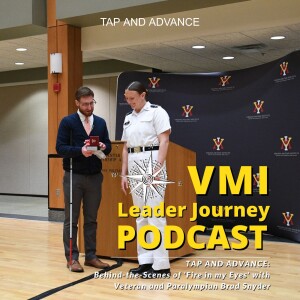
Tap and Advance: Behind-the-Scenes of Writing ‘Fire in My Eyes’ with Veteran and Paralympian Brad Snyder
Summary
In this episode, we’re doing something a little different. Our conversation with Brad Snyder, a Navy veteran, Paralympic gold medalist, and author, will reveal some behind-the-scenes insights into his memoir, “Fire in My Eyes.” We’ll discover what inspired him to write a memoir, what it was like to put some painful and confusing memories down on paper, and other details about his process. We will also talk about some leadership lessons that go beyond the pages of a book, including the metaphor of “Tap and Advance.”
Episode Transcript
MAJ. CATHERINE ROY, COMMUNICATIONS AND MARKETING MANAGER: Welcome to the VMI Leader Journey podcast, where we have inspiring conversations with leaders to uncover the strategies, lessons, and stories that shape their success. Today, we’re excited to explore memoir writing with Brad Snyder, a Navy veteran, Paralympic gold medalist, and author. During this interview, Brad shares some behind-the-scenes insights into his journey from the Naval Academy to the Paralympic Games and how he learned resilience, determination, and the power of embracing challenges.
We’ll use his memoir, Fire in My Eyes, as a guide to explore what inspired him to write a memoir and the process of the writing. Plus some leadership lessons that go beyond the pages of a book. Whether you’re a student leader, athlete, or just curious about leadership, this conversation will inspire and motivate you. So grab your headphones, lean in, and join us for this enlightening exploration of leadership with Brad Snyder.
Let’s dive in.
Welcome, Brad Snyder. Thank you so much for being a guest on today’s episode of the VMI Leader Journey.
BRAD SNYDER: It’s my pleasure. Thank you so much for having me.
ROY: I have a lot of notes here, and as we just reviewed, there are a lot of things I’d like to get into. First of all, how has your visit been so far? How have you been here for the whole two hours?
SNYDER: It’s been spectacular. It’s always a special treat to be able to visit somewhere that has such, deep and intertwined history with our great country, as VMI does. And I’ve, you know, always had a stout appreciation for this institution but never had the opportunity to come and visit the campus. So I’m really excited to be here now.
ROY: Excellent. So well, again, we’re just super excited to have you here tonight. I want to get into first, the book that you wrote, which is titled Fire in My Eyes. I have read it cover to cover. and you co-wrote that book with Tom Sileo. I will just tell our audience that it’s an excellent read.
I highly recommend reading it. just for the human interest stories. But then we’ll talk a little bit later in the podcast about some of the leadership lessons to gain from, reading the story. So, first of all, I’ll also say that part of our Courageous Leadership speaker series that what we are also doing is giving away a copy of the book with each talk.
My overall impression is, having read the book is I was very impressed with the authentic voice and several instances you talk about, failures and struggles, which I think will be an inspiration for the cadets. it was certainly inspirational for me, even so, a couple of questions about that. Number one, in your own words, why write a memoir?
SNYDER: The book covers aspects of my childhood up to the decision to go to the Naval Academy, my experiences at the Naval Academy, and then, my military experience. But then most of the quote-unquote story revolves around the year between my injury in September of 2011 and then my, ability to go to the Paralympics a year later so that that year is a real consequential part of my entire life and kind of the focus of the book.
Shortly after I competed in London, that story kind of went out there, and I got a lot of invitations to come and speak at various places. The Naval Academy, being one of the Naval Academy Leadership Conference, is one of the first places I spoke. And at that point, I didn’t really fancy myself a speaker. I didn’t really know what to put into a speech, and I didn’t really know what to say.
And I sort of would get up on stage and bumble through a bio of myself. Hi, am this guy. I did these things and here’s my story. What what questions do you have? and for whatever reason, that resonated with people. People really liked that. I was just kind of sharing my perspective on this unique set of experiences.
I got better and better at sharing the story, got more and more invitations over a span of a few years, and frequently the suggestion would come up like one of the incredible story. You know, you’re this incredible person and you should really write this into a book. And then I would go and do more speaking and they would say the same thing, and they would introduce me as things like American Hero and, you know, resilience figure and this and that.
The other thing, and, the way I was introduced did not feel like me, didn’t feel like who I am, who I aspire to be. Certainly, I know we all aspire to be heroic in some sense, but for someone to actually say that in my introduction was very unnerving and especially reflecting on my past. I haven’t always been hitting homeruns, you know, like I haven’t always been winning gold medals.
I have a whole bunch of things that I’ve screwed up along the way. And I thought, you know what? For anybody who’s calling me a hero, maybe they don’t know the whole story. Maybe they know all the good stuff. Maybe they don’t know the bad stuff, too. And for someone to call me a hero, I want you to know the whole story.
And if you read the whole story and you still want to call me a hero afterward, then great. But I wanted it all to be out there, and there’s a lot I can’t share about that journey into blindness. And beyond that, I couldn’t get out in a 45 minute keynote, and so I agreed. I thought, yeah, writing a book would be a good idea.
I spent a number of years trying to write the book. I had really bad insomnia after my injury, so when I couldn’t sleep at night, I would just stay up all night writing chapters about this chapter’s about that and trying to sell the pitch to a couple. Publishers got told, ‘thank you for your service, but no,’ a bunch of times it turns out that Tom Sillitoe is, a childhood friend of my cousin.
So I, we actually had a familial connection. He had just written another outstanding book called Brothers Forever, which is about two Naval Academy grads who are now buried in Arlington together. I highly recommend that book. but there was a very natural partnership there. I had actually already had a near complete manuscript, but at least so far as I could see, when I when I started working with Tom, I sent him the manuscript and he promptly deleted probably about half of it, which was a blow to my ego, but maybe recognize that I really didn’t know how to intentionally put an arc together.
I had written a bunch of chapters about stuff that nobody would really care about. And then when I read back with Tom and edited, there was a lot of power in sort of the Mark Twain quote. If if I had more time, I would have written a shorter note, and by editing it down, I think it ended up being a lot better than it was.
ROY: Yeah, yeah, it’s similar to, Oprah Winfrey likes to say reading is rereading. Yes. And certainly writing is editing.
SNYDER: That’s correct.
ROY: I have definitely experienced that. So why might someone want to read this book? Let’s give you your best plug for reading this book.
SNYDER: I think, and I, I don’t know, I won’t presume to be the reader, but I can say what I was trying to achieve with the book was sort of an explanation for my mom. my mom didn’t have a ton of background in the military. I don’t think she was ever fully aware of the nature of what I was doing in the military.
Both because of her lack of connection with the military, but also, because I intentionally withheld information, I guess I, you know, I didn’t really want my mom to worry about where I was going or what I was doing. Right. And I knew what I was doing was risky. And so I would sort of knew from my as it to my mom.
And there’s a I don’t know if it’s in the book or not, but I, my mom was really mad at me in the hospital. Her because people would visit me and some books. Somebody came to ask me about particular aspects of what was going on in Afghanistan. And of course, I was in the hospital and I was after injury and I was all doped up.
So I was very honest. And afterward, my mom kind of growled at me. I thought you were passing out candy to children, which is what I would frequently tell her on the phone and say, what do you do every day? Oh, well, we’re, you know, we’re out in the villages, and I give candy to children, you know, hearts and minds and that sort of thing.
And she seemed to willingly accept that at the moment. But I think, after the fact, came to recognize that what I was doing was very different than what I had shared with her. so, you know, kind of keeping my mom is the target audience in mind. My mom’s not going to get a lot of military jargon. She’s not really well versed in, are interested in the, like, the grander strategy of it all or counterinsurgency or international relations.
I think what my mom wanted to understand was what was my experience, what was was I afraid, what was I trying to do? What were all my friendships like? Was it difficult to be away from family? was I scared when I got hurt, that sort of stuff. So I, I, I, I was also an avid reader at the time, as we all are probably of military memoirs.
I’d read McChrystal’s book and Petraeus’ book. And, what the what I thought in all of those military memoirs. One, they’re all too long BS. They’re all laced in jargon. They’re all.
ROY: We are very.
SNYDER: Intentional about trying to situate themselves in this really big history. What I felt like was missing in the sort of the war memoir, genre was just like, just for me, like a my experience is just some yokel from Florida who thought it was a good idea to serve my country. I went and did this kind of crazy set of things.
I wasn’t trying to explain it all. I wasn’t trying to have a comment on whether we should have been there or shouldn’t have been. There was a good was it bad? Was it whatever, you know, was and this was my experience with it and it shaped who I am. And I think you should know about it. And that’s kind of what I was trying to achieve.
ROY: I would say you definitely accomplished that task. and certainly, I think it does give a fresh perspective in that, military genre, space. And and you didn’t have to explain your political reasons for whatever decisions happened with our military. So, so, so that is I think that did free you up to share a more relatable, authentic story.
Talk about the process a little bit. So you did mention and touch on that a little bit that you had written this fairly long memoir that 50% just got slashed. and I would say that, Tom Sileo’s work on this did help. What I noticed was the reuse and repurposing of certain phrases that did help connect stories and chapters together.
Yes. What else can you talk about in terms of the process of writing the book?
SNYDER: Yeah, I think from my perspective, my approach was like a scrapbook. I could think of an image in my mind and write the context of the photo. And that was if you flip through a set of photos of my background, that would sort of be how the chapters were arranged. And this memory was a really cool memory and a really cool story.
Let me tell you about it. And this is a really important part of the story. But it was very fragmented. Not Tom did a really, really good job of adding a lot of structure, as you alluded to, binning different thoughts and photographs into cohesive chapters that all matched a general arc from being a child in the Witchy-Waky Springs all the way up to being injured and then to the Paralympics, he added a lot of flow, and it made it a lot easier for the reader than what it would have looked like if they even had read the manuscript I submitted to Tom, which was again, like a scrapbook.
The process after that, I will say, as, as prideful as I was in the manuscript that I sent to Tom, there were big chunks missing, and it was because it was all the hard stuff to write. For example, everything in the hospital for me was hard to write on because it’s a memory I don’t necessarily like going back into.
I was really doped up. I was first newly blind. everything was very just massive in that set of memories. And it was hard to go back into that space and as you said, like be authentic about it. I could have said, you know, here’s the facts and figures. Here’s what happened. I was in the hospital between September the 11th and whatever else, but I actually wanted to go back into that space and understand what was it like with my brother.
What was it like with my mother? What was my head space? What was I afraid of? What was I excited about? What was I? What were my true honest feelings? and, you know, you have to go back into that, but you had to be in that memory and then describe it. It was just a really hard thing to do.
But I would say it was extremely cathartic for me to go back into the blast and go into that memory and, and search around in there and understand what happened to me. what was my perspective and what was the perspective of my friends who are on the battlefield, what it must have been like for them, right, to hear the blast and to run over to me and see me all messed up and be worried about that? Yeah.
To think of my mom getting a call at 530 in the morning to think of my sister having to fly to the hospital and, you know, go to the, the airfield at, Langley Air Force Base and know that I’m on there but not be able to talk to me. And these are all, like, really heavy memories that I had to go back into to write about.
ROY: And did you just write those stories or did you have, like, an interview, like a moderated interview with Tom Sileo or with a phone conversations?
SNYDER: I think the depth of my thinking is always best when I can sit and write it right. So, I wanted to go into this space. I wanted to write what I thought was important, and then I would submit it to Tom, and then Tom would come back in a lot of cases with most of the chapters. It was an editing, like here, I screen through this, I fix your typos.
I corrected a couple sentences. I added some detail where you needed it. There were especially with big chapters like the Blast, or hospital chapters. There was more of a where are you going with this section? And tap in advance was like an idea that came out of talking about the rehab process and me sort of sharing with him this idea of these concentric circles and then I don’t know who it was, said it, but it was in conversation that it dawned on us like, oh, you know, there’s this really neat connection between the metal detector and the cane and this idea of clearing for each footstep.
You know, it’s just like life, you know, you got to, like, know what you’re where you’re at before you can take a leap somewhere else. And so you have to be comfortable and then you have to take a risk and you have to be comfortable. You have to take a risk. And that cycle repeats over and over and over again.
Oh, what a cool idea to rope that into a broader concept. you know, a leadership lesson that follows on. So I think they all started with, you know, I am the subject matter expert in those memories, right? I have they’re my memories. Right. So I wanted to go back into those memories, pull out what I thought was important.
And then Tom did a really, really good job of pushing, nudging, and shaping all of those ideas into being situated within that broader arc.
ROY: Yeah, it sounds like he was trying to help you be very purposeful. Yeah, in what you were trying to accomplish and keeping it your story exactly at the same time, so excellent job there. I couldn’t help but wonder as I read the hospital scenes, particularly. You talked about your mom’s voice being the first thing that kind of, that you felt you could trust in this bizarre purgatory. And that that helped you come out of this coma state that that they had put you in. A lot of times you referenced those instances where you were not conscious with the term dreamscapes. can you talk a little bit about that?
SNYDER: Yeah, yeah, they were very strange. my experience throughout that time was, though, you took your normal perspective and your normal perception of time and memory, and you folded all up and you tied it in knots. Time moved at different speeds. My memory was all odd. and, for that first week especially, I didn’t always recognize that I wasn’t seeing with my eyes things would appear in my mind, that were generated by real stimulus.
So, sounds I was hearing with my ears in the environment around me would reshape themselves into different realities in my head. and look in my keynote. I’ll make this joke later. I kind of as a joke. I say, Willy Wonka’s chocolate factory, like, everything looked like Willy Wonka’s chocolate factory, which is one of many dreamscapes that I often found myself in some.
Sometimes my dreams would have me in. Like these really strange, like, you know, if you were able to go to a shipyard and you’re in all those CONEX boxes that are being loaded off of the ships, I felt like I was at one point, I thought I was trapped in this everlasting yard of shipping containers. Right. that’s one dreamscape.
Other dreamscapes were like walking around in the desert. at one point I thought that I was in a tent, like a a green army tent in the desert with no walls in it. And I kept thinking, I. You would have thought that Walter Reed would have had walls, you know, like. And so I say that to say that for me, these realities, these alternative realities were very, very, very, very real to me.
Yeah. And they were flexing and something I didn’t understand. And that’s why I called them dreamscapes. It’s important to know that, that those were my reality for a while. And that’s why it was so disorienting. Why is this so normal for everybody else? You hear a doctor and a nurse come in and they’re talking to each other as though it’s completely normal to be in this derelict tent in the middle of the Desert Rise shipping container area.
And I just didn’t get that. but I do remember early on hearing voices, and specifically my mom and my mom’s a long, long. You should know about my mom. My mom’s a 38 year neonatal nurse, so I thought, my mom knows the hospital, and she’ll know what’s normal and she’ll know what’s abnormal. And she’s going to advocate for me and to hear her voice and for her to be calm ish and to say, hey, we’re here and this is okay.
And we’ve talked to the doctor and you, this is what’s going on. That was something I could trust in psych. Okay, if my mom’s okay with this weird thing, then it’s okay, right? And as the week went on, I came to, like, kind of understand that these are dreams. And even though I sometimes I would know that I was dreaming and I would be afraid of the dream and be stuck in the dream.
But I knew, you know, after being in the hospital for a couple days or every night, my mom would leave and go to her hotel or whatever, and then she would come back in the morning, and sometimes the nights were the worst. I would have the worst nightmares at night, and I would know I’m stuck in my nightmare and I know I just have to wait.
I just have to wait for mom to come back in the morning and the nightmare will go away. And that’s how it worked. Like in the morning, my mom would bring some breakfast and she would show up. And there was like this immense amount of relief, like the nightmare’s over and my mom’s here, and I’m okay.
ROY: You could relax.
SNYDER: Exactly. And just day in, day out, that’s how it went for a period of a couple weeks.
ROY: So I wonder if there’s something that, practitioners can learn about patient care through you telling that story. Yeah. I know that they encourage family members to come in, although not to overtired patient, but just interesting that having those voices and then whose voice maybe is the one that the person can connect to to come out of their, dreamscape, if you will.
SNYDER: So actually, for sure. But I will tell you, the practitioners at Walter Reed were really good at that. They were really good at understanding the amount of stimulus I could take. And they understood that my family was a very comforting presence for me. But they were also very mindful of like, my mom’s going through hell, too. She’s watching me really hurt and really messed up and navigating massive uncertainty.
She’s afraid to if she needs to go to sleep. So the the practitioners at Walter Reed were good about, hey, we’ve got this. Go take a couple hours, get some sleep, come back breakfast thing in the morning. So they navigated all that really well. They did other things too. I was telling them like, don’t give me any more sleep meds.
That’s freaking me out. They’re like, okay, we’re going to we’re going to change the meds. We’re going to do this. They were very responsive to my needs. One nurse gave me a talking watch, and when I, when I told them about the night, like being stuck in my dreams at night and how that really wakes me up, they said, here, listen, this is your watch.
When you wake up, always hit your watch, and then it’ll tell you what time it is. And now auditory reality on time. so, so long as I knew time was clicking by, I wasn’t stuck in the nightmare. I was still grounded to reality even if someone wasn’t there. And that was actually really insightful. And that’s exactly what I started doing.
Every time I woke up, I would look and see at the time. Now, sometimes it felt like I would click it a couple times and only a few seconds will have gone okay. And it was freaking me out that way. But at least it was always going by. So I always knew I’m not stuck and mourning is coming and people are coming back and it allowed me to navigate that kind of terror for a little bit when I also had, like my favorite nurse at night was this fellow named John, who was a combat medic.
He said he was a combat medic in Afghanistan. He he knew he knew what I was going through. He knew the battlespace. He had friends. We had similar friends. he was just like a very like it was very easy to trust him. And he was able to kind of establish that rapport through our common experience. And so I would always kind of feel comfortable when John was around to.
ROY: Go look, all right, well, I’d like to transition over into some of the leadership lessons as we close out our discussion, because there’s getting time for you to move on to other things. So I do want to go on to some of the leadership lessons that I took away from the book. We’ve already mentioned. Tap in advance. Yeah.
Can you like in a couple sentences, talk about tap in advance and give it some context for a cadet audience?
SNYDER: Sure. Tap in advance. I think starting at the very abstract level is all about, if you, no matter what you want to do, whether it’s like, achieving a growth mindset, having goals, competing for a championship, getting a PhD, getting through your undergraduate experience at VMI, you can’t do it all at once. You have to do it in these very small, incremental steps. And it involves, becoming comfortable with where you are.
But knowing that you need to take little, tiny risks constantly to push your boundaries and become more capable, more wise, more well read more. You know, physically fit whatever else that’s happened. Advanced metaphor comes from blindness, where when you’re using a blind cane, what you’re doing is you’re clearing a spot for the one step in front of you.
That’s it. you’re safe where you are. You’re standing there completely fine. But I’m going to use the cane to clear one space in front of me. And then I take one step, and then I clear the space and take another step. So no matter how hard things get, how complex they get, how difficult and challenging and scary and adverse and whatever else, all you have to do is take one step and you just tap and advance.
Tap and advance.
ROY: That’s excellent. another, phrase in the book, you talked about the Delta. Yeah. So I think that it’s a nice segway from tap in advance. and it reminds me that the future is we might have plans, but it’s kind of unknowable. So I call it like a fog. Yes. You really don’t know. You are kind of navigating your life as best you can.
One step at a time. Yeah, but then there’s the experiences that we have, and in your book, you you coined the phrase the delta. Yeah. Talk a moment about that.
SNYDER: Is a fun kind of process. Point about the delta. in my original sort of manuscript, I go off on all of these offshoots all the time. So coming from the Naval Academy, I’m all about these leadership vignettes and the lesson learned all the time. Right. I think Tom encouraged me to have more patience, tell the story first, and then tell the lesson learned.
So he took out a lot of the little vignettes that I had along the way in the book, and then in the epilogue told me, go out. Well, write whatever you think is the broader lesson learned. And I think throughout the writing of the book, and actually in a, in an article that’s not part of the book, with the Players Tribune, this idea of the Delta came out when I was talking about some of my experiences when I was most frustrated being blind, and how I realized that the frustration was not with the thing itself.
I think it was either, you know, trying to wash dishes and breaking some of the glasses or, when my dog would come back to me in the dog park. gizzy, God rest her soul, she’s passed away a handful of years ago. But, I realized that for me to sort of mitigate these moments of frustration, I had to realize that they weren’t coming from washing the dishes or the dog and the dog.
Right. They were coming from an expectation in my mind that things should remain as they are. I should be able to wash dishes a certain way because I used to be able to do these things before this dog should come back to me, because she’s supposed to help me and I can’t get out of here without her help.
So it’s an expectation thing. I had to learn that things aren’t. They’re not always going to be the way that they are that you think they’re supposed to be. And for me to become less frustrated, for me to be at peace with my current reality, I need to let go of these tethers, both my past, who I used to be and my future, who I want to be.
And I have to accept who I am and know that context always changes. I’m always changing. I’m never going to be the same. I’m not 24 anymore. I’m different now than I was when I walked in here 15 minutes ago. We’re always making these small, incremental changes, and by holding on to past versions of ourselves or inappropriately bounding us to a future versions of ourselves, we can’t possibly be who we are.
And sometimes that, prevents us from being at peace, being happy, finding joy and delight in all of the like miracles that exist all around us. As a blind person, I’m extremely fortunate to still be alive. I talked about Tyler a lot in the book. My buddy who didn’t come back right. and for me to get frustrated over washing the dishes ignores the miracle that I’m still alive.
It’s a dishonor to my buddy Tyler, who died so that I might still be here. And so for me to really be at peace with who I am and to let go of this idea that, you know, I should be this kind of man. I’m not that man. I’m a blind guy and I do blind guy things, and I have a certain set of capabilities that I need to get that I need to accept and go back to the top in advancement of war.
If I want to expand my capabilities, I just have to work at. I have put in that work. I had to get comfortable with who I am and take a risk and move on. And that’s what the Delta is all about.
ROY: Yeah, I think that is such a powerful and exceptional lesson for everyone to learn, but especially young adults. because I think that we go into even being a, student here at the Institute, we have a certain expectation. Not everybody graduates from this place. It may not be a good fit or we made mistakes along the way.
We got behind and overwhelmed. And so I think it’s important for cadets to understand and have that perspective of tap in advance. And when it’s just not within the realm of possibility to say, that’s okay, I can be something new and different. Yeah. I love that you talk about that. That’s going to bring about personal peace and joy.
I like that you talk about, the gratitude and how we can reframe another phrase that ties into it is the flipping your perspective to to find gratitude and to accept and embrace the moment that you’re in yet, but that you can still move forward. we call around here, we eating the whale? Yeah, exactly. Same idea. Eat a whale one bite at a time.
SNYDER: That’s exactly right.
ROY: Just do the next thing. Yep. That’s in your control.
SNYDER: Yeah. One other aspect of the Delta. I’d like to kind of like bespoke for this audience. The cadets at VMI. I say this to midshipmen all the time, and I remember this as a midshipman myself. How I was just desperate. I couldn’t wait to go and, like, prove myself, couldn’t wait to go and do my military training and go on deployment and do my job.
And I felt like one of these days I’m going to feel like a real boy. I’m going to feel like I’ve made it. And my advice is like, you never actually make it. You’re always striving for the next thing. So my advice is, don’t be in such a rush. Going back to that delta, if you’re always thinking about where you’re going, you lose sight on where you are.
And I think it’s really important you’re never going to be a cadet again at VMI once you graduate. Just be here, enjoy this experience, make the most of it. Learn everything you can from your classes. Make the most of the relationships you have while you’re here, and then go on and go into the infantry or go to the fleet and be a great, you know, junior officer, and then be a great senior officer and then be a great, you know, civil servant and whatever else you’re going to do after the military.
But you can’t do all of that at once. And don’t be in a massive hurry to live your whole career all at once. Just be where you are and be good at it.
ROY: Excellent. Well, thank you so much for your time, Brad. This has been excellent discussion. I think, our cadet audience will certainly enjoy, what you’ve had to share.
SNYDER: Thank you so much for having me.
ROY: This has been a strategic outreach program of the VMI center for Leadership and Ethics. We educate, engage, and inspire the leadership journey of our VMI community and the nation. Don’t forget to subscribe to this podcast to follow along as we release new episodes. Follow the VMI Center for Leadership and Ethics on LinkedIn, Facebook, YouTube, and Instagram. To learn more about our programs and events, visit our website at VMI dot EDU forward-slash c l e. Thanks for tuning in.
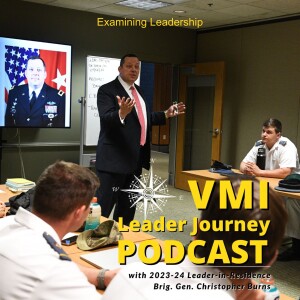
Examining Leadership with Brigadier General Christopher Burns
Summary
In this exciting episode of the VMI Leader Journey, host Major Catherine Roy invites Retired Brigadier General Christopher Burns, the 2023-24 Leader in Residence at VMI. Burns gives a succinct overview of his career journey, laying out potent leadership philosophies he’s learned from his time in the military and Wall Street. He delves deep into the distinction between managing and leading, emphasizing the centrality of clear communication and vision in inspiring successful endeavors.
Episode Transcript
MAJ. CATHERINE M. ROY, COMMUNICATIONS AND MARKETING MANAGER: Welcome to the VMI Leader Journey. I’m your host, Major Catherine Roy, communications and marketing manager at the Center for Leadership and Ethics. This podcast features conversations with VMI cadets, faculty, alumni, and VIP guests who come to post. Our conversations highlight leadership, and best practices and insights on leader development. On our show today is the 2023-24 Leader in Residence, retired Brigadier General Christopher Burns.
Burns was a guest speaker and Lieutenant Colonel Paula Tucker’s leadership class last year, which allowed us to invite him to observe and serve the Institute’s leader development programing. His unique relationship development style and insights on developing a ‘recruitable workforce’ have made him an invaluable asset as this year’s leader in residence.
Welcome to retired Brigadier General Chris Burns.
he’s made several visits to post, and we’re just very excited to have him. Not only has he been very useful, here on post, having conversations, engaging, members of our staff, faculty and Corps of Cadets.
But we’re having this opportunity to sit down and have a bit more of a in in-depth, targeted discussion on leadership insights.
if you can just introduce yourself to our audience. Give them a little taste of your background and, and, what you do now.
BRIG. GEN. CHRISTOPHER BURNS, RET. & 2024 PEAY LEADER-IN-RESIDENCE: Sure. Well, thanks, Catherine, and thanks for the opportunity to do this podcast. I’ve really enjoyed being in VMI and being a leader in residence and had, you know, I think learned as much from the cadets as they have from me, hopefully, and everybody else in the faculty. So, my background is pretty, pretty different in the sense that I started as a, private in the National Guard, in the artillery.
And then, kind of took the traditional path and what I would call the Connecticut mindset, which is you go to high school, you go to college, you get a job. And, came along the way, there was a little ad that talked about joining National Guard. And so I joined the National Guard as an E-1 when I was 17, between my junior, senior year of high school.
And then I was kind of off and running. It was a six year enlistment that were going to pay for college. It was the Cold War years. So, we kind of looked at it and said, you know, I always wanted to serve my country, and this is a way I can kind of do both. So, that was my initial motivation.
And then my grandfather had worked on Wall Street. I didn’t know what that meant at the time, but when I graduated college and, went through ROTC at the University of Connecticut, went through my Green Beret training, I started working on Wall Street. Didn’t realize it was sales but I quickly learned and adapted from that, what to do and became a very successful financial advisor and then moved into management at the same time, paralleling a career track as a Green Beret in the reserves.
And then when 9-11 happened, everything changed for everybody. I was working in the Middle East, with Fifth Group as part of my, alignment so I knew when we figured out that we were going to the Middle East, we’d be mobilized. So, I was there with Fifth Group, we mobilized with them, and then ended up […] Uzbekistan in February of 2002, and then pretty much every couple of years was deployed somewhere around the world
in terms of countering ISIS and all the various things we had to deal with from that side.
ROY: and you were still with the National Guard, right?
BURNS: Yep. Still the National Guard.
ROY: Okay. Okay.
BURNS: Yeah. So it was it was, you know, we mobilized for a year and then come back and, I learned a lot in that process. I learned the business principles. You kind of set the foundation up front. And then when I was away, all the success of all my hard work would be there for the person who was who took over for me.
And then, yeah, I’d come back and rebuild it but it was a pretty crazy time. And then I got the opportunity around midway, I think around ‘04-’05 to help develop a high performance coaching program for our company. And that’s when I really got the leadership bug. I had it a little bit before that because I had run Officer Candidate School, but I, I didn’t realize until I got into high performance coaching how effective it could be.
So that’s where my passion for leadership and coaching comes from. And and as you know, working with me, I’m an avid reader in that space and constantly looking at kind of where we need to be from that side. So that’s really where my passion came from. So combination of my military background, my executive coaching, and then just being a successful financial advisor and then moving up through the ranks of Wall Street, kind of gave me that drive to to keep going.
And then in 2010, with the mortgage meltdown, I came on active duty and, they kept giving me jobs. I couldn’t say no to. So I stayed until I retired, as commander, commanding general for Special Operations Command North, which was a tremendous honor for me.
ROY: Well, it’s super impressive, but, of course, that’s kind of what we look for in a leader-in-residence is somebody with these, not only the theory and the study, but the very practical…. you were in the trenches kind of background and experience. I think that that for our cadets, is a is a sign of some serious gravitas.
BURNS: Oh, you. I think I was in the right place at the right time, so. Yeah.
ROY: Right, right. So it’s interesting that your career kind of flexed in and out of the military duty and I wonder, with all the leadership reading that you do and your high performance coaching, would you say that you have a good idea or your finger on the pulse of trends, or, dare I say, a little bit of a futurist as to what are the coming needs for leadership?
And if so, can you talk about that?
BURNS: Yeah, I think the the trends are a little bit challenging because we’ve been in a tough economic cycle for 20 years since 9/11. Yeah. So one of the programs that gets cut on the civilian side, and I talk to the cadets about this, are your leadership development programs. So what you have on the corporate side is you have managers who are getting promoted from kind of what we call tactical management.
You’re working at that office level moving up, but they’re not getting that leadership training. And unless you’re someone who looks to keep learning, you’re not really catching up on that. So you have a lot of managers who need to become inspiring leaders but didn’t really get that training. Now the benefit is the military. That’s part of our core value system.
So, just like we run Officer Candidate School, VMI, you know, the Institute is focused on leadership, leadership development. And that’s really what it’s about. And that’s the strength I tell the cadets every day when I sit with them is that you’re unique value proposition is you’re going to be able to be an inspiring leader, because as you move from thinking about I just me, myself, who I am and then transition to a we mindset as you develop your leadership philosophies, you move into your leadership roles.,
you also have to inspire and that helps make for a very effective leader, both for those cadets who are going into the civilian world or into government agencies, as well as for the ones going into the military. But there’s a tremendous gap, because of that lack of leadership and development where you have people being more of a manager than a leader, and you can feel that, when you look especially in the corporate world, there’s just this kind of lack of inspiration and a little bit of apathy among employees because you’re just not inspired by by leaders, and it’s not their fault.
They just haven’t been developed, due to to the cutting programs, which is unfortunate, but, people tend to cut developmental programs when times get tough.
ROY: Yeah. You and I had a previous conversation and you were talking about how also the impact of the rapid technology growth that we’re having. and we’re not able to kind of my word, marinate in these leadership principles and ideas as we did post-World War two through the Cold War years, to say and and allow those people the time to develop their leadership, insights and principles and then become those inspiring leaders.
Do you have some insights on how managers might better transition from tactical? I call it like the moving from the production side to the leadership side.
BURNS: And I think the biggest thing is that and it’s the scariest thing, which is you have to realize your success is no longer based on you. And when you’re a manager, you can manage your way to success. And a lot of that is kind of centric on you and how you manage and what you do. Whereas when you’re leading and moving up in that, elevation, operational, strategic, you have to rely on everybody else, which can be very unsettling because you’re going from, you know, me as a manager, I can kind of manage this and I can, you know, through sheer force, kind of get to where I need to be.
Whereas when you’re leading, you have to inspire others to be the best versions of themselves, which then makes the organization greater. Now the scary part, which I always talk to the cadets, is, depending on the size of your organization, that can be anywhere from, you know, eight to hundreds that are all raising that organization, that you hope you can give them a common direction to be successful as a leader.
But it’s no longer about your success. It’s about you inspiring them to be successful and see the vision for the organization and driving.
ROY: That was going to be another question I had is, do you think that some of these managers that are struggling or, you know, just not quite getting it, would you say that they have a lack of vision or maybe a lack of ability to communicate a vision?
BURNS: Yeah, I think it’s it’s that and I’ve seen that over and over again. It’s amazing. at my company, I was working for, a year and a half ago, I was coaching through a, standard of care for our clients. And we had the the people talk about what their vision was, but I didn’t realize that their staff had no idea what the vision of these people was.
And they’d been working for them for 20 years. So it was incredibly powerful for the staff to get the vision from the leader, because then they were able to innovate and find solutions, say, okay, this is who we’re focused on. Let me do a better job in my role now that I know what the vision is. So yeah, that’s a great point.
I think a lot of people underestimate the value of articulating the vision to people, and they just assume everybody has it.
ROY: Yeah. Like reminds me of, I can’t remember quite how the saying goes, but if you aim for nothing, you’ll hit it every time. Yeah. Would you say that this also involves, again, going from that tactical management to strategic management requires a lot of, delegation and there’s that aspect of trust that has to happen?
BURNS: Yeah, yeah. Trust is is critical in the kind of the four elements I would say for a successful team are trust, communication, process, and accountability. And trust and communication are critical for a leader to have that so that way, that vision comes out. You know, what we call commander’s intent in the military comes out. And kind of having that road that everybody knows they need to move along.
And as you move up in the organization, you have less and less control, if you will, because you have more and more people under your, you know, supervision or command, which means you have to be much more effective as a communicator, because you’re going to have to give them that vision and that common road to kind of stay on, to develop and grow the organization.
And that can be hard sometimes if you’re not communicating. And we we have a tendency in society today to think, oh, we, you know, we don’t need to communicate as much as we do. And the common question that’s always been asked, which is a great one, is, do you ever feel like you’re over communicated to. And most people will say, no, but we have this natural tendency of, oh, no, too many meetings, too many this.
And we’re not communicating. But if you can communicate more effectively and also using different mediums because you know what you find there, I’m sure you see this, Catherine, with cadets, they love texting, you know, whereas, for me, I like a conversation. So I have to use different mediums to reach the population where they’re at to be an effective communicator, like the podcast. This is something, you know, a couple of years ago I would never thought of doing. But it’s an effective way to reach a certain amount of the population as we go forward.
ROY: Yeah, we definitely use those principles all the time in, in campaigns or marketing, reaching all and it, it makes your workload kind of grow exponentially along with the technology because you’re not creating 1 or 2 tactics, you’re creating a multitude of them. Thank God for repurposing, is all I can say.
It’s like I used to say when I, when I worked on Wall Street and I would train new advisors around marketing. I would say everything works a little bit. There is no magic bullet. You know, in the old days, you can have this very pithy tagline that would drive, you know, revenue. We don’t have that opportunity anymore now.
We have everything works a little bit. So to your point, you have to constantly be innovating and expanding and thinking differently on how to approach things and look at what the effects are.
ROY: Yeah, yeah. We also talked about, previously, some of your favorite leadership books, and one of them that you mentioned was about, Strengths Finder. And so if you could talk a little bit about why that’s one of your favorite leadership books, what people might find if they read that and then talk about one of your strengths being a ‘Woo’ because that’s, you know, what is woo?
That sounds romantic, but it’s not.
BURNS: It’s. Yeah. So Strengths Finder, I find to be probably one of the most powerful tools out there in terms of an assessment tool and helping an individual and organization be successful. And the primary reason is because it’s focused on your strengths. So if we go back to this idea that keeps me up at night, which is we’re moving faster and faster and faster, so we’re innovating.
We need to be able to adapt and change all the time. So when you think about that, I need the best version of you. Each person who works for me and the best version it is, they’re working to their strengths. And what Strengths Finder does is it’ll assess and tell you what your top five strengths are, and then the idea being that if I do those things, I’m going to probably operate over 100%, which as the world moves faster and faster.
And if I can have you doing that one, you’re going to be happier because you’re playing to your strengths. Two, you’re you’re going to just be way more effective because those strengths are your native geniuses. The things that you love to do, share and be passionate about them. And if you’re passionate about them, you’re going to naturally be innovating and thinking all the time about how do I make these strengths mine even better as I go forward?
And then that allows you to go and grow from there. And for cadets, it’s incredibly important. I just had this conversation last week in the class, because what you don’t have yet is a lot of experience, but if you know what your strengths are, then you can kind of focus on your experiences and then that you have as a cadet around those strengths and start to build confidence.
But Strength Finder will definitely give you that confidence, because if you know what your strengths are and then you reflect on some of the things at the institute that you did that really were your high points that you think memorably about, you can see where your strengths float in those, and then when you sit down, either with your first commander or you sit down with, a manager, when you get hired or do a job interview, you can tell stories on how those strengths applied for you and how you were able to effectively kind of drive outcomes based on those.
And that’s critical. And, for me, Woo is one of those strengths that I love because it’s about just talking to people you don’t necessarily know, and I just find people interesting. So I love just talking to a lot of different people, and I’m the person who will go to a cocktail party, never eat anything, and just kind of work the room and then, really enjoy myself in, in part of what I talk about in Strengths Finder 2.0 is where you draw your energy.
So for me, I love talking to people I don’t know, and I draw a lot of energy from that. And that’s also important to Strengths Finder how do you keep your energy levels up? Yeah, looking at those strengths. So for me was one of those things that really.
ROY: Well, we certainly all benefit from you having that kind of, character and strength.
We’re talking about the leadership in organization’s class, and that’s where they explore all kinds of leadership theories and then do some studies and some sections actually create, a leader profile about themselves and they take this, StrengthFinders assessment. Would you say that that closely falls in line with or can evolve into a commander’s intent?
BURNS: I think it can, from the sense that for the commander, if they use Strengths Finder and they look at their Strengths Finder, then what they’re doing is this are shaping their commander’s intent. Their mindset is, I’m getting the best version of each person to be the best they can be by looking at their strengths and then also theirs, and kind of bringing them together to kind of achieve those goals and objectives.
And then also, if for some reason there’s a gap in there, because diversity of your strengths is critical for an organization. So you don’t want twenty […] because them are all going to just shake our head and go, oh, that’s great. That’s the best idea I’ve ever heard. You want those diversity of strengths to help you get to a better solution, which is really critical.
So so the idea is if I can create my commander’s intent based on the best versions of each person I have, and then if I have a gap, go find some people to fill that gap or just put in processes in place to make sure I kind of think about those things we don’t necessarily have, because ideally you get who you want, but that’s not reality.
Sometimes you’re gonna have a gap. That’ll help you with the commander’s intent, and then you optimize your organization to be the best they can. They increase morale and, a sense of accomplishment and drive, which is really important.
ROY: I’d like you to talk a little bit more about how this leader profile strength finders relates to your strategy of developing recruitable subordinates and tie it into that 80/20 rule.
BURNS: Yeah. So I’ll take the second part first. So the that part goes to what I call my command philosophy, which is I know that we have a great organization if the people in my organization are being recruited to other parts of the organization. So there’s, there’s two elements to that. One is that I am honored that they’re being recruited because it talks to the culture of the organization we have and not the leader, because if it was just about the leader, you wouldn’t have that.
And, Liz Weisman has a book called multipliers, which talks about the ministers and multipliers, and that’s what a dimension does. It’s all about them. But to be recruited means that the culture of your organization you’re leading is naturally a place where it’s developing future leaders for other parts of the organization. And there’s a great book called What Got Us There Won’t Get You There.
And the whole idea was for Marshall Goldsmith was that you have to evolve to where the success of the organization is beyond where you are. So you want to help everybody with everything all the time, whether it’s your talent, your ideas, everything. So my philosophy has always been, I know that we have a good organization if you get recruited away.
And that’s what I focus on. The other thing to be careful of with young leaders is, and this is where you can see it as a trap sometimes is the leader won’t let their subordinates develop, so they won’t send them to school because they’re just too valuable. I can’t lose them. And that’s a very I-centric mindset because if I’m trying to get the best version of everyone, it’s for the organization, not myself.
So I want to have those people develop, have those opportunities, do those things and move on. Well, I miss them, absolutely. But if I’ve done a good job developing everybody in the transition, someone will step up from that side. But we have to be very careful that we don’t get selfish with very talented people. We want to have them keep growing.
So with the the Pareto principle, which is 20% of what you do is responsible for 80% of your success. That’s really the heart of what coaching is about. And figuring out, okay, what am I really good at? And then doing more of that. So what I coach people, I try to identify what are those key things that you’re good at and then have you do more of them.
And that’s how I’m able to have people be more successful. And when you go into the organizational aspects of it, it’s figuring out, okay, what are we good at? And then what are the gaps we might have that we need to go from good to great on and kind of executing to those within that 20% and then staying focused on it, which is critical from that side.
But it’s a powerful, very powerful tool that I use with very successful people, because we always assume if you’re really successful, you know, you must be working great. And I’ll have them just write down every hour what they do. And I’ve always had to back. Yeah, I always had them come back. They’re like, I God, I can’t believe how much time I wasted.
And that’s one side of it. The other side of it is think about how comfortable it is to know that these are the things that are most important. So if I come into my day and know these five things are the things I need to accomplish every day, and everything else is interesting, but it’s only going to be 20% more of the success. It just makes you more effective as an individual and then as a leader as well as a leader. If I know the 20% things I need to focus on that allows me to do that. And I also do it for work life balance with families in the military as well as other ones. Because if you know that 20% for your relationships or other things that allows you to get things done, and focus very quickly.
And if you have to leave or whatever, you know, you get the most important things done.
ROY: So what kind of, assessment tools, if any, do you use to identify the gaps? Would you say?
BURNS: So what I do is I do a strategic assessment of the organization, usually over the first 45 days. I interview, the leaders and then also the people who work, in various aspects of the business. So it’s not just the leaders because they’ll kind of give you the company line. I want to talk to everybody. I’ll also look at industry trends and say, okay, where’s this industry going?
So, like in my previous job, it was all about the client experience. for a lot of reasons, regulatory, obviously the client and some others. So looking at that and then looking at kind of where we’re at, doing your classic SWOT analysis is important because you need to understand those things. And a lot of a lot of industries are not looking at the macro trends, you know, because you’re going to have peaks and troughs, you’re going to have regulatory things come in.
You’re going to have economic cycles. All those things matter. When I kind of look at things, to figure out where we need to go and then getting that unified purpose, which is that trust and communications we talked about where we all are on the same line with that commander’s intent, that vision then allows us to execute and stay focused.
And the key thing is a leader is not to change the message. You know, success is defined by your people knowing exactly what they need to do every day. And if you keep changing the message, then they don’t know what to do. But if you stay focused, they will execute a very high level and then innovate around whatever that vision is.
ROY: So, one of my top leadership books is one by a lady named Denise Lee Yohn, and it’s called Brand Fusion. Have you heard of her?
BURNS: I’ve heard of it. Yeah.
ROY: Yeah. And she talks about operationalizing your brand. And so when you talk about taking your, you know, using your vision, leveraging that so that everybody knows, you know, not to change the message. What is our message? I, I like her work and how she, how she builds that into the operations. yeah.
You’re going to be giving the keynote speech at the Superintendents Annual Leadership Dinner. And while I don’t want to cannibalize your content for that, what topic will you be will you be talking about?
BURNS: So I’m going to talk a lot about how VMI is a crucible for leadership, innovation and adaptation. And the idea being that, you know, what keeps me up at night when I think about the world is it’s innovating faster and faster.
So we think about the technology all the time and go, wow, this is amazing. You know, I’ve got an Apple Watch, I’ve got this, I’ve got that.
Well, the thing is, you need leaders who can adapt to those changes and make sure they get integrated in. So a simple one is if we go back to COVID you know, you had Zoom, then you have Microsoft Teams. And a lot of people didn’t learn the technology because it just kept coming. And a leader needs to make sure they inspire their people to do that.
And what’s critical in today’s world is that we have to help those leaders become that type of leader. Because when I was going through, my initial leadership training, you had time to make decisions. and the problem is, your brain is designed to survive, not thrive. And that’s the hard part about today’s leaders versus when I started is I could sit on a decision for a period of time and then make it literally months later and not have any consequences be, against me.
Whereas today leaders have to be much more dynamic and leaning in, because, technology’s moving faster, so they need to make sure their subordinates have it. You know, it is, a nightmare scenario for me is a technology gets rolled out to, to a unit, a military unit. And they’re so busy and they’re so comfortable in the technology.
They have. The leader doesn’t create a change in the status quo and say, no, we need to learn this new technology. And then it leads to them having a setback on the battlefield. And it’s the same in the corporate world, because in the corporate world, you have to constantly be evolving. And if you miss, then that means you’re going to have to make a bet in the future because you didn’t come up with 2.0, now you’re going to bet on 3.0.
And that’s a risky challenge. So leaders today need to be constantly leaning forward. And there is no, you know, ten year success of a product anymore. It’s literally a couple of years. And then you better come up with a new version. So, you know, I joke a lot about the post-it note because that was a great thing, right?
We still use it. but you can see tablets and other things come in in younger generations. Don’t use those things. But these cycles change. And there was a great example last week, 23 and me, was this, you know, DNA thing that was really hot was $6 million company, and now it’s zero because it didn’t figure out what is next.
That comes after that. and that’s the reality we live in. So we need leaders who can do that. And VMI is a place where you have that laboratory to give them the the opportunity to constantly innovate and keep changing and thinking and practicing while they’re at this institute and then also go out into the civilian world or in the military and be that successful leader, because they know that they have to keep changing and innovating and also yet have the principles that VMI stands for.
ROY: Is there such a thing as future-proofing, or is there just, you know, a particular mindset that, that helps one to keep evolving?
BURNS: That’s a great question. and I do a lot of wargaming and and simulations, as in my other role as a senior advisor, for the Regal Warfare Center. And part of what we talked about is the elasticity of the mind. So just thinking about different opportunities and opens you up to thinking about them. Whereas if you don’t do that, you don’t have that elasticity of thinking.
So, you know, Bill Gates, who is Secretary of Defense, you know, once said that you know, futurists have never been right. But I don’t think it’s so much about them being right. It’s it’s about creating a mindset of thinking about constant change and being aware of that. And as you move up, you know, as a strategic leader, my role was to think out 3 to 5 years on where the organization needed to be. And as a tactical leader, it’s, you know, weeks out, because just the nature of tactical versus strategic.
But also, the compression of that is coming to where now, I even say at the strategic level, it’s like 18 months because everything’s moving faster, faster. So for those leaders, that’s hard. That’s really hard. And, you know, I talk about Ukraine with the cadets and the special operations task force commanders, which are colonels and special forces.
I’ve talked to three of them or four of them at this point, and they all say the war changes every 60 days. So as a leader is thinking about that is, you know, is a challenge. So the it’s it’s one of those things we just have to train people to be more and more, agile and leaning in on.
ROY: And is there a difference or can you describe the difference between having an agile mindset, maybe a resilient mindset and change management?
BURNS: So agile is is really about getting it out and executing it and developing and innovating. So kind of going back to Strengths Finder, I’m a learner and an input. So that’s what I do. I look I develop that plan, I get that plan out there. But then I’m constantly changing it because I wasn’t looking for the perfect plan to come out.
It’s more of that kind of agile concept of it’s 60%, but the field is going to tell me what I need to do to to kind of upskill it from there.
So a resilient mindset to me is about the ability to handle the pressure of changing all the time and then also being comfortable in, in taking those risks, which is really about you being resilient and realizing, okay, everything’s moving faster and faster, but it’s also about leaders looking and saying, and I always said, this is part of my leadership philosophy.
We’re moving fast, so we’re going to have an error rate and a key with that error rate is that we learn from it. But for us to be resilient, I can’t put pressure on my team to where they feel like, oh gosh, we’re a zero defect organization. Because when that happens, then nothing happens. And that’s unfortunately what we have in the past in the military, we have this kind of zero defect mentality, which led to kind of more of a stalled that organization and development.
And then change management is really about, again, thinking about where do we need to go, what do we need to be thinking about to get the best versions of our folks and realizing it’s not static. They are constantly evolving. The technology around them is evolving. That will make them better. And then the the trends and industry are evolving.
So you have to constantly have this change management mindset of always going from good to great and not thinking, okay, we’re good, because if you think you’ve made it and you’re maintaining the status quo, the reality is you’re going backwards. You’re just not seeing it because it’s very slow and eventually you’re you’re going to get in trouble and you’ll see that it might be too late for you to recover.
ROY: Can we train for resilience?
BURNS: We can, because it’s it’s one of those things that’s actually kind of fascinating. I’ve been doing a lot of reading on this where it’s it’s kind of like parachute jumping, you know, the first time you jump out of a really scared house. Okay.
And then the more you do it, the more comfortable you get. So we can train various resilience scenarios and then also it’s key for the leader to, to basically develop their folks and not look at something is oh my gosh, I can’t believe you did that. That’s such a big mistake. And put pressure on them instead of looking it as a learning opportunity to develop the organization.
And resilience is critical, because for us to be able to move forward in the future, we are going to make more and more mistakes because we’re moving faster and faster. So it’s the ability to to snap back immediately and get back into the game. And that’s where that resiliency is really going to come into play.
ROY: It’s interesting that resilience requires a certain error rate. How do you determine what success looks like, how do you determine what is a successful error rate?
BURNS: Yeah, that’s a great question. And I think it’s one that we are coming to grips with and realizing that failure leads to success. So there is a person I used to play golf with who is a four-star general who moved up in, actually was, in a pretty senior position, and we would talk about failing faster.
And the idea of failing faster is that the faster you fail, the faster you get to that next breakthrough in innovation. And that’s kind of how I look at errors, because if you’re on the cutting edge and you’re pushing forward, you’re going to have those errors and then those errors can lead to learning opportunities for you then to to advance from.
So the idea being that if I don’t have errors and I’m probably not taking enough of a risk to grow the organization to the next level, and that’s critical. And it’s the same. I always talk about friction in organization, and if you don’t have friction, your organization is a growing. And it’s not that you don’t want everybody like each other, but it’s the idea that organizationally we’re leaning in and you don’t make it personal, but you just talk about how do we challenge the status quo, where should we be going next to kind of create that friction?
And I look at errors that same way. We need to have those errors to be able to be successful. And I’ve had the opportunity a couple times to talk to biographers, and that’s one of the things they look at in developing leaders. You know, you have to have mistakes to learn from, to grow as a leader in the ones biographers are always worried about are the ones who’ve had no mistakes, who think they’re perfect.
Because that is a scary idea as well, because then you’re you have blind spots. You don’t realize, so how having errors, how you treat those errors and how you grow from them are critical for you and your organization.
ROY: So, I like that was another discussion we had.
As a team were actually in the season right now, we’re in February, of looking at what will be our leadership theme for next year, and then what will we delve into for our leadership conference. And so we talked about, you know, failure is a fairly big buzzword in industry and business.
It’s been out there for several years now. And we were talking about, you know, maybe we don’t call it failure, but we call it learning mechanisms, right? I mean, that’s really what you’re talking about. And I remember in college we talked about experimentation being a hallmark of intelligence. You know, that if you see a child trying to learn how to walk, it’s experimenting with its balance to learn how to walk, how to talk, so that was just a just a side note of conversation we were having.
BURNS: Yeah, it’s a great point because, as I build plans for organizations to that Pareto principle, we’re making a hypothetical experiment with a line of effort, and we put metrics both qualitative and quantitative against it. But I always tell people, don’t get wed to your plan. If the metrics are showing that your idea, what you thought was a 20% thing that would lead to 80% of your success isn’t working, then change the plan.
It’s not a failure. The metrics allowed you to say, hey, this isn’t working, let’s try something else. So you have to have that experimentation mindset as opposed to I have the best idea ever. And then you just hold that forever. And at least the failure instead of using it as an opportunity to change.
ROY: Yeah, yeah. It reminds me of somebody sent me the book Who Moved the Cheese or Who Moved My Cheese?
BURNS: That’s a good one.
ROY: So we’re about out of time, and, I think we’ve got we’ve gone over some really great, content this conversations with people who operate at your level are just so fascinating to me, because the episodes and the discussions we have are just chock full of meaty information and takeaways. Do you have any final words? You again, you’ve been here for a while.
You’ve kind of observed our leadership, methods and the results, having conversations with cadets. Any final thoughts or insights on the experience you’ve had?
BURNS: Yeah, I would say one, it’s it’s been incredibly humbling for me. And I tell the cadets all the time, I joined back in 1983 as an E-1 and every one of them, which is striking, is I ask, now were born around 2000. And so they they were born in a time of conflict after 9-11. And they’ve grown up in elementary school and middle school and high school.
And it’s still made a decision to serve their country, our country, either in the military or in other agencies or as a leader. And have come to VMI. So that’s incredibly humbling to me because when I joined in 83, as I mentioned, I wanted to serve my country. It also gave me an opportunity to get my college paid for.
And I was very sober in the reality of, I have to go, I have to go to war, I will, yeah, but they joined during a time of war. And, I always tell them, you know, this is as much as I’ve done an accomplished in the military, I don’t know if I would have made that decision because I haven’t been put in that space.
But that’s a much bigger decision than Chris Burns saying, okay, I’m going to join for six months, six years and serve in the National Guard. So I’m very proud of them and humbled by their commitment to serve and then their ability to be on the cutting edge of leadership innovation as the world gets faster and faster in figuring out how to do that, to me is incredibly exciting.
You know, as I said, you know, and help and advise and do all these things there at that tactical level, having to kind of make these changes faster and faster. So, that is exciting to me to watch them as they learn, as they develop. And just like with Officer Candidate School, my greatest joy will be when I run to, run into them at, base someplace and they’re a captain or a major, and they tell me about how what they learned at VMI helped them to be very successful as a leader in the future, whether it’s in the corporation or in the military. So that’s to me. But it’s really exciting about where they’re going and the future they have.
ROY: Well, I certainly hope you have plenty of those opportunities, and I hope that VMI, continues to stay in touch with you and, and leverage your insights and expertise. I know I certainly will. and so I’ve really enjoyed our time today. I could definitely go on for another couple of hours, but we’re not the Joe Rogan Show.
But I thank you so much for your time and for all that you’re contributing to, examining what we do here at VMI and your insights and conversations you’ve been having.
BURNS: And and thank you to Catherine and the entire team at the Center for Leadership and Ethics. It’s been an honor. And and I love the the workshops. You guys do amazing job which is how a and everybody coming to one of your, workshops. So it was fantastic. So thank you. Thank you very much.
ROY: All right. Thank you very much. And we’ll talk to you soon.
We’ll use his memoir, Fire in My Eyes, as a guide to explore what inspired him to write a memoir and the process of the writing. Plus some leadership lessons that go beyond the pages of a book. Whether you’re a student leader, athlete, or just curious about leadership, this conversation will inspire and motivate you. So grab your headphones, lean in, and join us for this enlightening exploration of leadership with Brad Snyder.
Let’s dive in.
Welcome, Brad Snyder. Thank you so much for being a guest on today’s episode of the VMI Leader Journey.
BRAD SNYDER: It’s my pleasure. Thank you so much for having me.
ROY: I have a lot of notes here, and as we just reviewed, there are a lot of things I’d like to get into. First of all, how has your visit been so far? How have you been here for the whole two hours?
SNYDER: It’s been spectacular. It’s always a special treat to be able to visit somewhere that has such, deep and intertwined history with our great country, as VMI does. And I’ve, you know, always had a stout appreciation for this institution but never had the opportunity to come and visit the campus. So I’m really excited to be here now.
ROY: Excellent. So well, again, we’re just super excited to have you here tonight. I want to get into first, the book that you wrote, which is titled Fire in My Eyes. I have read it cover to cover. and you co-wrote that book with Tom Sileo. I will just tell our audience that it’s an excellent read.
I highly recommend reading it. just for the human interest stories. But then we’ll talk a little bit later in the podcast about some of the leadership lessons to gain from, reading the story. So, first of all, I’ll also say that part of our Courageous Leadership speaker series that what we are also doing is giving away a copy of the book with each talk.
My overall impression is, having read the book is I was very impressed with the authentic voice and several instances you talk about, failures and struggles, which I think will be an inspiration for the cadets. it was certainly inspirational for me, even so, a couple of questions about that. Number one, in your own words, why write a memoir?
SNYDER: The book covers aspects of my childhood up to the decision to go to the Naval Academy, my experiences at the Naval Academy, and then, my military experience. But then most of the quote-unquote story revolves around the year between my injury in September of 2011 and then my, ability to go to the Paralympics a year later so that that year is a real consequential part of my entire life and kind of the focus of the book.
Shortly after I competed in London, that story kind of went out there, and I got a lot of invitations to come and speak at various places. The Naval Academy, being one of the Naval Academy Leadership Conference, is one of the first places I spoke. And at that point, I didn’t really fancy myself a speaker. I didn’t really know what to put into a speech, and I didn’t really know what to say.
And I sort of would get up on stage and bumble through a bio of myself. Hi, am this guy. I did these things and here’s my story. What what questions do you have? and for whatever reason, that resonated with people. People really liked that. I was just kind of sharing my perspective on this unique set of experiences.
I got better and better at sharing the story, got more and more invitations over a span of a few years, and frequently the suggestion would come up like one of the incredible story. You know, you’re this incredible person and you should really write this into a book. And then I would go and do more speaking and they would say the same thing, and they would introduce me as things like American Hero and, you know, resilience figure and this and that.
The other thing, and, the way I was introduced did not feel like me, didn’t feel like who I am, who I aspire to be. Certainly, I know we all aspire to be heroic in some sense, but for someone to actually say that in my introduction was very unnerving and especially reflecting on my past. I haven’t always been hitting homeruns, you know, like I haven’t always been winning gold medals.
I have a whole bunch of things that I’ve screwed up along the way. And I thought, you know what? For anybody who’s calling me a hero, maybe they don’t know the whole story. Maybe they know all the good stuff. Maybe they don’t know the bad stuff, too. And for someone to call me a hero, I want you to know the whole story.
And if you read the whole story and you still want to call me a hero afterward, then great. But I wanted it all to be out there, and there’s a lot I can’t share about that journey into blindness. And beyond that, I couldn’t get out in a 45 minute keynote, and so I agreed. I thought, yeah, writing a book would be a good idea.
I spent a number of years trying to write the book. I had really bad insomnia after my injury, so when I couldn’t sleep at night, I would just stay up all night writing chapters about this chapter’s about that and trying to sell the pitch to a couple. Publishers got told, ‘thank you for your service, but no,’ a bunch of times it turns out that Tom Sillitoe is, a childhood friend of my cousin.
So I, we actually had a familial connection. He had just written another outstanding book called Brothers Forever, which is about two Naval Academy grads who are now buried in Arlington together. I highly recommend that book. but there was a very natural partnership there. I had actually already had a near complete manuscript, but at least so far as I could see, when I when I started working with Tom, I sent him the manuscript and he promptly deleted probably about half of it, which was a blow to my ego, but maybe recognize that I really didn’t know how to intentionally put an arc together.
I had written a bunch of chapters about stuff that nobody would really care about. And then when I read back with Tom and edited, there was a lot of power in sort of the Mark Twain quote. If if I had more time, I would have written a shorter note, and by editing it down, I think it ended up being a lot better than it was.
ROY: Yeah, yeah, it’s similar to, Oprah Winfrey likes to say reading is rereading. Yes. And certainly writing is editing.
SNYDER: That’s correct.
ROY: I have definitely experienced that. So why might someone want to read this book? Let’s give you your best plug for reading this book.
SNYDER: I think, and I, I don’t know, I won’t presume to be the reader, but I can say what I was trying to achieve with the book was sort of an explanation for my mom. my mom didn’t have a ton of background in the military. I don’t think she was ever fully aware of the nature of what I was doing in the military.
Both because of her lack of connection with the military, but also, because I intentionally withheld information, I guess I, you know, I didn’t really want my mom to worry about where I was going or what I was doing. Right. And I knew what I was doing was risky. And so I would sort of knew from my as it to my mom.
And there’s a I don’t know if it’s in the book or not, but I, my mom was really mad at me in the hospital. Her because people would visit me and some books. Somebody came to ask me about particular aspects of what was going on in Afghanistan. And of course, I was in the hospital and I was after injury and I was all doped up.
So I was very honest. And afterward, my mom kind of growled at me. I thought you were passing out candy to children, which is what I would frequently tell her on the phone and say, what do you do every day? Oh, well, we’re, you know, we’re out in the villages, and I give candy to children, you know, hearts and minds and that sort of thing.
And she seemed to willingly accept that at the moment. But I think, after the fact, came to recognize that what I was doing was very different than what I had shared with her. so, you know, kind of keeping my mom is the target audience in mind. My mom’s not going to get a lot of military jargon. She’s not really well versed in, are interested in the, like, the grander strategy of it all or counterinsurgency or international relations.
I think what my mom wanted to understand was what was my experience, what was was I afraid, what was I trying to do? What were all my friendships like? Was it difficult to be away from family? was I scared when I got hurt, that sort of stuff. So I, I, I, I was also an avid reader at the time, as we all are probably of military memoirs.
I’d read McChrystal’s book and Petraeus’ book. And, what the what I thought in all of those military memoirs. One, they’re all too long BS. They’re all laced in jargon. They’re all.
ROY: We are very.
SNYDER: Intentional about trying to situate themselves in this really big history. What I felt like was missing in the sort of the war memoir, genre was just like, just for me, like a my experience is just some yokel from Florida who thought it was a good idea to serve my country. I went and did this kind of crazy set of things.
I wasn’t trying to explain it all. I wasn’t trying to have a comment on whether we should have been there or shouldn’t have been. There was a good was it bad? Was it whatever, you know, was and this was my experience with it and it shaped who I am. And I think you should know about it. And that’s kind of what I was trying to achieve.
ROY: I would say you definitely accomplished that task. and certainly, I think it does give a fresh perspective in that, military genre, space. And and you didn’t have to explain your political reasons for whatever decisions happened with our military. So, so, so that is I think that did free you up to share a more relatable, authentic story.
Talk about the process a little bit. So you did mention and touch on that a little bit that you had written this fairly long memoir that 50% just got slashed. and I would say that, Tom Sileo’s work on this did help. What I noticed was the reuse and repurposing of certain phrases that did help connect stories and chapters together.
Yes. What else can you talk about in terms of the process of writing the book?
SNYDER: Yeah, I think from my perspective, my approach was like a scrapbook. I could think of an image in my mind and write the context of the photo. And that was if you flip through a set of photos of my background, that would sort of be how the chapters were arranged. And this memory was a really cool memory and a really cool story.
Let me tell you about it. And this is a really important part of the story. But it was very fragmented. Not Tom did a really, really good job of adding a lot of structure, as you alluded to, binning different thoughts and photographs into cohesive chapters that all matched a general arc from being a child in the Witchy-Waky Springs all the way up to being injured and then to the Paralympics, he added a lot of flow, and it made it a lot easier for the reader than what it would have looked like if they even had read the manuscript I submitted to Tom, which was again, like a scrapbook.
The process after that, I will say, as, as prideful as I was in the manuscript that I sent to Tom, there were big chunks missing, and it was because it was all the hard stuff to write. For example, everything in the hospital for me was hard to write on because it’s a memory I don’t necessarily like going back into.
I was really doped up. I was first newly blind. everything was very just massive in that set of memories. And it was hard to go back into that space and as you said, like be authentic about it. I could have said, you know, here’s the facts and figures. Here’s what happened. I was in the hospital between September the 11th and whatever else, but I actually wanted to go back into that space and understand what was it like with my brother.
What was it like with my mother? What was my head space? What was I afraid of? What was I excited about? What was I? What were my true honest feelings? and, you know, you have to go back into that, but you had to be in that memory and then describe it. It was just a really hard thing to do.
But I would say it was extremely cathartic for me to go back into the blast and go into that memory and, and search around in there and understand what happened to me. what was my perspective and what was the perspective of my friends who are on the battlefield, what it must have been like for them, right, to hear the blast and to run over to me and see me all messed up and be worried about that? Yeah.
To think of my mom getting a call at 530 in the morning to think of my sister having to fly to the hospital and, you know, go to the, the airfield at, Langley Air Force Base and know that I’m on there but not be able to talk to me. And these are all, like, really heavy memories that I had to go back into to write about.
ROY: And did you just write those stories or did you have, like, an interview, like a moderated interview with Tom Sileo or with a phone conversations?
SNYDER: I think the depth of my thinking is always best when I can sit and write it right. So, I wanted to go into this space. I wanted to write what I thought was important, and then I would submit it to Tom, and then Tom would come back in a lot of cases with most of the chapters. It was an editing, like here, I screen through this, I fix your typos.
I corrected a couple sentences. I added some detail where you needed it. There were especially with big chapters like the Blast, or hospital chapters. There was more of a where are you going with this section? And tap in advance was like an idea that came out of talking about the rehab process and me sort of sharing with him this idea of these concentric circles and then I don’t know who it was, said it, but it was in conversation that it dawned on us like, oh, you know, there’s this really neat connection between the metal detector and the cane and this idea of clearing for each footstep.
You know, it’s just like life, you know, you got to, like, know what you’re where you’re at before you can take a leap somewhere else. And so you have to be comfortable and then you have to take a risk and you have to be comfortable. You have to take a risk. And that cycle repeats over and over and over again.
Oh, what a cool idea to rope that into a broader concept. you know, a leadership lesson that follows on. So I think they all started with, you know, I am the subject matter expert in those memories, right? I have they’re my memories. Right. So I wanted to go back into those memories, pull out what I thought was important.
And then Tom did a really, really good job of pushing, nudging, and shaping all of those ideas into being situated within that broader arc.
ROY: Yeah, it sounds like he was trying to help you be very purposeful. Yeah, in what you were trying to accomplish and keeping it your story exactly at the same time, so excellent job there. I couldn’t help but wonder as I read the hospital scenes, particularly. You talked about your mom’s voice being the first thing that kind of, that you felt you could trust in this bizarre purgatory. And that that helped you come out of this coma state that that they had put you in. A lot of times you referenced those instances where you were not conscious with the term dreamscapes. can you talk a little bit about that?
SNYDER: Yeah, yeah, they were very strange. my experience throughout that time was, though, you took your normal perspective and your normal perception of time and memory, and you folded all up and you tied it in knots. Time moved at different speeds. My memory was all odd. and, for that first week especially, I didn’t always recognize that I wasn’t seeing with my eyes things would appear in my mind, that were generated by real stimulus.
So, sounds I was hearing with my ears in the environment around me would reshape themselves into different realities in my head. and look in my keynote. I’ll make this joke later. I kind of as a joke. I say, Willy Wonka’s chocolate factory, like, everything looked like Willy Wonka’s chocolate factory, which is one of many dreamscapes that I often found myself in some.
Sometimes my dreams would have me in. Like these really strange, like, you know, if you were able to go to a shipyard and you’re in all those CONEX boxes that are being loaded off of the ships, I felt like I was at one point, I thought I was trapped in this everlasting yard of shipping containers. Right. that’s one dreamscape.
Other dreamscapes were like walking around in the desert. at one point I thought that I was in a tent, like a a green army tent in the desert with no walls in it. And I kept thinking, I. You would have thought that Walter Reed would have had walls, you know, like. And so I say that to say that for me, these realities, these alternative realities were very, very, very, very real to me.
Yeah. And they were flexing and something I didn’t understand. And that’s why I called them dreamscapes. It’s important to know that, that those were my reality for a while. And that’s why it was so disorienting. Why is this so normal for everybody else? You hear a doctor and a nurse come in and they’re talking to each other as though it’s completely normal to be in this derelict tent in the middle of the Desert Rise shipping container area.
And I just didn’t get that. but I do remember early on hearing voices, and specifically my mom and my mom’s a long, long. You should know about my mom. My mom’s a 38 year neonatal nurse, so I thought, my mom knows the hospital, and she’ll know what’s normal and she’ll know what’s abnormal. And she’s going to advocate for me and to hear her voice and for her to be calm ish and to say, hey, we’re here and this is okay.
And we’ve talked to the doctor and you, this is what’s going on. That was something I could trust in psych. Okay, if my mom’s okay with this weird thing, then it’s okay, right? And as the week went on, I came to, like, kind of understand that these are dreams. And even though I sometimes I would know that I was dreaming and I would be afraid of the dream and be stuck in the dream.
But I knew, you know, after being in the hospital for a couple days or every night, my mom would leave and go to her hotel or whatever, and then she would come back in the morning, and sometimes the nights were the worst. I would have the worst nightmares at night, and I would know I’m stuck in my nightmare and I know I just have to wait.
I just have to wait for mom to come back in the morning and the nightmare will go away. And that’s how it worked. Like in the morning, my mom would bring some breakfast and she would show up. And there was like this immense amount of relief, like the nightmare’s over and my mom’s here, and I’m okay.
ROY: You could relax.
SNYDER: Exactly. And just day in, day out, that’s how it went for a period of a couple weeks.
ROY: So I wonder if there’s something that, practitioners can learn about patient care through you telling that story. Yeah. I know that they encourage family members to come in, although not to overtired patient, but just interesting that having those voices and then whose voice maybe is the one that the person can connect to to come out of their, dreamscape, if you will.
SNYDER: So actually, for sure. But I will tell you, the practitioners at Walter Reed were really good at that. They were really good at understanding the amount of stimulus I could take. And they understood that my family was a very comforting presence for me. But they were also very mindful of like, my mom’s going through hell, too. She’s watching me really hurt and really messed up and navigating massive uncertainty.
She’s afraid to if she needs to go to sleep. So the the practitioners at Walter Reed were good about, hey, we’ve got this. Go take a couple hours, get some sleep, come back breakfast thing in the morning. So they navigated all that really well. They did other things too. I was telling them like, don’t give me any more sleep meds.
That’s freaking me out. They’re like, okay, we’re going to we’re going to change the meds. We’re going to do this. They were very responsive to my needs. One nurse gave me a talking watch, and when I, when I told them about the night, like being stuck in my dreams at night and how that really wakes me up, they said, here, listen, this is your watch.
When you wake up, always hit your watch, and then it’ll tell you what time it is. And now auditory reality on time. so, so long as I knew time was clicking by, I wasn’t stuck in the nightmare. I was still grounded to reality even if someone wasn’t there. And that was actually really insightful. And that’s exactly what I started doing.
Every time I woke up, I would look and see at the time. Now, sometimes it felt like I would click it a couple times and only a few seconds will have gone okay. And it was freaking me out that way. But at least it was always going by. So I always knew I’m not stuck and mourning is coming and people are coming back and it allowed me to navigate that kind of terror for a little bit when I also had, like my favorite nurse at night was this fellow named John, who was a combat medic.
He said he was a combat medic in Afghanistan. He he knew he knew what I was going through. He knew the battlespace. He had friends. We had similar friends. he was just like a very like it was very easy to trust him. And he was able to kind of establish that rapport through our common experience. And so I would always kind of feel comfortable when John was around to.
ROY: Go look, all right, well, I’d like to transition over into some of the leadership lessons as we close out our discussion, because there’s getting time for you to move on to other things. So I do want to go on to some of the leadership lessons that I took away from the book. We’ve already mentioned. Tap in advance. Yeah.
Can you like in a couple sentences, talk about tap in advance and give it some context for a cadet audience?
SNYDER: Sure. Tap in advance. I think starting at the very abstract level is all about, if you, no matter what you want to do, whether it’s like, achieving a growth mindset, having goals, competing for a championship, getting a PhD, getting through your undergraduate experience at VMI, you can’t do it all at once. You have to do it in these very small, incremental steps. And it involves, becoming comfortable with where you are.
But knowing that you need to take little, tiny risks constantly to push your boundaries and become more capable, more wise, more well read more. You know, physically fit whatever else that’s happened. Advanced metaphor comes from blindness, where when you’re using a blind cane, what you’re doing is you’re clearing a spot for the one step in front of you.
That’s it. you’re safe where you are. You’re standing there completely fine. But I’m going to use the cane to clear one space in front of me. And then I take one step, and then I clear the space and take another step. So no matter how hard things get, how complex they get, how difficult and challenging and scary and adverse and whatever else, all you have to do is take one step and you just tap and advance.
Tap and advance.
ROY: That’s excellent. another, phrase in the book, you talked about the Delta. Yeah. So I think that it’s a nice segway from tap in advance. and it reminds me that the future is we might have plans, but it’s kind of unknowable. So I call it like a fog. Yes. You really don’t know. You are kind of navigating your life as best you can.
One step at a time. Yeah, but then there’s the experiences that we have, and in your book, you you coined the phrase the delta. Yeah. Talk a moment about that.
SNYDER: Is a fun kind of process. Point about the delta. in my original sort of manuscript, I go off on all of these offshoots all the time. So coming from the Naval Academy, I’m all about these leadership vignettes and the lesson learned all the time. Right. I think Tom encouraged me to have more patience, tell the story first, and then tell the lesson learned.
So he took out a lot of the little vignettes that I had along the way in the book, and then in the epilogue told me, go out. Well, write whatever you think is the broader lesson learned. And I think throughout the writing of the book, and actually in a, in an article that’s not part of the book, with the Players Tribune, this idea of the Delta came out when I was talking about some of my experiences when I was most frustrated being blind, and how I realized that the frustration was not with the thing itself.
I think it was either, you know, trying to wash dishes and breaking some of the glasses or, when my dog would come back to me in the dog park. gizzy, God rest her soul, she’s passed away a handful of years ago. But, I realized that for me to sort of mitigate these moments of frustration, I had to realize that they weren’t coming from washing the dishes or the dog and the dog.
Right. They were coming from an expectation in my mind that things should remain as they are. I should be able to wash dishes a certain way because I used to be able to do these things before this dog should come back to me, because she’s supposed to help me and I can’t get out of here without her help.
So it’s an expectation thing. I had to learn that things aren’t. They’re not always going to be the way that they are that you think they’re supposed to be. And for me to become less frustrated, for me to be at peace with my current reality, I need to let go of these tethers, both my past, who I used to be and my future, who I want to be.
And I have to accept who I am and know that context always changes. I’m always changing. I’m never going to be the same. I’m not 24 anymore. I’m different now than I was when I walked in here 15 minutes ago. We’re always making these small, incremental changes, and by holding on to past versions of ourselves or inappropriately bounding us to a future versions of ourselves, we can’t possibly be who we are.
And sometimes that, prevents us from being at peace, being happy, finding joy and delight in all of the like miracles that exist all around us. As a blind person, I’m extremely fortunate to still be alive. I talked about Tyler a lot in the book. My buddy who didn’t come back right. and for me to get frustrated over washing the dishes ignores the miracle that I’m still alive.
It’s a dishonor to my buddy Tyler, who died so that I might still be here. And so for me to really be at peace with who I am and to let go of this idea that, you know, I should be this kind of man. I’m not that man. I’m a blind guy and I do blind guy things, and I have a certain set of capabilities that I need to get that I need to accept and go back to the top in advancement of war.
If I want to expand my capabilities, I just have to work at. I have put in that work. I had to get comfortable with who I am and take a risk and move on. And that’s what the Delta is all about.
ROY: Yeah, I think that is such a powerful and exceptional lesson for everyone to learn, but especially young adults. because I think that we go into even being a, student here at the Institute, we have a certain expectation. Not everybody graduates from this place. It may not be a good fit or we made mistakes along the way.
We got behind and overwhelmed. And so I think it’s important for cadets to understand and have that perspective of tap in advance. And when it’s just not within the realm of possibility to say, that’s okay, I can be something new and different. Yeah. I love that you talk about that. That’s going to bring about personal peace and joy.
I like that you talk about, the gratitude and how we can reframe another phrase that ties into it is the flipping your perspective to to find gratitude and to accept and embrace the moment that you’re in yet, but that you can still move forward. we call around here, we eating the whale? Yeah, exactly. Same idea. Eat a whale one bite at a time.
SNYDER: That’s exactly right.
ROY: Just do the next thing. Yep. That’s in your control.
SNYDER: Yeah. One other aspect of the Delta. I’d like to kind of like bespoke for this audience. The cadets at VMI. I say this to midshipmen all the time, and I remember this as a midshipman myself. How I was just desperate. I couldn’t wait to go and, like, prove myself, couldn’t wait to go and do my military training and go on deployment and do my job.
And I felt like one of these days I’m going to feel like a real boy. I’m going to feel like I’ve made it. And my advice is like, you never actually make it. You’re always striving for the next thing. So my advice is, don’t be in such a rush. Going back to that delta, if you’re always thinking about where you’re going, you lose sight on where you are.
And I think it’s really important you’re never going to be a cadet again at VMI once you graduate. Just be here, enjoy this experience, make the most of it. Learn everything you can from your classes. Make the most of the relationships you have while you’re here, and then go on and go into the infantry or go to the fleet and be a great, you know, junior officer, and then be a great senior officer and then be a great, you know, civil servant and whatever else you’re going to do after the military.
But you can’t do all of that at once. And don’t be in a massive hurry to live your whole career all at once. Just be where you are and be good at it.
ROY: Excellent. Well, thank you so much for your time, Brad. This has been excellent discussion. I think, our cadet audience will certainly enjoy, what you’ve had to share.
SNYDER: Thank you so much for having me.
ROY: This has been a strategic outreach program of the VMI center for Leadership and Ethics. We educate, engage, and inspire the leadership journey of our VMI community and the nation. Don’t forget to subscribe to this podcast to follow along as we release new episodes. Follow the VMI Center for Leadership and Ethics on LinkedIn, Facebook, YouTube, and Instagram. To learn more about our programs and events, visit our website at VMI dot EDU forward-slash c l e. Thanks for tuning in.
Cadet Insights
The Institute is known worldwide for the strength and excellence of cadet leaders within the Corps. From balancing the three-legged stool to remaining humble in all things, cadets speak candidly about their experiences on post and how VMI is shaping them into future leaders and trailblazers.
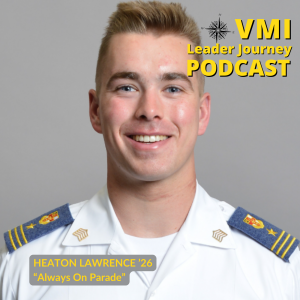
Always on Parade with Heaton Lawrence ’26
Summary
What does peer leadership really look like — and what does it cost you? In this episode of the VMI Leader Journey, host Lt. Col. Catherine Roy sits down with Cadet Heaton Lawrence, Virginia Military Institute Class of 2026, Corps Chief of Staff, and CSAB Vice President, just days before graduation. Heaton isn’t commissioning — he’s headed to the classroom to teach AP English and build a career in education. But his four years at VMI have been a front-row lesson in what it means to lead the people beside you, every single day.
Heaton opens up about navigating peer leadership at the highest level of the Corps, why he says VMI is “an experience, not an education,” and the mindset shift that changed how he carries himself — on and off parade. He also shares hard-won advice for any cadet or young professional who has ever been passed over for a position they wanted.
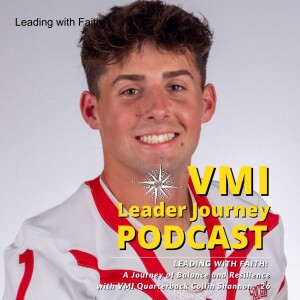
Leading with Faith: A Cadet’s Journey of Balance, Resilience, and Leadership at VMI
Summary
Welcome to an inspiring VMI Leader Journey podcast episode, “Leading with Faith.” In this episode, we introduce you to Cadet Collin Shannon from the Class of 2026, a psychology major and VMI’s quarterback, who shares his insightful journey about leadership, teamwork, time management, and relentless perseverance.
From balancing the rigorous life of a student-athlete to identifying the transformative power of seeking help, Cadet Shannon’s experiences paint an intricate picture of fortitude. He emphasizes the role faith and camaraderie play as the underpinnings of a reliable support system. He also discusses the importance of humility, authenticity, and unity within the VMI community while providing a peek into his future aspirations, especially toward coaching.
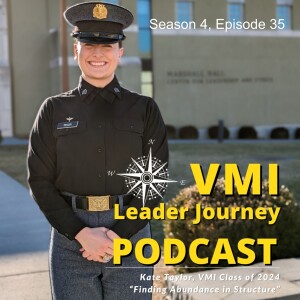
“Finding Abundance in Structure” with Kate Taylor, ’24
Summary
Beginning in her third class year, Kate Taylor, VMI Class of 2024, got involved with programs at the VMI Center for Leadership and Ethics. A civil engineering major, she attended the Annual Leadership and Ethics Conference three times, twice as a table group facilitator, and was a member of the VMI Swim and Dive Club and the Cadets’ Superintendent’s Advisory Board.
In this episode of the VMI Leader Journey, we predominantly cover the leadership domain of efficacy, which concerns an individual’s confidence. Her leadership journey covers why she chose VMI out of 21 other choices, some of the distractions she faced, how a mentor helped her refocus her energy on productive goals, and what made her change her mind about commissioning. Her four-year development at VMI touches on leader competencies such as self-understanding, mentoring, service, resiliency, and goals.
Episode Transcript
MAJ. CATHERINE ROY
Welcome to the VMI Leader Journey podcast, where we explore the leader development stories of our cadets, alumni, and VIP speakers who come to the post of Virginia Military Institute. I am your host, Major Catherine Roy, communications and marketing manager for the Center for Leadership and Ethics. With me today is my assistant, Broni King, and our guest, Kate Taylor, a member of the VMI class of 2024, VMI Swim and Dive Club.
And the Cadets Superintendents Advisory Board. Cadet Taylor’s journey at VMI was not without its challenges. Like many cadets, she found the structured environment to be intimidating at first. However, she quickly realized that this structure was beneficial in helping her to develop her own voice and sense of purpose through her involvement in the Cadet Superintendents Advisory Board, or CSAB.
She was able to explore new ideas and collaborate with other cadets on projects that positively impacted the VMI community. Kate’s Story is an inspiring reminder of the power of perseverance and the importance of finding your own path, even amid challenging circumstances. If you listen all the way to the end of this episode, you’ll hear a ‘Corps ’ moment from her rat year that inspired her to seek an Army commission.
Be sure to subscribe to the VMI Leader Journey podcast as you tune in to today’s episode, Finding Abundance in Structure.
Welcome, Cadet Taylor, to the VMI Leader Journey class of 2024. And we just like to get to know you and to hear about your VMI leader journey and some of the programs you’re involved with here at the CLE. So, take it away and introduce us so that we can get to know who you are.
KATE TAYLOR, ’24
Amazing. Well, first of all, thank you for having me. I love doing things like these. Any any chance like I can, I can have to to repay VMI in some way and to really put a put it in a positive light and continue a conversation in which VMI is championed as the positive institution that it is. And so in the CLE, I’m involved in, I’ve been a two-year member of the superintendent, Cadets’ Superintendent’s Advisory Board, and a leadership conference facilitator.
And I’ve I’ve been involved in the conference for three years. But as a leader, in it for two. And so those, those two events have been exceedingly rewarding in terms of not only the cadets that I’ve worked on the advisory board with, but also just all of the positives that come out of the leadership conference has been such a productive and transformative experience for myself, speaking more broadly about my cadetship, I think my story is pretty unorthodox.
If you want me to dive in.
ROY
Yeah.
TAYLOR
So, I applied to 22 colleges, which is an insane number of schools, and I’m still paying my lovely parents back for that much money. And I had this idea in my head that I was going to go to a big football school, and I was ready to do the sorority thing and do all these things that I had set my mind on.
was essentially ready not to be, to hallmark Card-esque, but I was ready to do ordinary and to. I was really excited to embrace what I thought my 18-year-old female self wanted to do.
ROY
Well, a traditional experience.
TAYLOR
At that point in my life, I was so excited to do what all my friends were doing and to, to dive into that world. And my parents told me they were very supportive. They said, you know, we’ll support you where you want to go. It’s your choice. This is your life. However, there was a nice little bit that they said, you know, we think you have all these goals for yourself.
And in order to really achieve them, we think you’ll benefit from some structure.
ROY
What kind of goals were they?
TAYLOR
I wanted to be a civil engineering major in the eighth grade, so I knew I wanted to do civil engineering, and I knew I wanted to eventually go to grad school. And I’ll note that military at this moment was not on my horizon. And so that comes back in later in my story in a very significant way. But my parents just knew that I had a lot of things I wanted to achieve, and I like to talk about them, but they worried that I may not have been backing them up with as much action as I could have been.
and so, they recommend VMI. And I begrudgingly applied, and I had all these opinions about how I thought they were wrong and all these things. And and I was Covid class. So, I had about a three month window to to sit and think right over what up until that point had been the hardest decision really of my life.
And so where was I going to? How was I going to change the needle on the trajectory of my life, excuse me, by making this choice? And so ultimately, I knew that the other schools would wait for me and that VMI was not going to wait for me. And so, it was an opportunity that I, I couldn’t miss.
And once I truly embraced and accepted that, I never looked back. And I’m so incredibly blessed and grateful that I did take that leap. And I made it to VMI because it’s truly changed who I am in more ways than one. And I don’t say that lightly. If you had put that 18-year-old girl in front of me again, I think I’d, I’d recognize her, but I wouldn’t really know her.
And so that’s something that I take great pride in understanding. And an embracing is that my new identity is something that I value immensely. And it’s because of VMI, but not only the higher VMI, but the smaller things like what we do here in the CLE and the rank organization and sports and everything that we do at VMI that the work that champion the students is, is a testimony to who I am today.
ROY
So talk about the decision-making process a little bit because of course being part of C SAB decision-making is something that Colonel Gray is big on. He’s got all kinds of strategies and tools you could use. But as your 18-year-old self, what was maybe in your pro and con column that made VMI the standout location?
TAYLOR
So, I think it had to do with when you’re when you’re not given a set of instructions. So like the part of the Rat Line, I think that’s so fascinating is that you’re essentially told you’re supported in a lot of ways, and there’s a lot of structure that’s given to you just in your day-to-day activity as a rat.
And I know that for myself, it was really a question of when I have nothing to do, can I devote that time to being most productive? And at VMI, when your time is very blocked out and you don’t have as much autonomy over your schedule, that’s become something where, you know, I have to do this now because I can’t do it later.
And so, the eighteen year old self, I think I saw that structure as a negative and I, I, villainized. I think that idea of structure as, as taking something from me, when in reality it was granting me with something. And so, once I shift that perception of structure as such a positive gift that you get to utilize rather than something that was deterring me or hindering me anyway, once I embraced that, the decision became a lot easier.
ROY
Was that a conversation you had with your parents that they said, hey, the structure is going to be beneficial for you, our daughter, because we know you are right.
TAYLOR
They did, and I think I want to note that they did say it, but once they said it, it just they let it sit there. And then it really became my decision. And it was wholeheartedly something that I had to face. And I had to look in the mirror and realize that that structure was, was, in fact, something that I needed and that ultimately it was the decision, the decision-making came down to me thinking that that I think now that that structure created an abundance.
But in high school, I thought that structure was going to be taking something from me. And once I realized that, yeah, everything else became clear.
ROY
And have you carried that lesson forward then into your cadetship?
TAYLOR
It’s such a strong thing to have in a leader is someone that can unequivocally dive into those hard questions like Colonel Gray does, and like the CSAB team does, is that when you can dive into those questions and go through the thick of it and, and have hard conversations and champion hard topics and, and find tact and personal interpersonal tact throughout all of that.
That was really, I think, what started to change my mind into thinking, you know, this is structure that I was so worried about or that I was that I had such a misconceived notion about and here it is, being shown in the entire opposite light as something that is so positive and so productive and so rewarding. And it’s because of people, I think, like Colonel Gray and members and people that are on CSAB, and all these, these committees is that they’re devoted to asking the hard questions, but then also instilling in you a a sense of identity and understanding; you know how to navigate them.
And I think that’s something unique. VMI does specifically within the CLE and the Center for Leadership and Ethics, is that it gives you the tools to be someone comfortable and understanding. My toolbox has been filled with tools in which I know how to properly handle these conversations or these situations, not always perfectly, but that you have the confidence to know that you can at least try.
ROY
So, you mentioned that the conversations that you have are being held tactfully. One of the buzzwords around here or in today’s business and leadership realm is about civility and of course, the importance of civility as we discuss these hard topics. Yes. What are your thoughts on that?
TAYLOR
I think I have a lot of opinions about civility, because I think I think it reminds us and it brings back these conversations to understand that they’re happening at a very personal level. However, they are skill. To understand two things simultaneously is that you can disagree with an idea and a thought and not the person, but also at the end of the day, the end of the day, you are speaking to another person and while you can disagree with their ideas, you need to have that.
You need to be grounded in a mutual understanding of civility and humility. And I think servitude is also something that comes in really nicely, is that when you realize that you’re acting in the VMI system, I love going back to that, that idea of servitude, and it’s a selfless service to the Institute. And so, in that if you extrapolate it into things like CSAB was or when I’m sitting across the table from someone on a very charged issue, and if passions come into play and all that stuff, you lose,
I think, your productivity, once you’ve lost civility, is that that person can start to put walls up, or the idea can no longer be productive once civility, once it’s abandoned. It does get hard is that when you you are so steadfast and understanding, like, this is my idea and I’m going to I’m going to die on this hill.
So, understanding that once you’ve lost the idea of selfless service, the civility goes out the door and you really are not working on a level playing ground because you can’t get anywhere. Once you’ve removed that person from their identity as someone that you need to respect.
ROY
Do you think that there’s a way of being passionate without being overly emotional?
TAYLOR
Yes. And that is something that is. I think my goal for 2024 is to understand that something that about myself personally, and more so in the leaders that I strive to emulate, and those that have really had a profound impact on my life, like people like Ryan Cooper, is that they know how to utilize their emotion as such a tool, and they utilize it and they harness it as something that’s so impactful because I think that emotion is why people and subordinates, they feel seen.
And so when Ryan Cooper was my swim team captain, he always made me feel seen. And it was because I could, I could feel his emotion, but he channeled it in such a professional and a positive way that it was never a deterrent. And so then.
ROY
Yeah, because I think there’s a big difference between having emotion and being emotional.
TAYLOR
100%.
ROY
Because everybody talks about the amygdala hijacking and you’re not thinking. And I think that especially in a diverse cultural environment that we’re expected to operate in, people can mistake people being passionate about something with being emotional. And so as soon as the volume gets more elevated or the ideas get more firm or the language gets more repetitive, I think that that can trigger some people to say, oh, you’re being emotional, therefore you’re not.
You’re not rational. Therefore, I’m going to tune you out. And I think that’s a big disservice. Yeah, I think it’s great that you’ve got leaders around you who are bringing that conversation back around to productive conversation and not necessarily shutting down the emotion.
TAYLOR
A hundred percent. And yes, there’s emotion and there’s being emotional, which is, I think, such an important line. I think it brings it helps even bring that civility back, because you understand you’re operating on a human level in that they’re their feelings and their ideals can be valid.
ROY
So, you talked about having consensus on ideas as you’re going through the decision-making process. This year’s leadership theme was adapting to complex situations. and of course, you were a facilitator at this year’s leadership conference, maybe talk about this decision-making, because adaptive leadership is a people focused leadership style. You’re talking about using leadership, influencing others onto a single mission focus, and then getting the expertise in.
So, as you all decide, because it’s a problem-solving club, you’re looking at how do we select a problem that we’re going to solve. What’s the research like? And then you’re bringing not just your peers along for that journey, but you’re also then communicating, these ideas to the executive leadership here at VMI. And so, you’re having to learn how to manage up.
You’re doing an executive briefing, but you to present the ideas, you’ve had to come to a consensus and work with various groups to say, who are the experts in this area? What do we know about this or that topic? And talk a little bit about the process for this year’s problem solving?
TAYLOR
Sure. What was really exciting about this year was that we had a new batch of a lot of new faces, a lot of new people, and so having a lot of new ideas, I think was the first thing that new influx of personality and ideas so that we could reestablish our battle rhythm as a as a, committee was the first exciting part.
And I think with that, conversely, it also brought new challenges in terms of when people come in. And we did, our, our president or CIC. Mr. Riley Schultz, he did such a good job of of bringing on such a diversified portfolio of people is that it brought new voices and new identities from all different parts and organizations on post.
And I think what was really exciting was watching us all come to the understanding that it’s… CSAB is supposed to be selfless. It’s supposed to be the Cadets’ Superintendent’s Advisory [Board] committee. So we really are trying to represent that cadet body as a as a whole on the Corps. And that’s that can be a pretty daunting task. So when we had all these identities coming to the table, returning back to the idea of selfless service was something really fascinating to watch because you had to go back to the idea of my identity is first rooted in my identity as a member of the Corps and my greater identity as a cadet, not just, you know, whatever
tribe I may fall in or whatever organization I’m in. But the first and foremost, I am a member of the VMI Corps of cadets. And so in the the decision-making and finding the topic that we were going to go with, once everyone started to realize that we were a collective working together for the Corps, and those identities started to maybe realign.
That was I think we’re where most of our progress began. The CIC set sort of an expectations and defined what our goal as CSAB is and what past years have completed and all these things. And then we went into we dove into our our brainstorming phase before early in the semester when we’re brainstorming any sort of really just trying to find a few domains in which problems may exist or, excuse me, issues may we may find somewhere to start.
And so, once we broke down those umbrellas in those larger domains, then we can delve in further into what each one of those may hold in which one could ultimately be our problem statement. And, in that I think what peer to peer, we would often break into small groups on the committee. And I think watching those small group interactions, it was the heart of our creative process.
So, there wasn’t, you know, deadlines, there wasn’t any pressures yet. There wasn’t deliverables needed that it allowed us to truly just focus on building the battle rhythm and being the most creative and productive as we could have been. And in that, listening to the to, the first thing I noticed was how much passion was in the room. And I think that’s when I knew I knew something good was going to come out of this year, because we had so many people that were really excited and ready to work and understood it’s.
ROY
Enhancing cadet life.
TAYLOR
100 Percent. The fact that we have a system like the Cadet Superintendent Advisory Board that exists is, is a signal to the fact that our institution in our system is so focused on enhancing that cadet life. And we have such a care for the system that we want to improve it for posterity, we want to improve it for the next generation of cadets.
And I think that the fact that this space even exists for something like she said, this is such a wonderful thing.
MS. BRONI KING
Right from the beginning, you talked about civil engineering that you knew in eighth grade. How did you know in eighth grade that that was your major, your direction?
TAYLOR
Sure. that’s a a good question. And I, I think it goes back to even just to relate it back to the Cadets’ Superintendent’s Advisory Board, is that from a very young age, I loved the idea of all these wonderful minds, creative minds, coming together to accomplish a task or to accomplish something really productive. And so I thought about, if you can take that idea of a think tank and take something very productive like that.
And as a child, I love doing all these, I loved doing Legos. And that was like my thing. And that was the scope of your think tank as a child is really that Lego box, right? And so, I just knew that I liked fixing things, and I love problem solving. I love building things. And I was always a kid kind of asking or not asking why, but it was always I was always doing something.
I was always very involved and inquisitive. I think as a young child, and in that I had similar to I do here, is that I had mentors that saw that and, and championed me to, to funnel that, that energy into something positive. And so, I think it was my eighth grade science teacher that really challenged me that, okay, you have all these things like, let’s try, let’s try this.
And so as soon as she recommended me for this program in eighth grade, I kind of took off with that. And I realized that I just really liked being faced with a problem. And and apparently it stuck because I continue to seek things like CSAB, where in a closer to an adult in real world capacity is that I’m still trying to solve those problems.
And that’s I think that’s how I knew it, that I tried to channel that childhood that loved Legos into something very productive. And that’s how I found my way to VMI. Ultimately.
KING
Can you share a memorable or intense experience from your cadetship that has had a significant impact on you?
TAYLOR
It was my third-class year. My swimming coach at the time stepped down, and it was, an imperfect situation, and he stepped down. and that’s totally was his prerogative and everything in that sort. However, it left us in a sticky situation. And so, Colonel Tom Timmes is thankfully through, you know, God’s grace. He stood up and he was the only reason that we had a season that year was was Colonel Timmes agreed to be our coach and interim coach.
And in that season, that was that whole year was was a very transformative year for me. I was a third. So I had I had broken out and I was trying to find my voice, I think in the VMI system as a third class is such an interesting year.
ROY
It’s kind of we call it a marinating period.
TAYLOR
It really is because you have no horizons. So firsts’horizon is graduation. And seconds have that ring coming and thirds that horizon just seems really distant. And as a third, not only was I in this kind of really marinating season in my cadetship, but that I had I had no, no, you know, I was, I was I definitely was in the moment in my cadetship where I needed that structure and I found myself in a moment without it.
And so, our, our male’s team, men’s team captain Ryan Cooper, he really stood up. And he helped me navigate a lot of those interpersonal issues I was having was that I had finally, you know, was a third. And I was trying to see how I fit in the system. And I and I saw all this almost adversity, but almost injustice where I felt not betrayed, but I felt neglected.
And I felt like, almost like my team had been wronged and I was I was so full of I was so passionate for this issue. And it was coming out of such a good place, but I didn’t know how to channel it.
ROY
That where Cadet Cooper came into the picture.
TAYLOR
He did, but he helped both as a faith mentor. You. He understood where I was coming from because he was living it too. He knew he saw through all of my, I guess, my emotion in some moments in my passion and some others. And he saw it through it and he helped me channel it into something that was productive.
I channeled it into my school, my academics, and I had I AC [short for academic] stars the next year. He helped me channel it into my sport and I, I won the best time that I’d ever gone, and he helped me champion it and my friendships. And I think just having those people in that in your corner and those voices that help you again, see you.
For as you present yourself in front of them, not something on your schedule, not an inconvenience, but someone that as I was appearing in front of him, he saw me at face value, and he took time to hear me and to to mentor me into something so that I could grow productively. I was I was kind of being held hostage by a lot of my feelings.
And so he helped me see another avenue to take that made sense.
ROY
So would it be fair to say that what he showed you was things that you could control, and things that you had to let go of?
TAYLOR
100%. And I, people asked me, what did the Rat Line teach you? And I love this question because it’s it’s hard because the Rat Line really is the best by design. It’s supposed to teach you so many things, and but it taught me to be patient. And people always taken aback when I say, how do how did the Rat Line teach you to be patient?
I’m like, well, when you’re in the Rat Line, you’re sent a schedule every week. You’re sent all these things where you have to be, what you have to wear, all these things. And VMI takes everything out of your control. But what you control through it, through and through is how you approach a situation and how you face it. It’s how you respond, how you act, your emotions, your feelings that is entirely always in your your control and in your court.
And so once I realized that I controlled how I faced the situation, what I brought to a situation because of of people like Ryan Cooper, I realized it almost helps you gain your autonomy. And it gained some of that armor back is realizing, you know, I’m not I haven’t lost his battle because I still get to control how I face and how I even start it.
And so, 100%, that idea of, patience and channeling it into something like that was was huge for me, too.
ROY
Well, in the VMI leader journey publication, that goal, that institutional goal of the or objective for the freshman year is leading self right. And so by removing all of like you say, the decisions and a lot of things, the illusion is that you have no control. But the reality is you have a lot of self control, right? That you’re going to learn to exercise.
And that is a maturing process. And here at VMI, everyone lives on post all four years. And so getting along with others, managing yourself, these are simple things but powerful life lessons that it’s great that you can learn it here and now. And not later, because you’re going to have to become part of an organization of some kind.
If you’re going to work at all with anyone, or you either have clients and customers or you have supervisors, vendors, etc., etc.. So, I also hear you saying that basically that third class year, it sounds like it was an opportunity for you to develop regular habits, regular habits that you saw the rewards of in grades and performance.
What are your thoughts on that?
TAYLOR
I think, and I’m definitely a creature of habit, and I really like having my schedule and it helps once you have. And I think a lot of VMI goes back to ownership. And so, once you have ownership and identity, you feel like you’re in control. And I think having that self-control and realizing you’re in control is is really our power here is that once we realize it’s our system, it’s our school, it’s our cadetship, it’s it’s us.
And I think that’s the that’s our power is that it lies in the fact that we have ownership over the things we do here and over our identity as a cadet. And I think in that is understanding something as trivial as doing your homework at the same time every day, going to practice. It’s like all these things that are the seemingly more trivial, it goes back into the greater base of I’m in control of what my day looks like in these ways.
And when you have when you feel like you have more control over something, inherently you feel like you have ownership in it and I think as cadets, that’s really our first calling, is to have ownership in our system. And once you’ve crafted a schedule or crafted these habits that can accompany in helping that, I really think that’s so powerful.
And Ryan Cooper definitely helped me. And in finding positive ways to bring that control back to center. And once I felt center, and I think you mentioned in that third class year and even in rat year, you realize that you’re learning all these things and I think it’s important to note that it’s not obviously the there’s several aspects of the Rat Line that aren’t easy, but the internal conflicts that you go through as you’re being broken down as an individual, metaphorically speaking, and and learning how to live.
I had a room of five girls when I was a rat, and so it was just like, you’re learning all these lessons without even realizing it. And I think in that, that there’s some, grace, I think to realize that you’re learning all these things and, and that grace is important at that moment, but also to lean into the to the discomfort and to lean into the lessons you’re learning and to lean into the I’m going to sound I’m going to age myself now talking like some First Classman that’s, you know, that’s that’s not all I like wise now that I’ve gone through it.
But I would really think to to lean into those situations because VMI is a golden ticket and that a lot of us, I feel very blessed to be here because, I was on swimming scholarship and I had said no to them, so I almost didn’t come to VMI. [music]
The pool is now the Mr. Richard Goodall pool. And so, he was a man. The money. I told the coach no, I’m sorry, I can afford it. He he came back with the dollar amount I needed to afford the school. And the man that funded my cadetship, I swim in his pool now. So every time I flip turn, I see his name on the wall.
So. So I think about getting off topic here, but I think about how giving our grace in those moments allows a little bit more gratitude to seep in.
ROY
I had asked you kind of at the beginning, as we were chit-chatting, what advice would you give your your 18-year-old self as you were making school decisions/year right after matriculation, what advice would you give to her as a first?
TAYLOR
Sure. Sure. And I think I, I touched a little bit there on the last thing I said, but I love the idea and the imagery of of leaning in to challenge and to embracing it. And I think about how in my head, how everything has an ending. And for the most part, everything has a finite amount of time. So, my, my time as a rat had a finite start and end date. My time as a cadet had a start and end date. My time as an athlete.
A VMI swim and dive athlete. That had a start, an end date. And so now that I am approaching those end dates, I’m really reflective on all the start dates and I just urge I would have urged my my rat self and I urge everyone else to, as they’re on that side that’s closer to the start date, is to value that time because that time is is so it’s so valuable.
It’s the golden ticket that some don’t have and so fleeting. It is fleeting and it’s so fleeting. And I’m, I’m, I’m sounding like some washed up first classman. But the fact if I could tell myself and I you know, you always wish for the like the discomfort to end and for x, y, z and into something else to come to fruition and all those things.
And so I urge anybody, in their cadet ship to, to slow down, metaphorically speaking, not literally, but but to understand that there’s going to come a time, I think, where every you start to speak and everything is, oh, remember when and and when you’ve reached that moment, I think just hone in on and lean in on the privilege you have.
Even the hard days are a privilege. So, own them because you’re here, you’re doing them. You’re making it through with really great people next to you. And if you can have that grace and gratitude, it’s going to it’s going to help you prevail throughout your entire cadetship.
ROY
It’s changing the narrative from something that’s negative to something that’s positive. 100%. And it’s and I like to talk about it’s just a season, and it’s a season. You can make it a season of learning, or you can make it a season of misery. And the gratitude, I think, helps to make it into a season of learning. I like how you emphasize the role of mentors, the ability to talk in safe spaces 100%, creating space, grace, and gratitude.
I think those are all great key words to home in on to help make the most of your cadetship here and hopefully, get some of those lessons learned that experiential learning here at the Center.
TAYLOR
Right. And I think so. And so, I think, everyone that’s helped me thus far in my journey and I, I really I just hope to champion anybody that hears this, whatever season of whatever season they’re in, whatever start or end date they may be near in terms of their journeys to, to take, take inventory of the posture of their heart.
Take inventory of what, how you’re speaking and and what I think that the posture of your heart sometimes can be going a little too quickly is you just want to get on to the next thing and you’re missing what’s right in front of you. And and when you’re so busy looking at tomorrow, you miss the abundance that’s in front of you today.
So I. I urge everyone to take inventory of the abundance that’s in front of them right now and to never to never wish too hard for tomorrow. Because today is right in front of you. And that’s a gift, especially at VMI.
ROY
So well, those are great parting words for our audience. And Broni, do you have any final thoughts or a little wrap up question that you may have?
KING
What’s next?
TAYLOR
Great question. So, I came in not wanting to commission, and then I was training on the fourth soup the day General Peay gave his farewell address to the Corps. Very emotional. Yes, it was. I was straining fourth stoop as a rat. I remember where it was, just like it was yesterday. And, you know, we had no idea as rats, really, the severity of what was happening.
But the, you could, it was palpable in barracks. So, you knew even as a rat, we knew something was happening. We didn’t fully understand it, but we knew. And so, I’m straining on fourth stoop and this esteemed general is walking in, and he has tears in his eyes, and he salutes the Corps. And I’m in. In that moment I can remember it like it was yesterday.
I knew I had to commission. I was like that. There is something in barracks right now that’s alive and that’s only, I think is intrinsically tied to military. And so, in that moment, I knew and so from a rat to second classman, I fought for two years to get medically qualified. And I contracted in the Army my second-class year, and I just branched Army aviation.
So, I’m very excited.
ROY
Well, excellent. Very good. Thank you. I appreciate that.
TAYLOR
Yeah.
ROY
All right. Well, thank you so much.
TAYLOR
Thank you for having me.
ROY
Cadet Taylor, for being with us. This was a great conversation. I hope you will share it with others and that we can get some great engagement on the podcast episode.
TAYLOR
Yes, ma’am. Thank you.
ROY
This has been a strategic outreach program of the VMI Center for Leadership and Ethics. We educate, engage, and inspire the leadership journey of our VMI community and the nation. Don’t forget to subscribe to this podcast to follow along as we release new episodes. Follow the VMI Center for Leadership and Ethics on LinkedIn, Facebook, YouTube, and Instagram. To learn more about our programs and events or visit our website at VMI.Edu forward-slash c l e. Thanks for tuning in.
Questions? We’re Here to Help
Connect with the Center


Email: lawhornesk@vmi.edu

Phone: (540) 464-7396

Center for Leadership and Ethics
Marshall Hall, 500 Anderson Drive