
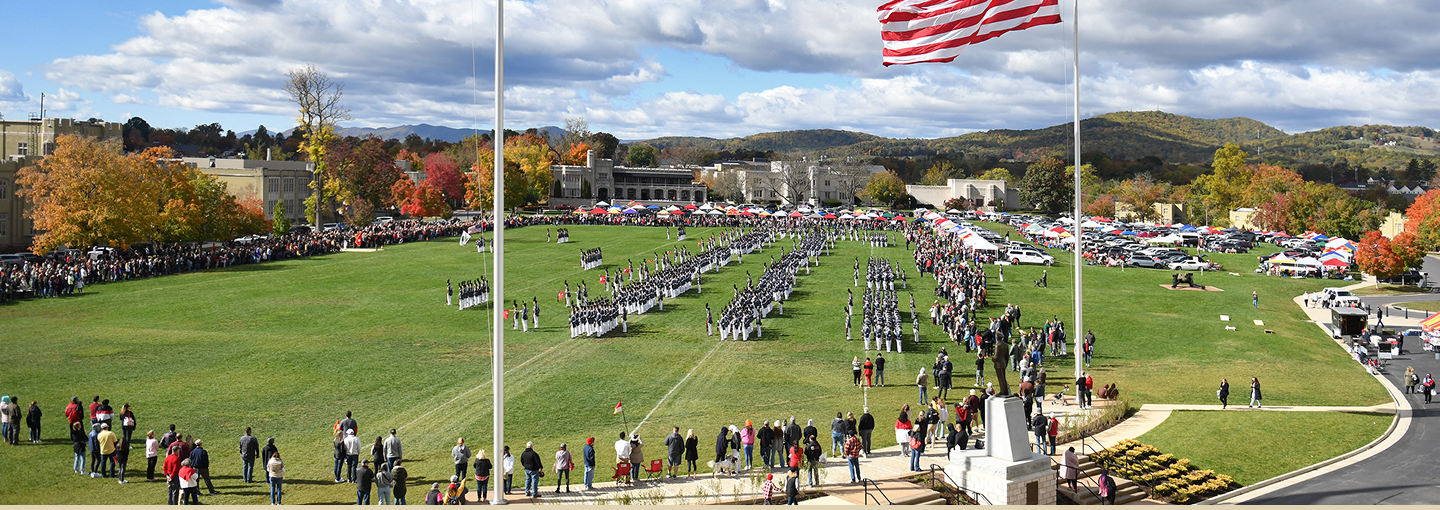

VMI boasts many spaces unique to the No Ordinary College experience for cadets across academics, military life, and athletics across its historic post – what most colleges call campus.
Some facilities are also heavily used by members of the local community, the extended VMI community, and guests and groups who host events on post. Explore below to see what VMI has to offer.
Looking for a live view of post? Daytime access is available from webcams installed on Smith Hall and Preston Library. Installed in spring 2026, both cameras offer stunning views during parades, tailgating, and the day-to-day activities on the Parade Ground.
Related Resources
Barracks
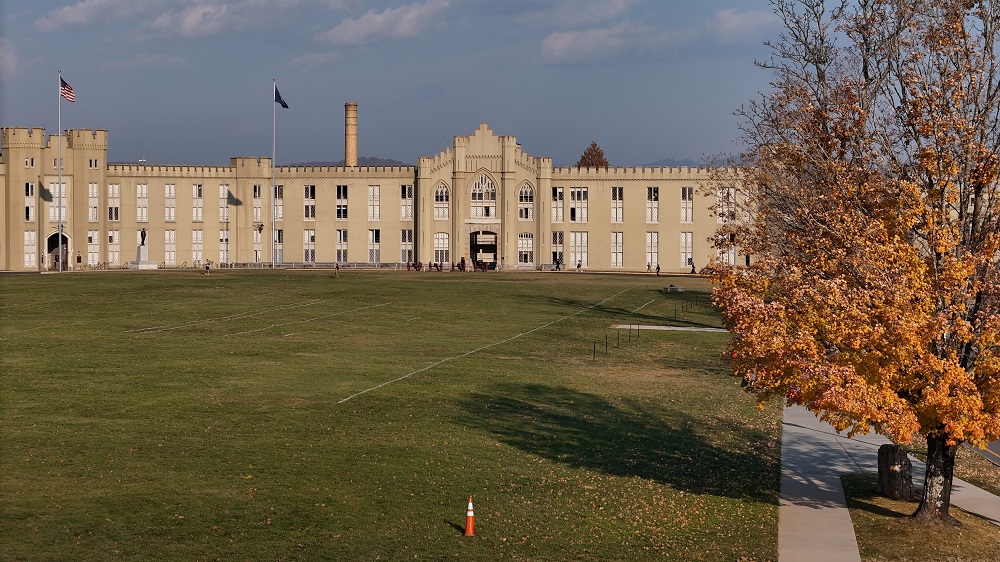
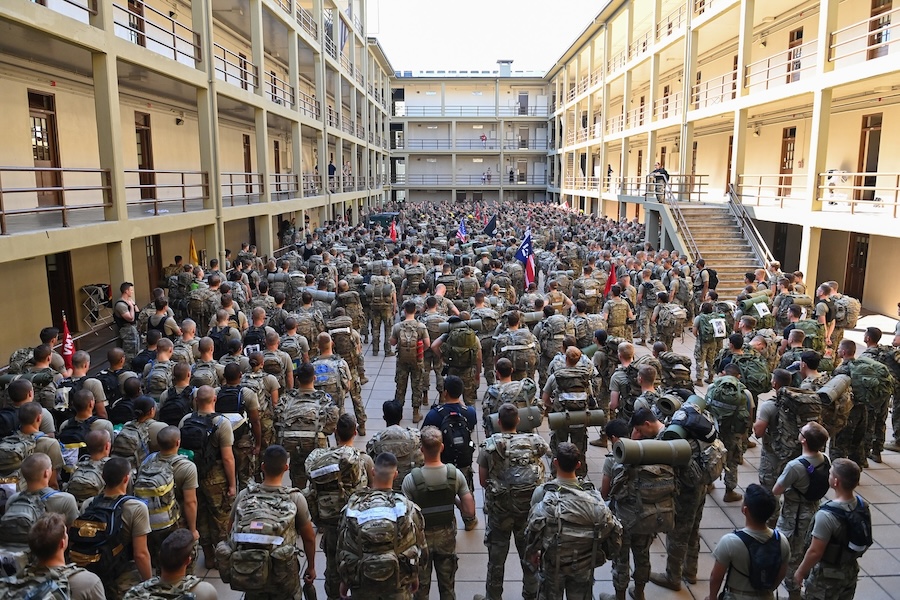
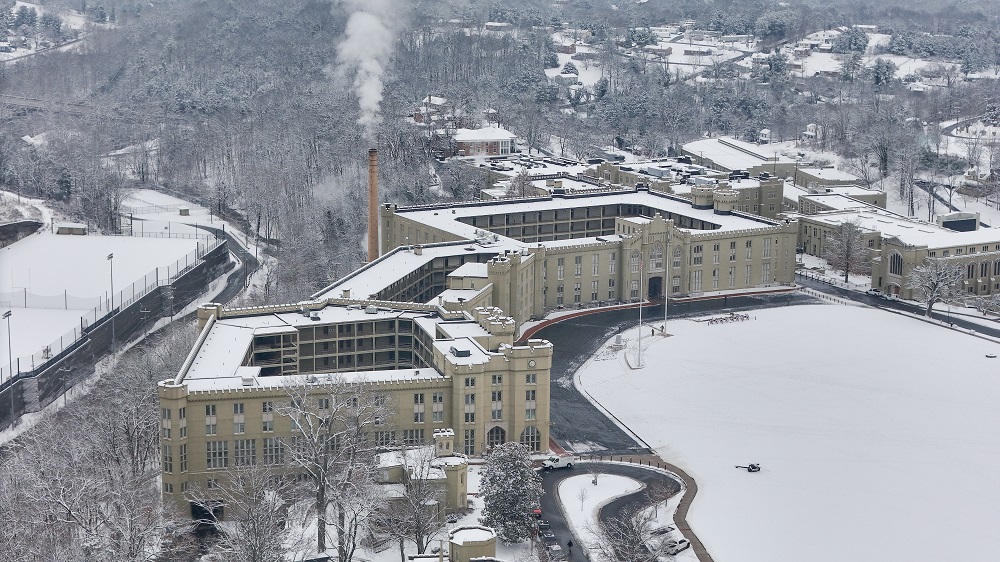
Perhaps the most iconic location at VMI, the cadet housing complex is composed of Old, New, and Third Barracks. Old Barracks is a registered historic landmark and the location of the Sentinel Box and VMI’s Old Yells – some of the most stirring moments of a cadetship.
Lejeune Hall is connected to Third Barracks and contains the PX, Visitor Center, and VMI Bookstore.
Barracks is the focal point of a cadet’s life at VMI, and the fact that all cadets are required to live under one roof facilitates student government and helps promote and strengthen ties of friendship. Rooms are furnished sparingly but with essential equipment, and three, four, five or six cadets share a room. They have equal responsibility for keeping the room clean and in order for daily inspection.
Did you know? You can visit the VMI Museum to get a look at a barracks room. Open House attendees are able to stay overnight in barracks to get a real taste of life as a cadet.
Training & Athletic Facilities
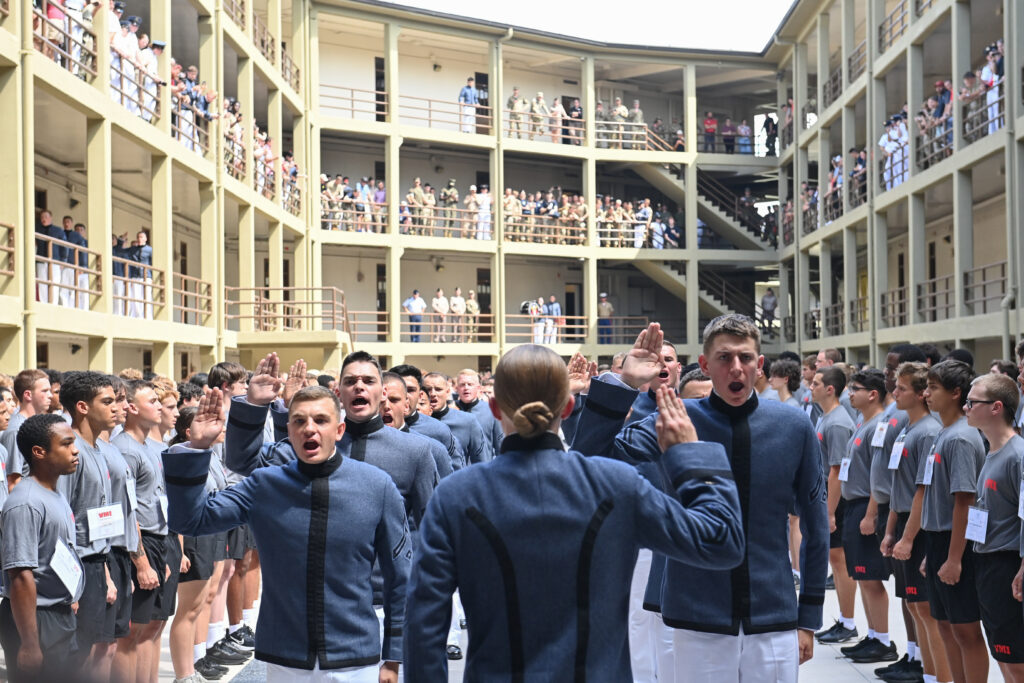
The military aspects of life at VMI see the Corps of Cadets consistently pushing themselves to excel in both fitness and military precision. VMI’s participation in NCAA Division I athletics and robust list of clubs and activities with a physical component require modern spaces with equipment ready to serve the needs of those competing to win. Some of these spaces also serve additional purposes in facilitating the ability for the Corps of Cadets and the public to gather for various events throughout the year, including major milestones.
Aquatic Center
VMI’s Aquatic Center officially opened January 2023. A three-year project, the center boasts an indoor 50-meter swimming pool – Goodall Pool – which holds 800,000 gallons of water. It has two 1-meter springboards, two 3-meter springboards, and a 5-meter dive platform, plus seating for 570 spectators. It is designed to facilitate the various need of cadets at VMI from mandatory swimming classes, to ROTC training, to NCAA men’s and women’s swimming and diving, as well as women’s water polo.
Cameron Hall
Cameron Hall is a multipurpose arena providing accommodations for Keydet basketball, convocations, guest speakers, and other large events, most notably Matriculation, Ring Figure. and May Commissioning and Commencement . Completed in 1981 with seating for over 5,000, the hall houses team rooms and offices of the VMI Athletic Department. As with home football games, the stands in Cameron are often filled with the rousing cheers of the Corps of Cadets, led in their enthusiasm by VMI’s mascot, Moe.
Corps Physical Training Facility
The Corps Physical Training Facility, or CPTF, opened formally in January of 2017. The building is dual-purpose, as it is used for both track and field and general Corps of Cadets activities. Each year, the CPTF serves as one of the first locations for VMI’s newest recruits when they report to post on Matriculation Day and again during the Rat Olympics, the culmination of a 10-week physical challenge for the newest members of VMI.
The main track is used not only by rats and cadets during training, but is also often the site of NCAA and Southern Conference (SoCon) track and field competitions. Above the main floor is a flat, 350-meter warm-up track that athletes can use during the meet to prepare for their events.
The space also has a climbing wall is used by the Corps during physical training, as well as by VMI’s rock climbing club, a 70-foot high ropes course is used in cadet training, often during ROTC field training exercises (FTX), and stationary bicycles and elliptical trainers overlook the track and a weight room
Cormack Hall
Cormack Hall houses the Department of Human Performance and Wellness and Keydet wrestling team. Built in 1919 as a mounted riding and drill hall, Cormack Hall is named in honor of Major Walter Cormack, a professor of geology (1949-1974) and track coach. The Division I wrestling program at VMI competes in the Southern Conference (SoCon).
Prior to moving into its new home, wrestling had spent many years in Cocke Hall, aka “The Thunderdome.” There, the Keydets wrestled in one form or another for over 80 years. In addition to practices and SoCon competitions for VMI’s wrestlers, this space is also utilized by some of VMI’s cadet clubs including the Brazilian Jiu-Jitsu club.
Foster Stadium
Very few football experiences in the country can rival that of a fall Saturday at Alumni Memorial Field at Foster Stadium, the home of Keydets. It is a day filled with the pageantry and tradition of the nation’s oldest state-sponsored military college. The team competes as an NCAA Division I program in the Southern Conference (SoCon). The highlight of each season is the game against rivals, The Citadel, known as ‘The Military Classic of the South.’
VMI’s stadium features an entrance plaza at the Cameron Hall corner complete with permanent ticket booths, restrooms, concessions, and donor recognition wall. It contains 54 rows, is 173 feet high (not including the press box), and has a seating capacity of 10,000. The small bleachers on Main Street side are the designated visiting team section, while the larger section of seats is filled with the Corps of Cadets, family, friends, alumni, and fans.
Alumni Memorial Field was built in 1921 as a memorial for VMI Alumni who died in WWI. The current 10,000-seat stadium was constructed in 1962. On game day, the team is welcomed by the Corps and mascot, Moe, following their march down to the stadium.
Kilbourne Hall
Gray-Minor Stadium
Gray-Minor Stadium is the home of NCAA Division I VMI baseball, the oldest intercollegiate sport played at VMI. With seating for over 1,400 fans, covered batting cages, a state-of-the-art scoreboard with videoboard and a first-class press box, Gray-Minor Stadium lives up to the legacies of two of the most successful VMI Baseball alums to ever wear the Red, Yellow, and White. Lamore Field was dedicated in spring 2024 and is named for Michael Lamore ’85. The all-weather AstroTurf field with new drainage system, larger dugouts, and updated bullpens were completed prior to the 2024 season.
Kilbourne Hall provides offices and instructional facilities for Army, Navy (including Marine Corps), and Air Force (including Space Force) ROTC units at VMI. The building also houses an indoor rifle range. Constructed in 1967, Kilbourne Hall is named for VMI’s sixth superintendent, Lt. Gen. Charles E. Kilbourne, Class of 1894. All cadets at VMI are required to participate in four years of ROTC training, but have the option whether or not to seek a commission upon graduation. ROTC offers an additional pathway for cadets to fund their degree programs at VMI.
In addition to being used by the Reserve Officer Training Corps (ROTC) programs at VMI, Kilbourne Hall is home to VMI’s NCAA Division I men’s and women’s rifle teams.
North Post Training
Leadership Reaction Course
Opened in 2015, VMI’s leadership reaction course (LRC), found in the North Post training area, provides a space for cadets to work together in teams to overcome obstacles and challenges. It features 10 team-building obstacles that every cadet will have the opportunity to experience. It gets the most use by the ROTC units on post during field training exercises (FTX) each year and 2nd Class leadership training.
Drill Fields 1/2/3
Part of the North Post training area, VMI’s drill fields are dual-purpose, offering training space for the Corps of Cadets during military exercises, both with ROTC units and during cadet events such as Breakout, as well as serving as sports fields. Drill Field 1 mainly serves as a soccer practice field. Drill Field 2, otherwise known as the North Post Turf Field, is the site of VMI lacrosse practices and games. The turf field is also used for rat training, drill practices and competitions, and ROTC physical training. Drill Field 3 is home to VMI’s club rugby team.
Firing Range
The firing range in North Post is used by cadets for marksmanship training as part of their military training, as well as by the Army ROTC Ranger Challenge team in preparation for their competitions. Open Range times are also available for faculty, staff, and cadets throughout the year.
Outdoor Ropes Course
Found in the North Post training area, the outdoor ropes course offers another location for VMI cadets to work on fitness, military skills, and teamwork skills as part of their training. There is also an obstacle course nearby.
Research & Multipurpose Facilities
Committed to providing research opportunities — and honoring the legacy of those who came before — the Institute also hosts a number of locations where cadets, employees, and the general public can explore their own interests, the history of the nation’s oldest state-supported military college, and gather to maintain the fierce bonds of brotherhood formed at VMI.
Preston Library
Preston Library was dedicated on VMI’s centennial Founders Day, Nov. 11, 1939. It was enlarged in 1971 and renovated in 2020. Preston Library is named for Col. J. T. L. Preston, the young Lexington attorney who first suggested and actively promoted the establishment of the Institute. Many notable examples of VMI’s fine art collection can be found in Preston Library.
Cadets may check out books, videos, and other materials for their research and study needs and can access materials on course reserves. Preston Library also offers cadets a free interlibrary loan service, which provides access to materials not owned by our library. Personalized research consultations are available by appointment or on a drop-in basis. Materials, including the numerous computer stations, are also available to the public. A café was added to Preston Library in 2023. The space near the café is used by cadets and patrons to study and read, and also can also host cadet social activities for clubs.
Turman Room : This meeting space is known best to the VMI community as the location of annual meetings of the Board of Visitors, VMI’s governing body. It features the portraits of past VMI superintendents.
VMI Archives
Located in Preston Library, the VMI Archives contain a wealth of primary source collections of interest to both scholars and the general public. The growing digital archives allow researchers to access many of our most popular resources online. From photographs to paintings, manuscripts to official records, the collections tell the detailed story of the Institute, its cadets, and faculty, staff, and alumni. Patrons interested in doing primary source research involving rare books and photographs, along with Institute historical records and growing digital archives, can find those materials in the VMI Archives.
Marshall Hall
Marshall Hall houses the Center for Leadership and Ethics; the Leslie Gillis Jr. Theater, a 500-seat auditorium; and the Hall of Valor, which displays over 6,000 medals and decorations awarded to VMI alumni citizen-soldiers. It is the largest display of its type in the nation.
Hall of Valor : The Hall of Valor commemorates the service and sacrifice of VMI Alumni in time of war through the permanent display of medals of valor earned by VMI graduates. The event space hosts numerous guest speakers, cadet gatherings, conferences, alumni recognition dinners, Parents Council meetings, and other events through the year.
Memorial Hall
Memorial Hall is an assembly hall and non-denominational chapel with a seating capacity of about 1,150. The hall hosts a number of yearly events at the Institute including the Institute Awards, December Commissioning, and Commencement, glee club and band performances, a candlelight holiday service, and an optional Ring Blessing for 2nd Class cadets during Ring Figure.
Around the balcony hang flags representing the states in the union at the time of the Institute’s founding in 1839. Entering the hall, one’s attention is swiftly drawn to a 21-foot by 18-foot oil painting, the work of Benjamin West Clinedinst, VMI Class of 1880. The painting depicts the charge of the VMI cadets during the Battle of New Market, May 15, 1864.
VMI Museum
The VMI Museum collects, preserves, interprets, and exhibits the heritage of VMI as recorded in the 25,000-artifact collection. From the mounted hide of “Little Sorrel,” “Stonewall” Jackson’s favorite horse, to seven Medals of Honor awarded to VMI alumni, the museum’s collection chronicles the story of the nation’s first state-sponsored military college. On the museum’s main floor, nearly 200-years of VMI history is told through the items, uniforms, weapons and class-room instruments of generations of cadets and faculty. Unique items inspired by the historic collection are featured in the store. Apparel, gifts and books are great ways to extend your museum experience and remember your visit to the Institute.
On the lower level, The Citizens and Soldiers exhibit explores the many ways VMI alumni have served the state and nation in and out of uniform. The life and career of George C. Marshall, VMI 1901, who lead the WWII allied effort to victory and then developed the “Marshall Plan” for the recovery of Europe is featured here. The Medals of Honor received by seven VMI alumni, along with the citation for their achievement is also found in the gallery. The world-class Henry Stewart Antique Firearms Collection exhibits over 450 rare and fascinating arms of the late 18th and 19th century.
Moody Hall
Moody Hall serves as the central gathering location for VMI alumni throughout the year, with its balcony offering one of the best views of post. In addition to playing host to numerous alumni events and receptions, the facility is also used by the Institute, local civic organizations, and businesses. It also houses some Alumni Agencies offices on the ground floor level.
Stay up to date on the transition progress on the VMI Alumni Agencies website.
Outdoor Spaces
VMI’s beautiful post — what most colleges call a campus — also utilizes key outdoor spaces for milestone events and community gatherings.
Parade Ground
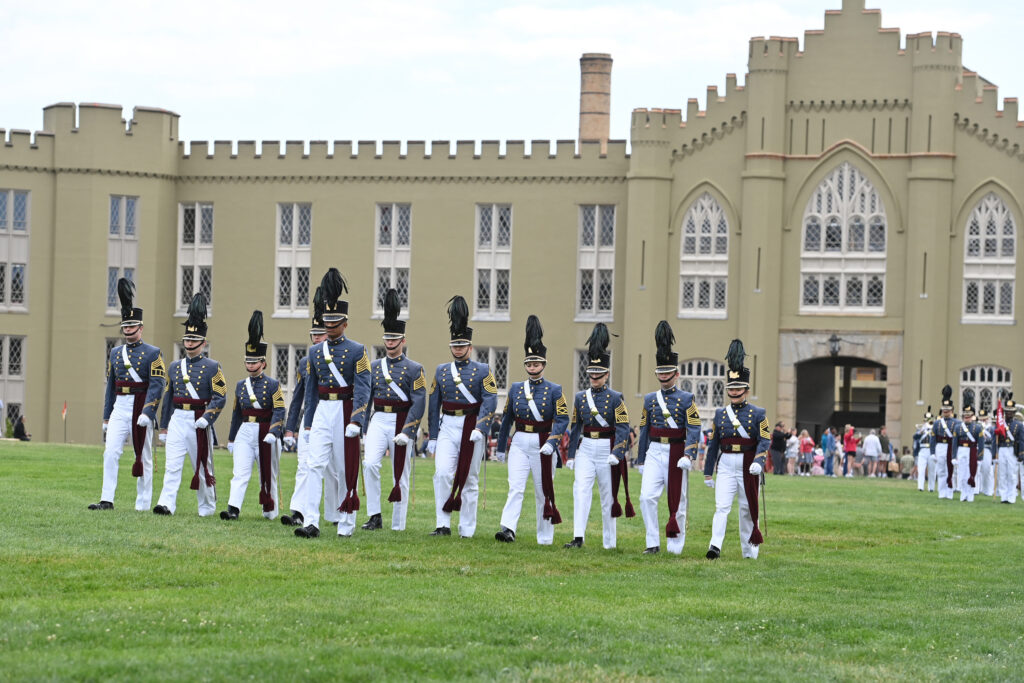
VMI’s Parade Ground is the central area of post and is the location of many hallmark events at the Institute. From new families arriving for Matriculation and the VMI community gathering for tailgating and family weekend, to the Corps of Cadets marching parades and conquering one of the final stages of Breakout, the Parade Ground is synonymous with VMI itself. The Federal Cannon Ball stands on a concrete base at the corner closest to Memorial Hall and a stone monument, The Guard Tree, now marks the location where an old hickory tree used to stand since before VMI’s founding in 1839.
Memorial Garden
Dedicated in 1928, the Memorial Garden is the work of eminent landscape architect Ferruccio Vitale and was the gift of Mrs. William H. Cocke, wife of VMI’s fourth superintendent. Overlooking the garden from the west end is the marble statue, “The Spirit of Youth,” by Attilio Piccirilli, a gift from Mrs. Cocke as a memorial to her husband.
On the walls of the stairway leading into the garden are bronze tablets placed in memory of deceased cadets and alumni. In 2016 a memorial arch was added opposite the “Spirit of Youth.” This triple-arched memorial invites visitors to reflect. An inscription reads, “In remembrance of all of those who have served the Institute.”
Daniels Courtyard
The Jonathan M. Daniels ’61 Memorial Courtyard is named for the valedictorian of the Class of 1961, who began studies to become an Episcopal priest after graduation from VMI and soon became involved in the Civil Rights movement. Daniels was killed Aug. 20, 1965 when he gave his life to save a young Black girl, Ruby Sales, in Hayneville, Alabama, and is recognized as a martyr by the Episcopal Church. The space offers a quiet area for cadets to study, relax, and reflect on the legacy of Daniels.
Chessie Nature Trail
The Chessie Nature Trail is a seven-mile, year-round public access walking trail between Lexington and Buena Vista, located along the former Chesapeake and Ohio Railroad right of way.