Lt. Gen. Furness’ First Year in Review
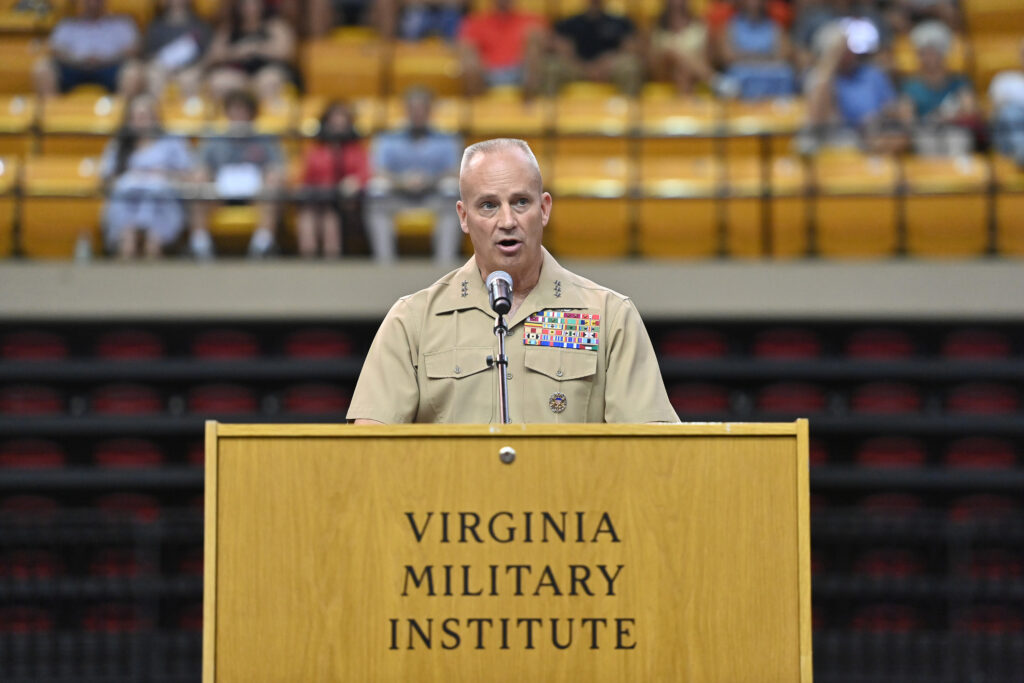
Lt. Gen. David Furness ’87 recently reflected on the first year of his tenure as the 16th superintendent of Virginia Military Institute, and described it as a fast-paced, fun-filled year of learning.
A goal Furness prioritized and one he stated is important when leading any organization is to establish relationships with people within the organization—administrators, faculty, staff, and cadets—and to be present, a concept he refers to as “leadership by walking around.” He makes a habit of visiting barracks, the dining hall, and the academic buildings. He watches the cadets compete in sports as well as their ROTC training.
“Because then I can give them feedback. I can interact with them, and find out what’s on their minds in a less stressful environment. I can learn the things they care about, and can transmit things I care about to them. I’m pretty much everywhere all the time, and they have a lot of opportunities to interact with me. They also know that I can pop around any corner at any time, and you know that tends to keep them on their toes,” he said with a smile.
The first thing he discovered when chatting with cadets was the Wi-Fi in barracks was old, and inadequate in keeping up with the demand required by staff and cadets. Within 90 days, work began to improve it.
He shared the biggest surprise he experienced was the exceptionalism of the female cadets.
“When I was a cadet, this was an all-male institution. I was probably one of the alumni who wanted to keep it single gender because I think it benefited me as a cadet and my focus, but I could never imagine, after this year, VMI without female cadets. In fact, if I had my way and I had the resources, I would have several more female sports teams.”
A significant accomplishment Furness achieved in his first year was growth in enrollment. He stated 1,800 cadets is the target number to start each academic year, but there have been many years that target was not reached. Earlier in the year he set the goal for over 500 matriculants, and in August, VMI welcomed the largest rat class in history with 532.
“We met our goal. We’ll need to do that three or four more years in a row to get the overall enrollment up to where it needs to be.”
He also discussed the standards for the personal appearance of the Corps has improved from when he arrived a year ago, but not entirely where he wants them to be. “Our students deserve a pat on the back for their focus and self-discipline in improving those standards. But we can be better, and that’s what I keep trying to inspire them to be.”
Early in 2026, Furness met a challenge when members of the Virginia General Assembly attempted to pass two house bills unfavorable to VMI.
“One bill did not pass the Senate. The other bill that did pass was amended appropriately by both the patron and the governor to be more amenable to VMI. That was a very stressful three months, but in the end, I think we achieved good results, and worked well with people on both sides of the political aisle.”
Throughout the year, Furness made a concerted effort to connect with alumni. He engaged with them during their reunions and special events on post, and traveled to visit alumni chapters around the country. Within the commonwealth, he met with chapters in Fredericksburg, Hampton Roads, Lynchburg, Northern Virginia, Rappahannock, Richmond, Roanoke, Shenandoah, and Williamsburg. He met with alumni in California, Idaho, Maryland, North Carolina, South Carolina, Texas, Washington, as well as Washington, D.C. Over the summer, he ventured overseas to Taiwan and Thailand where he was warmly welcomed by the alumni there and recruited potential future cadets.
In discussing his future goals, Furness referred to the three core values of academics, military leadership, and athletics, symbolized by VMI’s Three-Legged Stool.
“The military leg is stronger now than when I was a cadet. We train young officers better than anybody in the business. The academic leg is stronger. There are more course offerings than when I was a cadet, and there are more opportunities for cadet research and overseas study. The athletic leg, though, needs improving. We’ve underinvested in that leg for over 50 years, and we have to change that in order to make us more competitive to win. We are currently working on an athletic strategic plan that will help us achieve that goal.”
Additionally, by next year, Furness believes a master’s in executive leadership will be developed through the Center for Leadership and Ethics, which may be available to students online. He is also trying to establish a program in which cadets can earn simultaneously both a bachelor’s degree and MBA in four years.
“We are working with the State Council of Higher Education for Virginia right now on that program.”
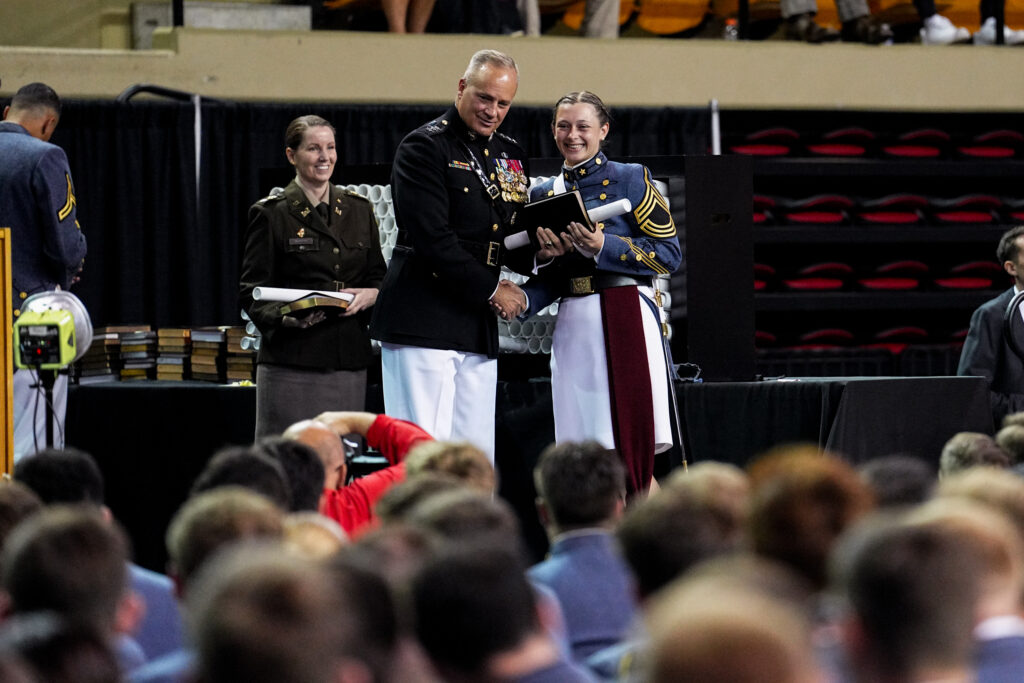
Furness’ favorite memories over the year are of handing out class rings to 2nd Class cadets and handing out diplomas to 1st Class cadets as they graduated.
“I enjoyed seeing the looks in their eyes as they reached that part of their VMI journey. I think those are two very special moments of my first year.”