VMI Receives $1M Grant
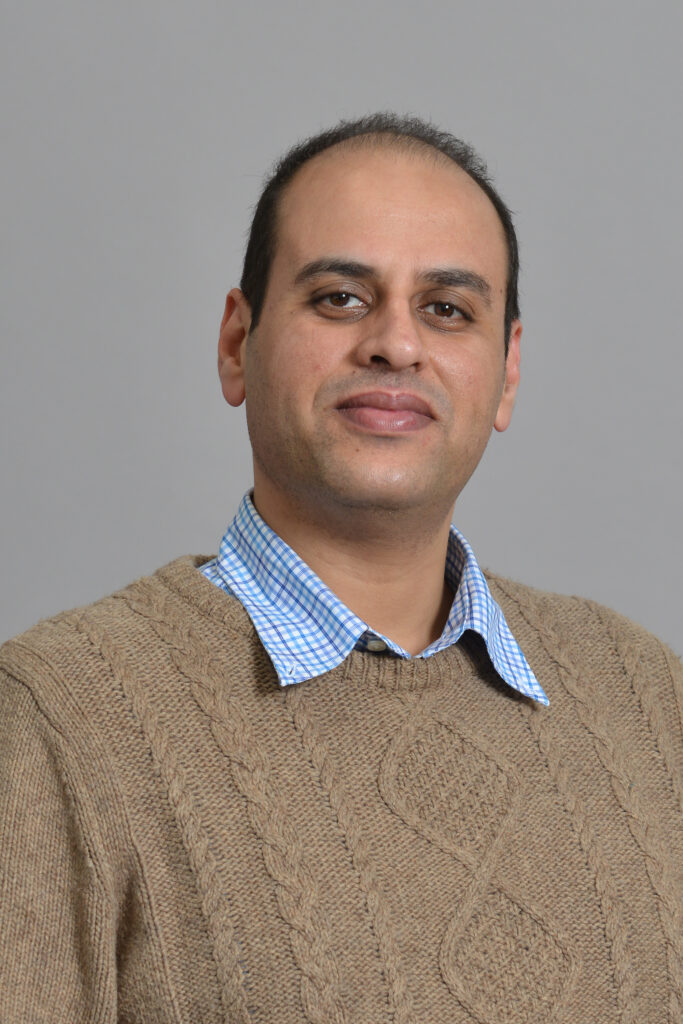
Virginia Military Institute was recently awarded a grant by the Joan and Morgan Massey Foundation in the amount of $1 million to support the launch of the project titled, “From Legacy Infrastructure to Secure AI Leadership.” Dr. Mohamed Azab, associate professor in the Department of Computer and Information Sciences, is lead principal investigator for the project. Dr. Efat Fathalla, assistant professor in the Department of Electrical and Computer Engineering (ECE); and Col. David Feinauer, professor in ECE, are co-principal investigators.
Azab stated this achievement is the result on more than six years of dedicated research and hard work, including contributions from many cadets.
“This grant represents an exciting opportunity for VMI to advance innovative research at the intersection of cybersecurity, artificial intelligence, and critical infrastructure. We are deeply grateful to the foundation for believing in our vision and providing the generous support needed to move it forward. Through this initiative, we aim to advance scientific research and workforce development by investigating how emerging technologies, particularly artificial intelligence, can be securely and responsibly integrated into critical infrastructure. Equally important is preparing the next generation of researchers, engineers, and cybersecurity professionals. We want our cadets to become innovators and problem-solvers who can translate scientific discoveries into practical solutions.”
Brig. Gen. Robert Moreschi, dean of the faculty and deputy superintendent for academics, also extended his gratitude on behalf of VMI.
“We are proud and excited for these faculty members, and under their mentorship, the rotating teams of cadets who will be deeply engaged in the work of the proposal. The project promises to be a showpiece of student experiential learning, a key initiative of VMI’s strategic plan,” he said.
According to Sky Massey, chairwoman of the foundation, central to the decision to fund the project is its dual-impact design, bridging deep technological research with mission-critical workforce development.
“The initiative answers both needs in tandem — producing peer-reviewed, reproducible methodologies for complex system upgrades while immediately translating those findings into cadet training, ensuring theoretical innovation directly drives operational leadership.”
Funds will be disbursed by check in two installments of $500,000 each, with the first payment scheduled for December 2026 and the second for December 2027.