36th Annual Environment Virginia Symposium Held at VMI
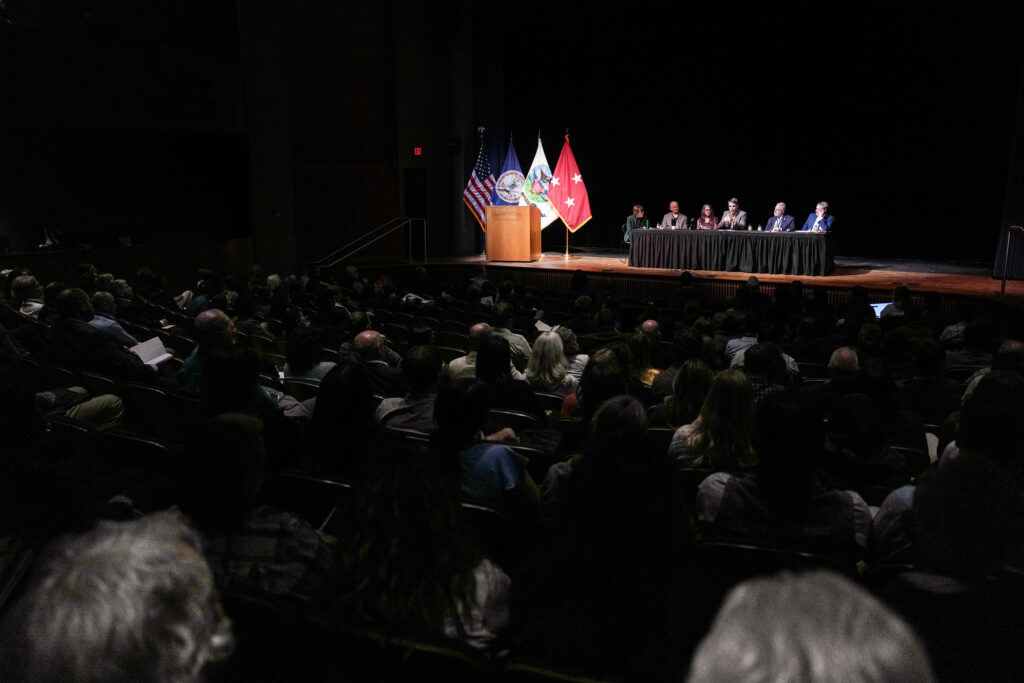
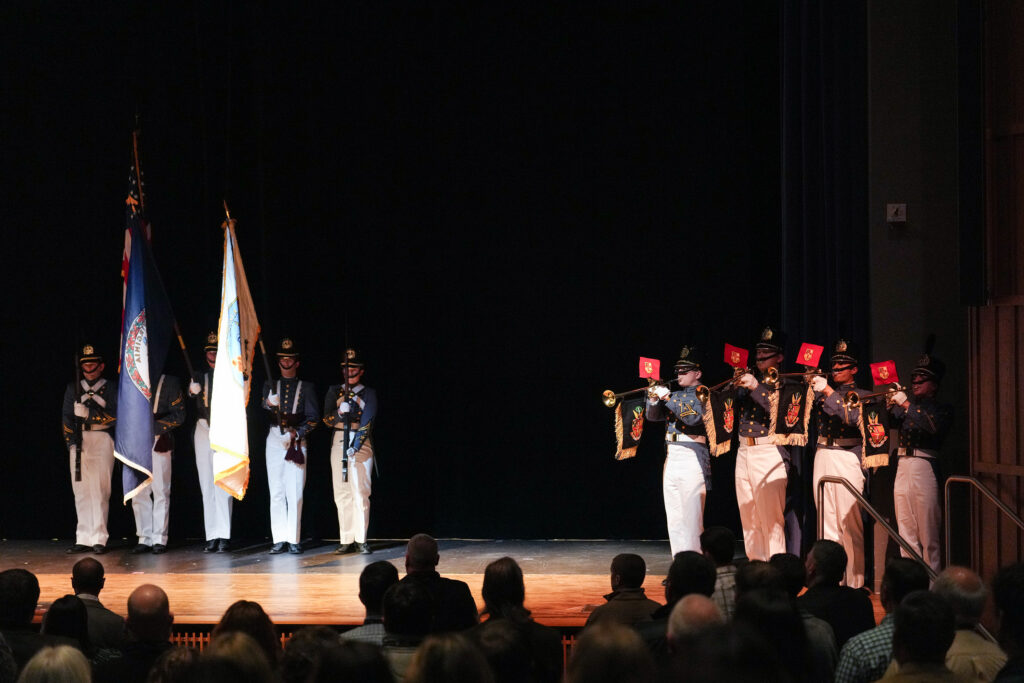
Over 570 representatives from state and local governments, nonprofit organizations, higher education, and the private sector converged at Virginia Military Institute for the 36th annual Environment Virginia Symposium March 24-26. The conference was organized and co-hosted by VMI’s Center for Leadership & Ethics (CLE). Col. Dave Gray, executive director of the CLE, served as master of ceremonies. The event opened in Marshall Hall with the Corps of Cadets color guard posting the colors as the herald trumpets played “The Star Spangled Banner” in four-part harmony.
Superintendent Lt. Gen. David Furness ’87 formally welcomed the participants.
“This conference is organized to allow leaders to exchange ideas, regulators to converse with those they regulate, and nonprofits to collaborate with businesses and governmental agencies. No person or group has all the right answers or can solve every issue that we are presented with today. Everyone has a vested interest, however, in a great and thriving environment where it affects every citizen of the commonwealth. This conference is for every one of you, the environmental professionals who work to protect and preserve Virginia’s environment. The wealth of knowledge and experience for many attendees makes this a wonderful training ground for those who are new to this profession. This serves as a great opportunity to hear about the goals and challenges of our commonwealth’s environmental sector. VMI is proud of our engineering and science programs. We encourage you to learn more about our highly ranked and accredited STEM programs, visit our departments and hire our cadets to serve in your organizations. I’m confident VMI graduates will continue to be leaders and problem solvers ready to join your ranks and become productive contributors to the environment of the commonwealth,” he said.
Opening remarks were offered by David Bulova, secretary of Natural and Historic Resources, who brought greetings from Gov. Abigail Spanberger, who was unable to attend.
He stated, “We as Virginians are truly blessed. From the Chesapeake Bay to the Piedmont to the Shenandoah, and the great Southwest, the natural beauty that is the commonwealth is truly unsurpassed. These natural resources sustain us. They support millions of jobs, and they give us a special sense of place that is Virginia. It’s a privilege to serve as the secretary of Natural and Historic Resources, as together we protect, conserve and restore these resources for future generations. Protecting our environment depends on fostering a new generation of leaders who will take up that charge. For all of the young professionals and students who are here with us today, thank you, and for those who have been around here for a while, please take up the time to lift up the next generation of leaders. Our planet is depending on it.”
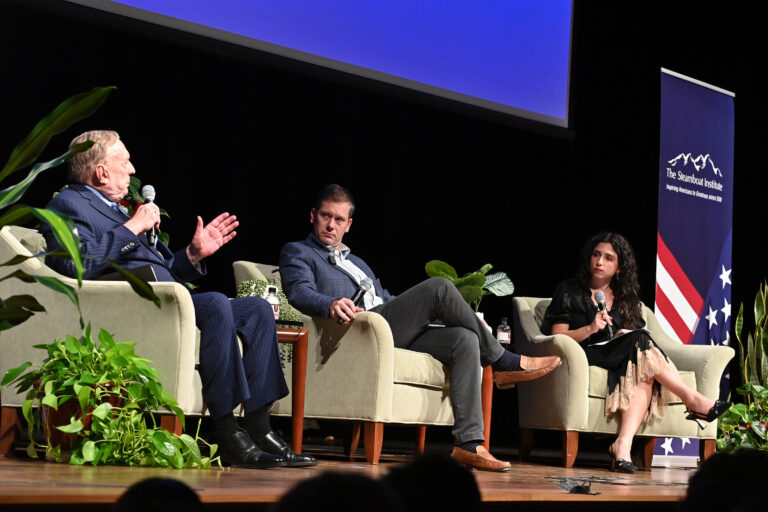
A panel discussion featuring the directors of the conference’s five state government co-host agencies was moderated by Tanya Denckla Cobb, director of the University of Virginia’s Institute for Engagement & Negotiation. Held in Gillis Theater, the panel included Ryan Brown, executive director of the Department of Wildlife Resources (DWR); Terry Lasher, state forester and director of the Department of Forestry; Joe Grist, acting commissioner of the Virginia Marine Resources Commission; Mike Rolband, director of the Department of Environmental Quality; and Nikki Rovner, director of the Department of Conservation and Recreation. They talked of budget cuts, grants, and values that guide them including transparency, collaboration, common sense, the Golden Rule, making good decisions, strong leadership traits, being transformative, and innovation. They also conversed on the use of artificial intelligence (AI), supporting and sustaining the forestry industry, mediating conflicts, and managing public lands and parks.
Breakout educational sessions were offered by experts from all over the commonwealth including Maj. Peter Neofotis, lecturer in VMI’s biology department. Topics of the sessions included achieving the Chesapeake Bay Agreement commitments, water quality, flood resilience, food waste, invasive plants and landscape restoration, freshwater conservation, silt, algae and ecosystems, soil health, the wetlands, solar energy, pollutants, wildlife corridors, urban agriculture, challenges for data centers, a guided flora walk, and more.
The plenary speaker was Alejandra Parra-Orlandoni, chief operations officer of Pasteur Labs. Her talk titled, “Neither Savior nor Villain: A Practitioner’s Guide to AI and the Environment,” examined getting better use from AI as a tool. “When you ask an AI system a question, you often get back a really confident, agreeable answer. This is called sycophantic AI, and it validates your perspective. The way you frame the question steers the answer toward agreement,” which she conceded in not always a good thing. She encouraged her audience to be more specific in the questions they put to AI, and to understand the actual problem before they seek a solution. “Three questions you must ask and answer before even thinking about using AI: What specific decision are you trying to make better, easier, faster? What data do you actually have, and is it clean, consistent, accessible, reliable? What does failure look like, and who’s accountable for it? Answering these three questions with integrity takes work, and many AI projects that fail do so because these questions weren’t asked and answered upfront.” She gave an example of a question that didn’t work for her colleague in water management. “The question posed was, ‘How can AI improve water management?’ That led to a lot of wasted money and time. My colleague shifted the framing of the question to one that did help, ‘We know water is being lost, but customers can’t pinpoint where, and physical investigations are expensive and disruptive. Can we find a better way to identify where losses are actually occurring?’ The specific question forced that company to look at what data they already had, and it made clear patterns existing in their data. AI technology could finally identify not just that the water was being lost, but where, in what quantities and exactly from which buildings, without any excavation, or guesswork.”
She concluded by telling her audience, “AI is not an oracle. Used without discipline, it’s really a very convincing mirror for your own assumptions, and that’s a very risky prospect. But when used well, AI doesn’t replace your judgment, it amplifies the reach at a scale that’s finally going to match the complexity of the problems that this field is up against.”
A momentous part of the symposium is the presentation of the Erchul Environmental Leadership Award, named for the late VMI professor Capt. Ronald A. Erchul, Ph.D., founder of the Environment Virginia Symposium. The award recognizes a Virginian who has made significant individual efforts to improve the environment. Members of Virginia’s environmental community nominate candidates who are judged based on their vision, expertise, commitment, integrity, communication skills, accomplishments, and diplomacy. This year’s winner was Becky Gwynn, executive deputy director of DWR.
Denckla Cobb, who received the award last year, introduced Gwynn. “For nearly 40 years with DWR, Becky has established a reputation for conservation leadership, professional diligence and innovation, and personal integrity. Her leadership has helped shape the department’s vision and mission. Her career highlights include development of Virginia’s first wildlife action plan, initiating the commonwealth’s first wildlife viewing plan, creation of the Virginia birding and wildlife trail, coordinating land acquisition efforts that have safeguarded and restored habitat for threatened species, as well as providing public access to recreational opportunities for all Virginians. Her leadership enabled Virginia’s largest conservation easement in the coalfields, securing 65,000 acres of recreational access and habitat for Virginia’s only elk herd. Becky was also responsible for a $44.5 million EPA grant, the largest in the agency’s history to protect and restore coastal wetlands and forests for carbon capture and storage,” said Denckla Cobb.
After accepting the award with gratitude, Gwynn shared that she loves her job and the agency for which she works. “Across the country, state fish and wildlife agencies serve as trustees for the fish and wildlife populations as a public trust resource. I take that responsibility really seriously. It motivates me to get up and go to work every day. When I have opportunities like holding the first nestlings of red cockaded woodpeckers that were born on the Big Woods Wildlife Management Area, that’s a lifetime experience I will never have again. The work done by state fish and wildlife agencies is something that we do because we’re passionate about the work. Many in my profession enjoy in their off time, the same things they do during their day job, so we have become a large family. We spend our time together, and the birds don’t wait until the sun comes up, so we have to be out before they are. The wildlife that’s out at night doesn’t really care that it’s after dark and we might have to be out late. So, we spend a lot of time together. It’s an enriching experience. I’m privileged to work with so many dedicated, committed professionals.”
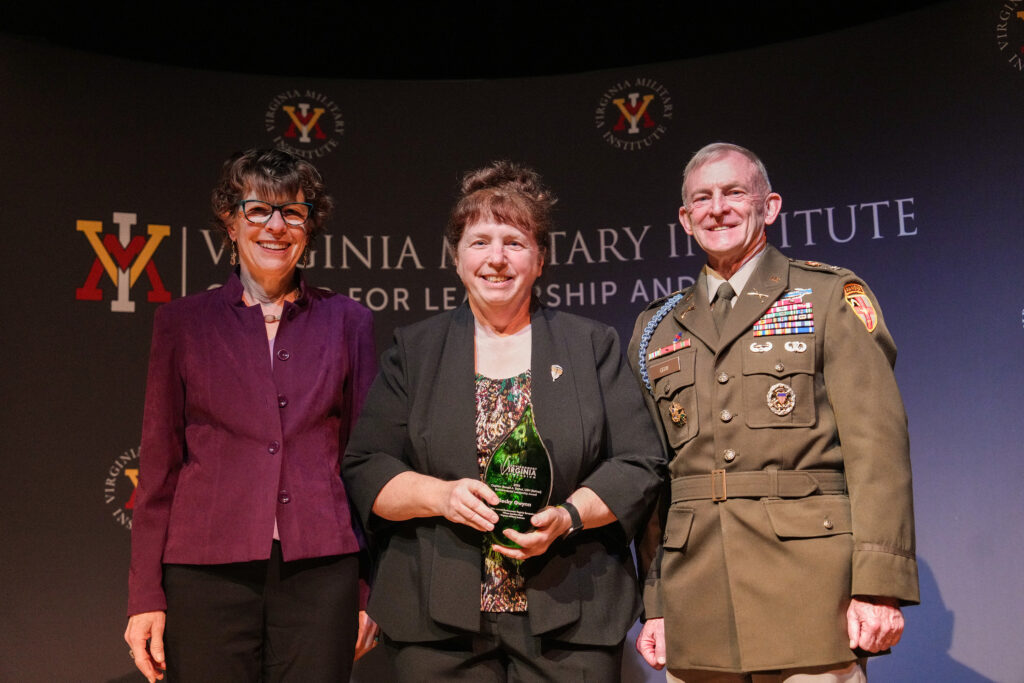
Each year, VMI donates $1,500 to a nonprofit environmental organization of the recipient’s choice in their honor. Gwynn requested the donation go to the Virginia Herpetological Society.
Other awards presented at the symposium are the Governor’s Environmental Excellence Awards, which recognize successful and innovative efforts that improve Virginia’s environment. This year’s gold medal winners were: The Conservation Fund for their work preserving James Monroe’s Oak Hill Farm in Loudoun County; Four Mile Run Conservancy for Water Access for All at Four Mile Run, the region’s first ADA-compliant kayak and canoe launch; Lancaster County for Windmill Point County Maritime Recreational Campus, a project that transformed a severely eroded shoreline into a premier public recreational campus; Piedmont Housing Alliance for Kindlewood Community Redevelopment, a transformative resident-led project converting a 12-acre Section 8 community into a climate-resilient, net-zero-ready affordable housing development; Prince William County Public Schools for their Energy, Sustainability, and Environmental Program, contributing to healthier learning environments and long-term cost savings; Rappahannock Tribe Inv. for Rappahannock Tribe Return to the River Restoration Initiative, which successfully reclaimed 964 acres of ancestral homelands along the Rappahannock River at Fones Cliffs; and Rockfish Valley Foundation for ENLIT (Environmental Literacy), an innovative, interactive, and accessible outdoor learning system that connects visitors to the regions natural and cultural resources.
Silver medal winners were: Fairfax County Park Authority for Spring Hill Rec Center energy upgrades; InBio for Environmental Sustainability Program; and Prince William Soil and Water Conservation District for Water Quality Program.
Bronze medal awards were: Sewing Lab LLC for Circular Fashion Education & Textile Waste Reduction Program.
Receiving honorable mention were: Fairfax County Public Library Department of Procurement and Material Management for Library Book Reuse & Recycling Project; and Tree Fredericksburg for canopy restoration in the City of Fredericksburg.
Next year’s Environment Virginia Symposium is scheduled for March 23-25 at VMI.