Cadets Take Part in EMT Training
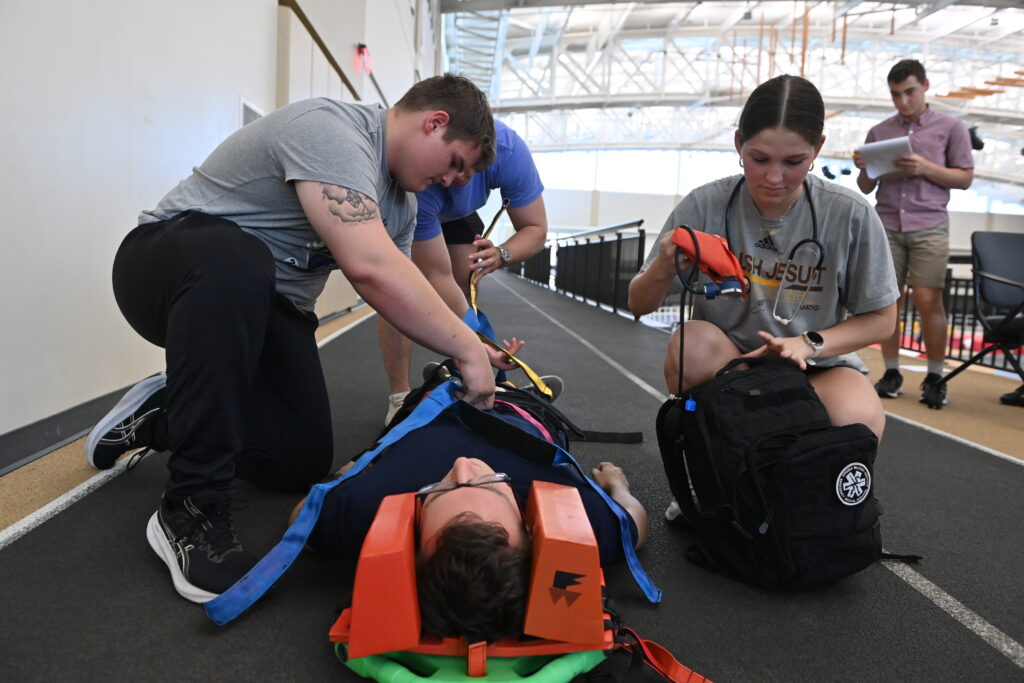
While most college students leave campus immediately after final exams, 25 Virginia Military Institute cadets chose to spend 4 ½ additional weeks on post to learn how to be emergency medical technicians (EMT). Emergency Medical Service (EMS) at VMI is responsible for providing emergency medical care to the Corps of Cadets, staff, faculty, and visitors on and around post, and is a certified non-transport EMS agency that can handle 911 calls on post. The cadets who are certified EMTs are vital to the Institute and part of the regimental system. They are on duty during Corps parades, at all athletic games and competitions, and throughout rat training.
According to Donnie McBrayer, VMI EMS advisor, EMT summer instruction is contracted with Mountain Gateway Community College (MGCC). The costs of the course, room, and board are fully covered for the cadets, but they are obligated to serve the Institute as EMTs for two years.
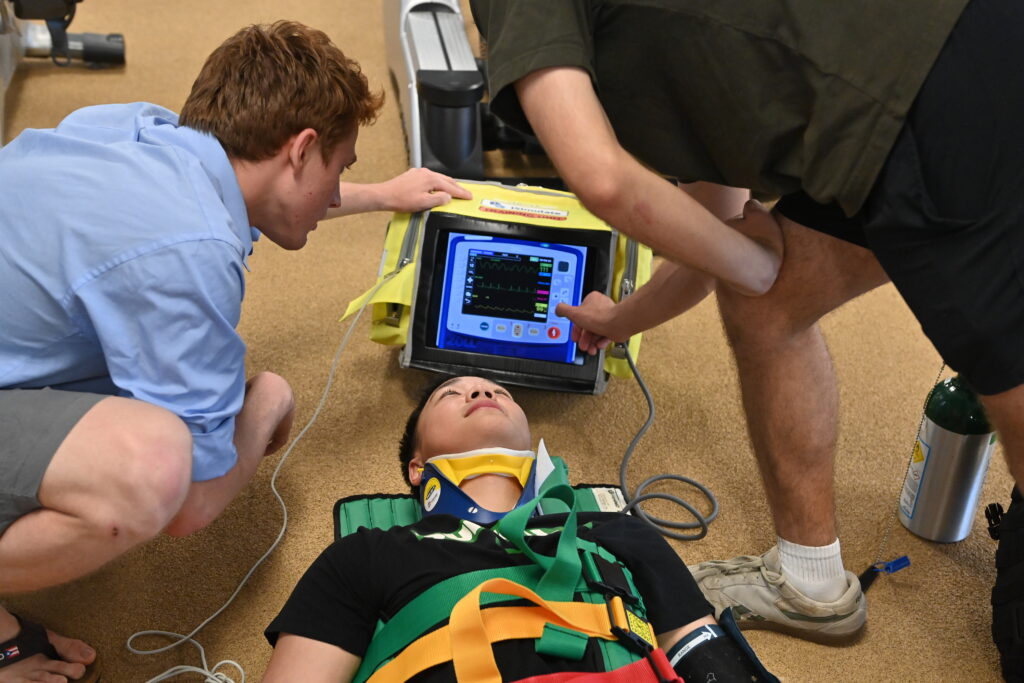
MGCC instructor Rob Brooks is a full-time firefighter and paramedic with the Department of Fire and EMS for Amherst County. His extended career includes law enforcement for Sweet Briar College, where he attended the police academy and obtained his EMT certification. As a campus police officer, he often responded to medical emergencies on campus. From 2002 to 2018, he worked for the Nelson County Sheriff’s Office where he served as a K-9 handler, a major crimes investigator, and a narcotics investigator. He was team leader for the department’s first official tactical team in 2014. After switching his career to full-time firefighter and EMS, he obtained his advanced EMT, paramedic, firefighter, and hazardous materials certifications. He has taught EMS for five years. This summer was his first experience teaching at VMI. He explained the comprehensive curriculum of the class. “In the mornings, I give lectures on various subjects including trauma; toxicology; behavioral health; cardiology; allergies; anaphylaxis; pediatric, gastrointestinal, urologic, and gynecologic emergencies; and bodily injuries. Each afternoon we do hands-on, scenario-based drills—called practicals—on training manikins. The cadets take turns portraying patients as well. I provide a scenario, such as a victim of a house fire found outside sitting on the grass, suffering from singed facial hair, a hoarse voice, soot around his mouth, and burned clothing stuck to his skin. The cadets needed to respond with the proper protocol of treatment.”
Additionally, the cadets were required to spend time working with professional emergency responders at Lexington Fire Department and Carilion Rockbridge Community Hospital.
After the cadets pass the class, they must take the National Registry EMT exam. Upon passing the exam, they will be awarded a license to operate as an EMT in the Commonwealth of Virginia.
Alex Sydnor ’29, a history major from Doswell, Virginia, is taking the class because he plans to commission into the Coast Guard and work in emergency management. He believes being an EMT will help him reach that goal. “I am very interested in the communications aspect of emergency management. I am a ham radio operator and have helped out at the Hanover County emergency operations center talking with other ham operators to learn where resources are needed during natural disasters,” he stated. In addition to being a VMI EMT, Sydnor hopes to establish a ham radio club on post, so other cadets can learn how to best respond during catastrophic events.